July 20262 minBeginner
What Is Hash Rate?
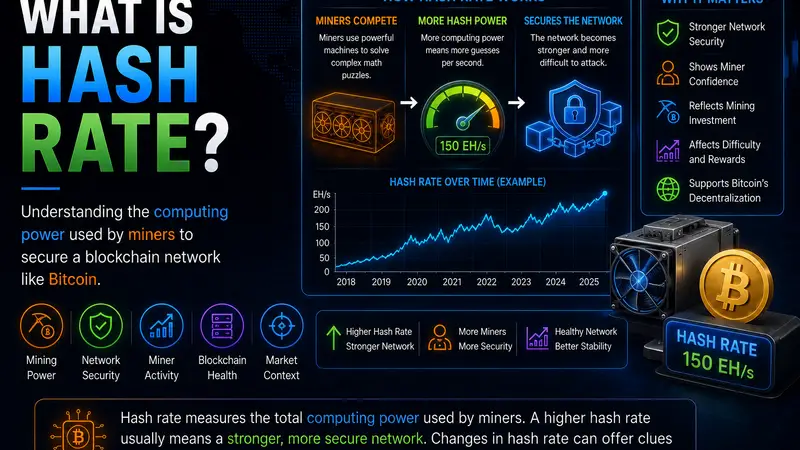
Hash rate shows how much computing power is being used to help secure a proof-of-work network like Bitcoin.
017
Read guideLoading page…
Beginner-friendly crypto, macro, and market structure explainers for reading the Daily Pulse with more context.
Showing 1–12 of 270 guides
Hash rate shows how much computing power is being used to help secure a proof-of-work network like Bitcoin.
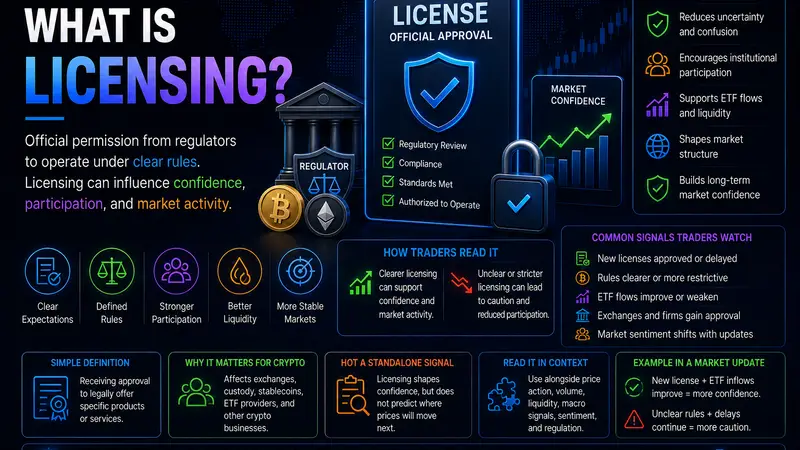
Licensing explains how official approval to operate can influence confidence, regulation, and crypto market participation.
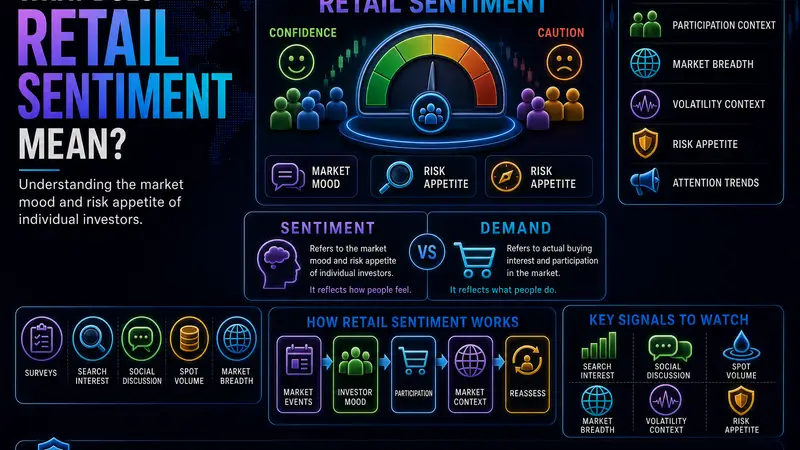
Retail sentiment is the overall mood of individual investors and helps explain changes in confidence, risk appetite, and participation.
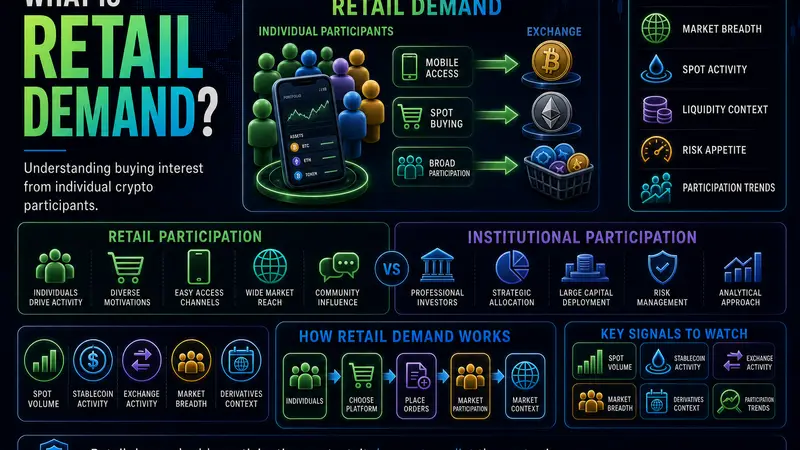
Retail demand is buying interest from individual investors and helps show how broadly everyday participants are engaging with crypto.
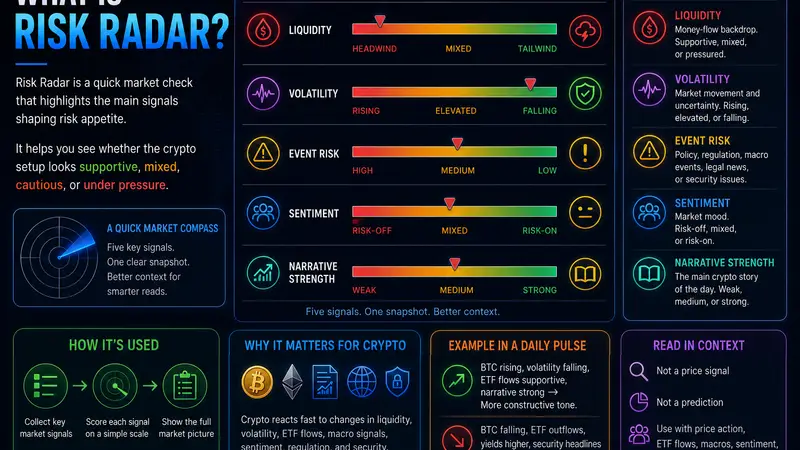
Risk Radar is a quick market context tool that shows whether crypto conditions look supportive, mixed, cautious, or pressured.
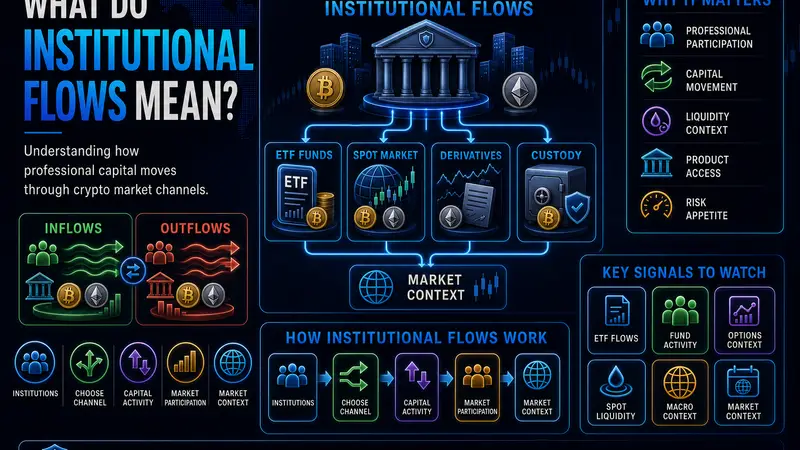
Institutional flows describe capital moving through professional investors and can add context to participation in crypto markets.
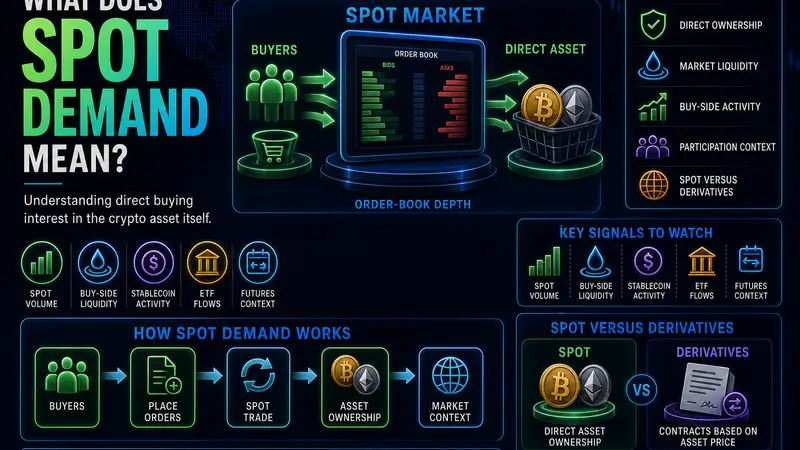
Spot demand is direct buying interest in the crypto asset itself, helping show participation outside derivatives markets.
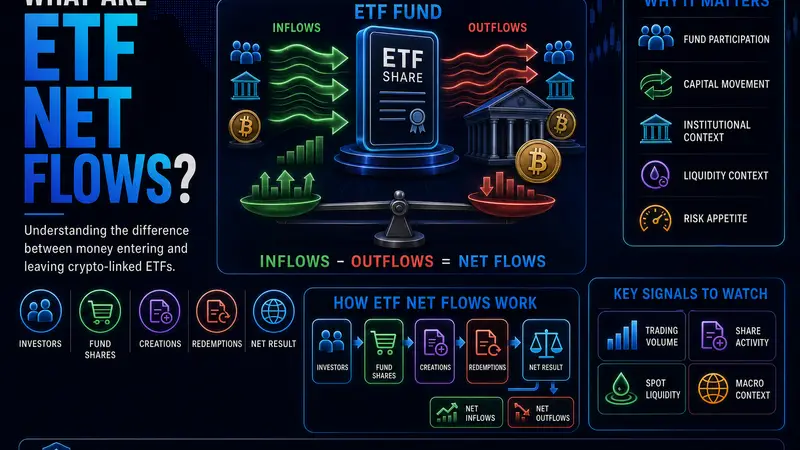
ETF net flows show the difference between capital entering and leaving a fund, adding context to crypto-linked ETF participation.
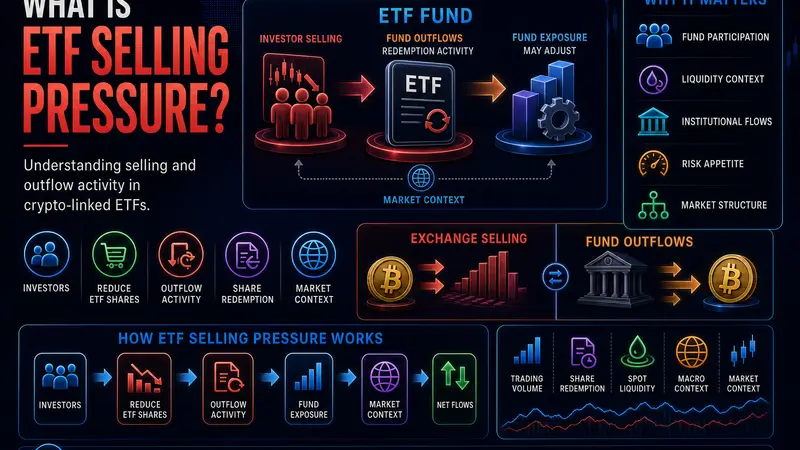
ETF selling pressure describes investor selling and outflow activity in an ETF, adding context to crypto-linked fund participation.
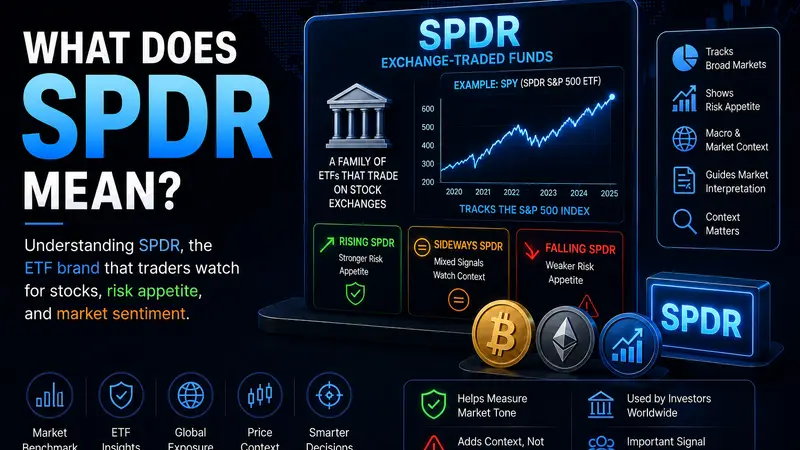
SPDR refers to a family of ETFs that traders often watch for stock-market context, risk appetite, and broader market sentiment.
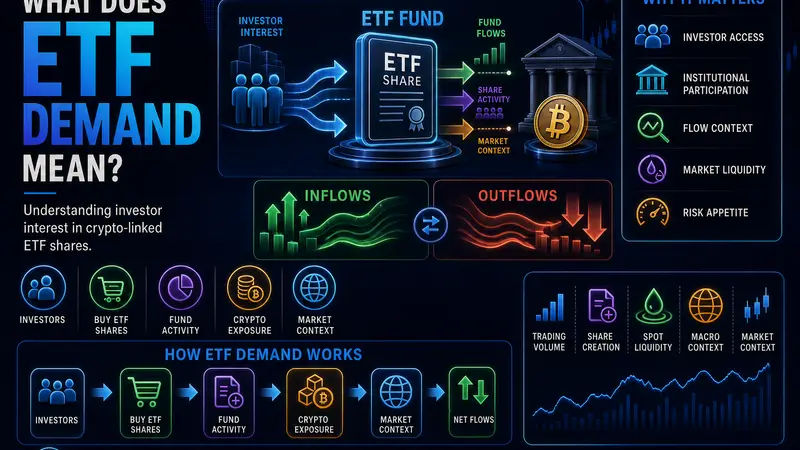
ETF demand describes investor interest in buying ETF shares and helps add context to participation in crypto-linked funds.
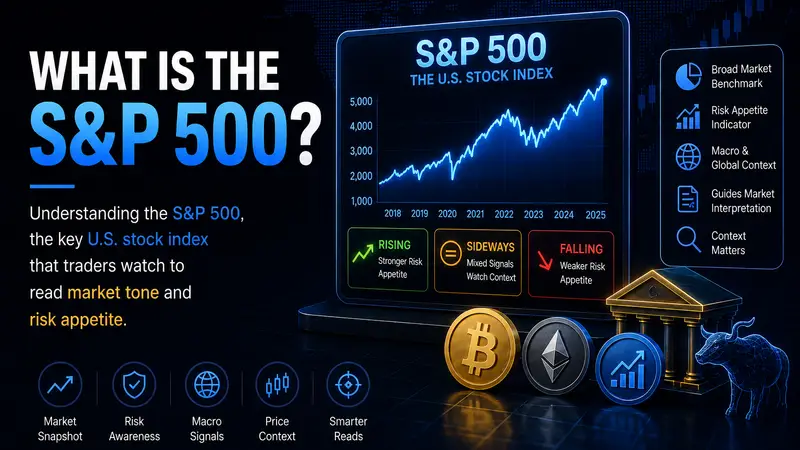
The S&P 500 is a major U.S. stock index that traders watch to understand risk appetite and broader market tone.
Beginner-friendly crypto, macro, and market structure explainers for reading the Daily Pulse with more context.
Showing 37–48 of 270 guides
Hash rate shows how much computing power is being used to help secure a proof-of-work network like Bitcoin.
Licensing explains how official approval to operate can influence confidence, regulation, and crypto market participation.
Retail sentiment is the overall mood of individual investors and helps explain changes in confidence, risk appetite, and participation.
Retail demand is buying interest from individual investors and helps show how broadly everyday participants are engaging with crypto.
Risk Radar is a quick market context tool that shows whether crypto conditions look supportive, mixed, cautious, or pressured.
Institutional flows describe capital moving through professional investors and can add context to participation in crypto markets.
Spot demand is direct buying interest in the crypto asset itself, helping show participation outside derivatives markets.
ETF net flows show the difference between capital entering and leaving a fund, adding context to crypto-linked ETF participation.
ETF selling pressure describes investor selling and outflow activity in an ETF, adding context to crypto-linked fund participation.
SPDR refers to a family of ETFs that traders often watch for stock-market context, risk appetite, and broader market sentiment.
ETF demand describes investor interest in buying ETF shares and helps add context to participation in crypto-linked funds.
The S&P 500 is a major U.S. stock index that traders watch to understand risk appetite and broader market tone.