June 20262 minBeginner
What Is Consolidation?
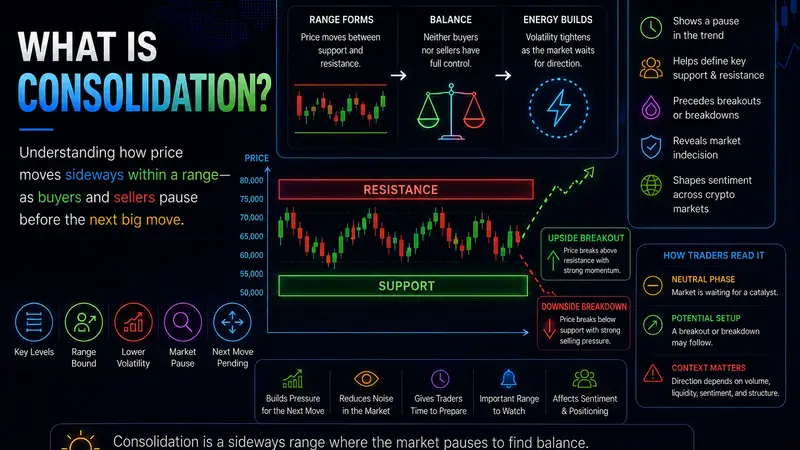
Consolidation happens when price moves sideways within a range while traders wait for clearer direction.
Loading page…
Beginner-friendly crypto, macro, and market structure explainers for reading the Daily Pulse with more context.
Showing 1–12 of 270 guides
Consolidation happens when price moves sideways within a range while traders wait for clearer direction.
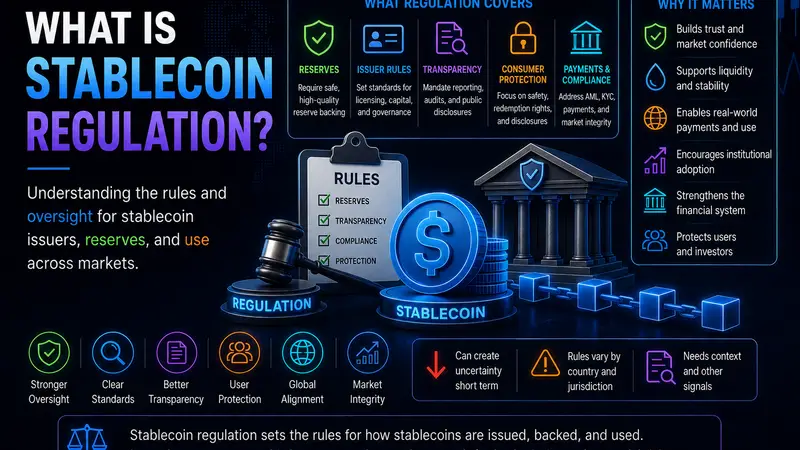
Stablecoin regulation means rules and oversight for stablecoin issuers, reserves, payments, and market use.
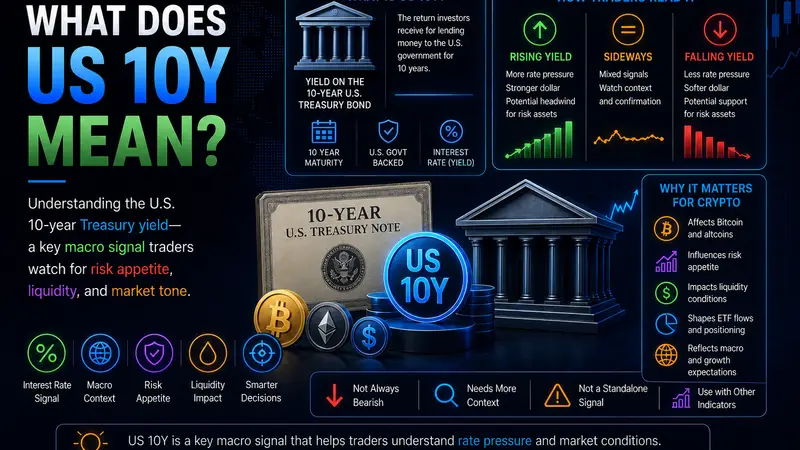
US 10Y refers to the 10-year U.S. Treasury yield, a major macro signal traders watch for risk appetite and market pressure.
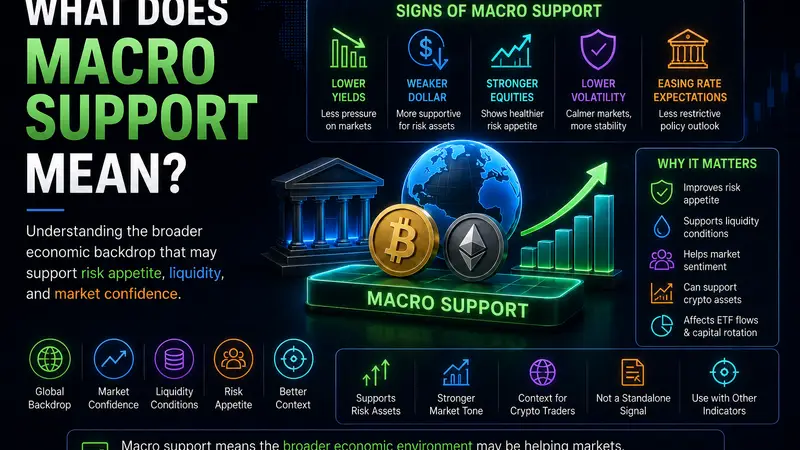
Macro support means broader economic conditions may be helping risk appetite, liquidity, and market confidence.
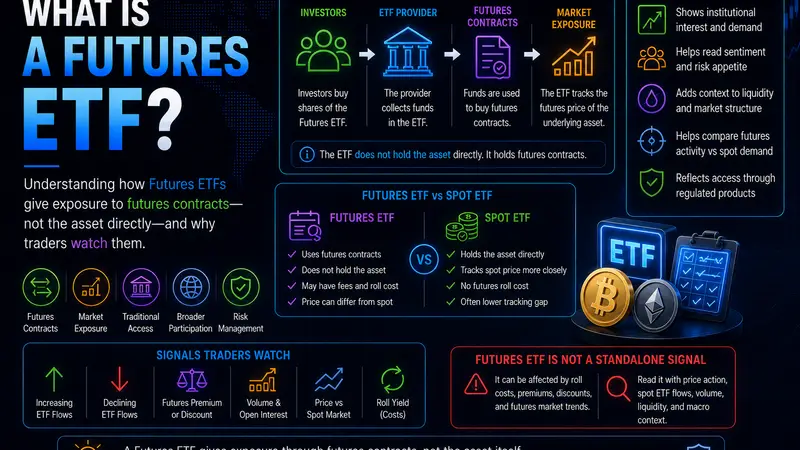
A Futures ETF tracks futures contracts instead of directly holding the underlying asset, helping traders read market exposure and sentiment.
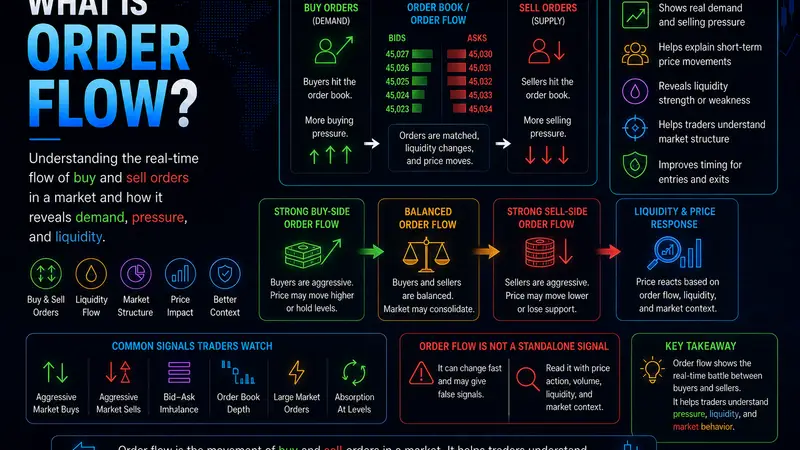
Order flow shows how buy and sell orders move through a market, helping traders read demand, pressure, and liquidity.
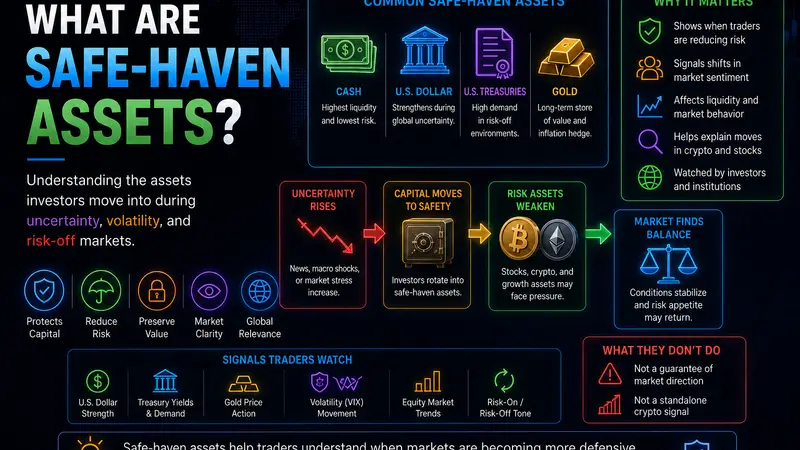
Safe-haven assets are assets traders may move toward when markets feel uncertain, stressed, or risk-off.
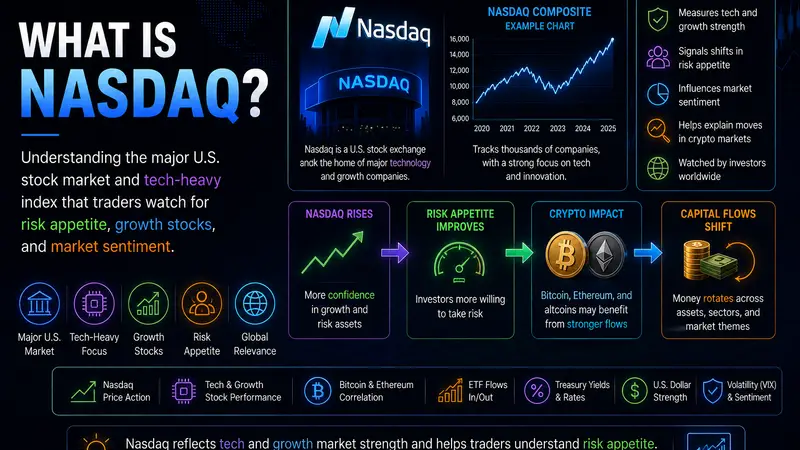
Nasdaq is a major U.S. stock market and tech-heavy index signal that traders watch for risk appetite and market sentiment.
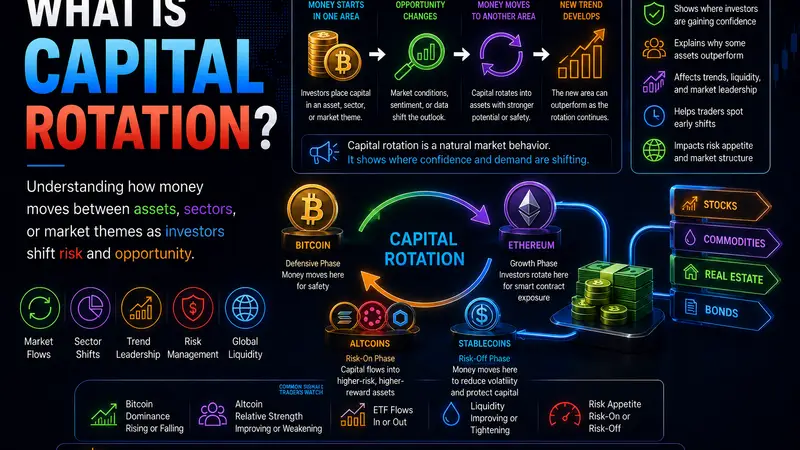
Capital rotation describes money moving between assets, sectors, or market themes as traders adjust risk and opportunity.
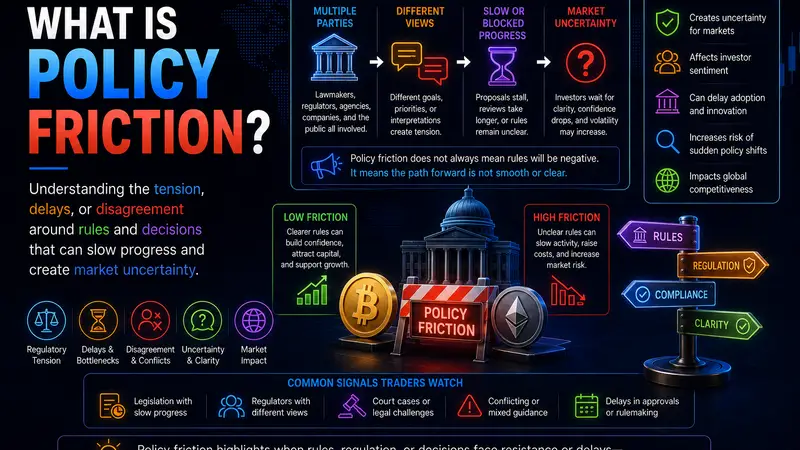
Policy friction means tension or delays around rules, regulation, or government decisions that can affect market confidence.

Policy debate means public discussion about rules, laws, and decisions that may shape markets or regulation.
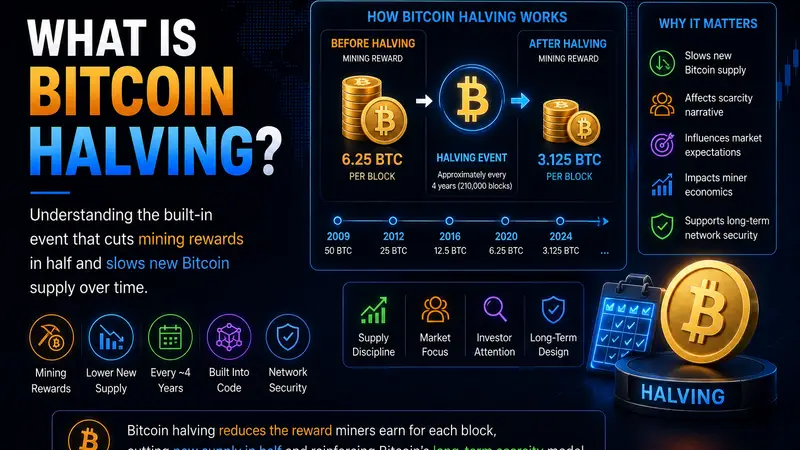
Bitcoin halving is when Bitcoin’s mining reward is cut in half, reducing new supply and shaping market expectations.
Beginner-friendly crypto, macro, and market structure explainers for reading the Daily Pulse with more context.
Showing 217–228 of 270 guides
Consolidation happens when price moves sideways within a range while traders wait for clearer direction.
Stablecoin regulation means rules and oversight for stablecoin issuers, reserves, payments, and market use.
US 10Y refers to the 10-year U.S. Treasury yield, a major macro signal traders watch for risk appetite and market pressure.
Macro support means broader economic conditions may be helping risk appetite, liquidity, and market confidence.
A Futures ETF tracks futures contracts instead of directly holding the underlying asset, helping traders read market exposure and sentiment.
Order flow shows how buy and sell orders move through a market, helping traders read demand, pressure, and liquidity.
Safe-haven assets are assets traders may move toward when markets feel uncertain, stressed, or risk-off.
Nasdaq is a major U.S. stock market and tech-heavy index signal that traders watch for risk appetite and market sentiment.
Capital rotation describes money moving between assets, sectors, or market themes as traders adjust risk and opportunity.
Policy friction means tension or delays around rules, regulation, or government decisions that can affect market confidence.
Policy debate means public discussion about rules, laws, and decisions that may shape markets or regulation.
Bitcoin halving is when Bitcoin’s mining reward is cut in half, reducing new supply and shaping market expectations.