What Is the Yield Curve?
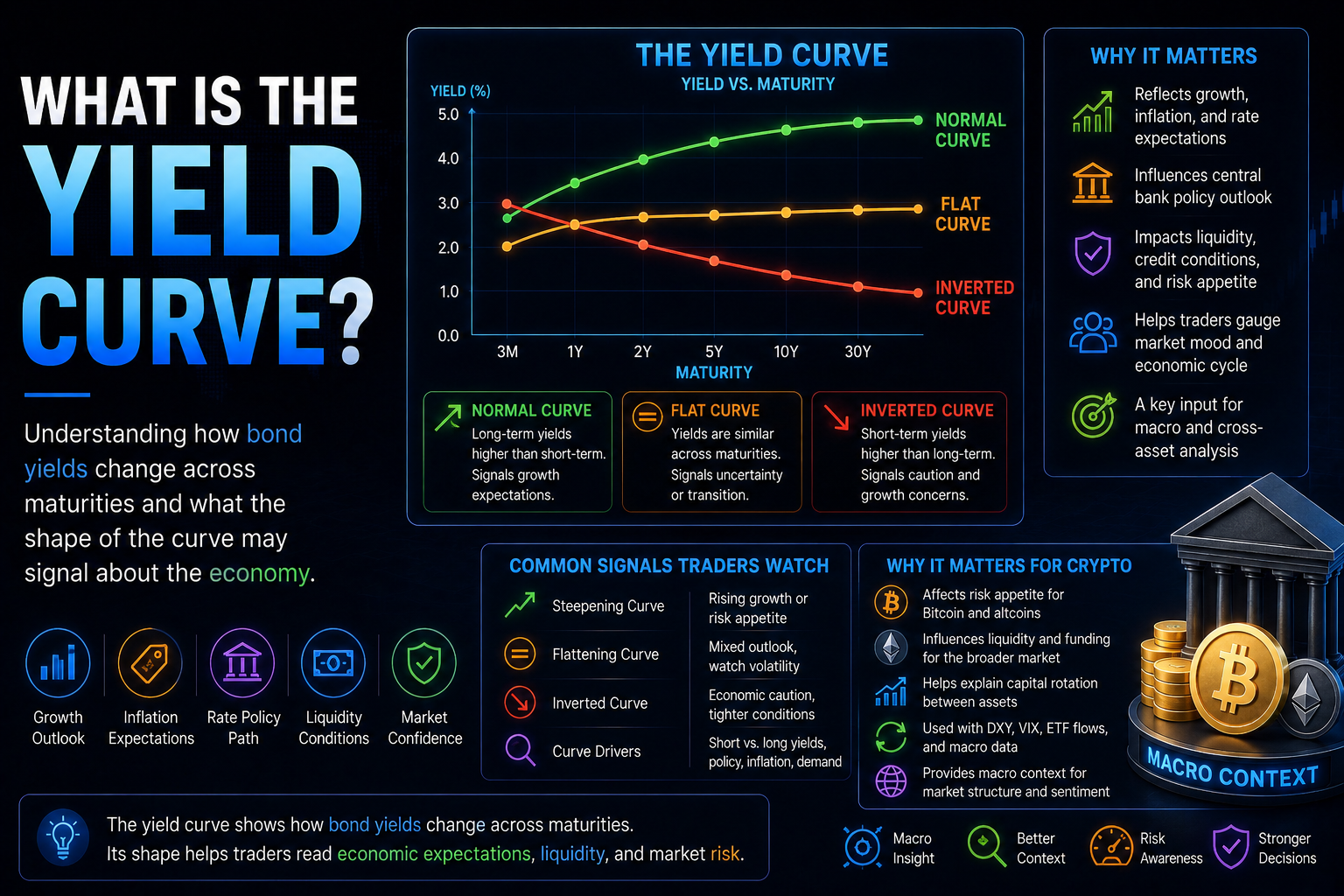
What Does Yield Curve Mean?
The yield curve shows how interest rates compare across short-term and long-term government bonds. Crypto readers watch the yield curve because it can help explain macro pressure, risk appetite, liquidity, Bitcoin, Ethereum, and broader market sentiment.
Simple definition
The yield curve is a line that compares bond yields across different maturities, from short-term bonds to long-term bonds.
A normal yield curve usually slopes upward because longer-term bonds often offer higher yields than short-term bonds. When that relationship changes, traders pay attention because it can signal shifts in growth, inflation, rate expectations, or market stress.
Why yield curve matters
Yield curve matters because it reflects how the bond market is thinking about interest rates, economic growth, inflation, and future policy conditions.
When the curve changes shape, traders may adjust how they read risk assets, credit conditions, liquidity, and whether markets are becoming more confident or more defensive.
How traders usually read it
A steepening yield curve usually means long-term yields are rising faster than short-term yields, or short-term yields are falling faster than long-term yields. Traders may read that as changing expectations around growth, inflation, or future rate cuts.
A flattening or inverted yield curve can suggest tighter financial conditions or concern about future growth. The meaning depends on context because rate policy, inflation data, bond demand, central bank expectations, and market stress can all shape the curve.
Why it matters for crypto
Crypto traders watch the yield curve because Bitcoin, Ethereum, and altcoins can react when macro conditions affect liquidity and risk appetite. If the bond market signals tighter conditions, traders may become more cautious toward risk assets.
The yield curve can be useful in a broader crypto market read alongside Treasury yields, the U.S. dollar, VIX, SPY, Nasdaq, ETF flows, liquidity, Bitcoin dominance, and market sentiment.
Yield curve is not a standalone signal
Yield curve should not be used as a standalone crypto signal. A change in the curve does not automatically tell traders where Bitcoin, Ethereum, or altcoins will move next.
Yield curve is most useful when read alongside price action, liquidity, volatility, Treasury yields, the U.S. dollar, ETF flows, inflation data, central bank expectations, and broader market structure.
Example in a market update
If the yield curve steepens while equities rise and Bitcoin holds firm, a market update may say macro conditions look more supportive but still need confirmation from liquidity and risk appetite.
If the yield curve flattens while the U.S. dollar strengthens and Bitcoin weakens, a market update may say traders are reading macro conditions as more cautious.
Common signals traders watch
- Whether the yield curve is steepening, flattening, or inverted
- Whether short-term yields or long-term yields are driving the move
- Whether Treasury yields are helping or pressuring risk assets
- Whether the U.S. dollar and VIX confirm a cautious or supportive macro tone
- Whether Bitcoin, Ethereum, and ETF flows are confirming or ignoring the macro signal
Key takeaway
The yield curve helps traders read interest rate expectations and macro conditions, but crypto traders should compare it with liquidity, volatility, the dollar, ETF flows, and Bitcoin market structure.
Comments (0)
Join the discussion
Sign in or create a free account to leave a comment.
No comments yet. Be the first to comment!