June 20262 minBeginner
What Is Free Float?
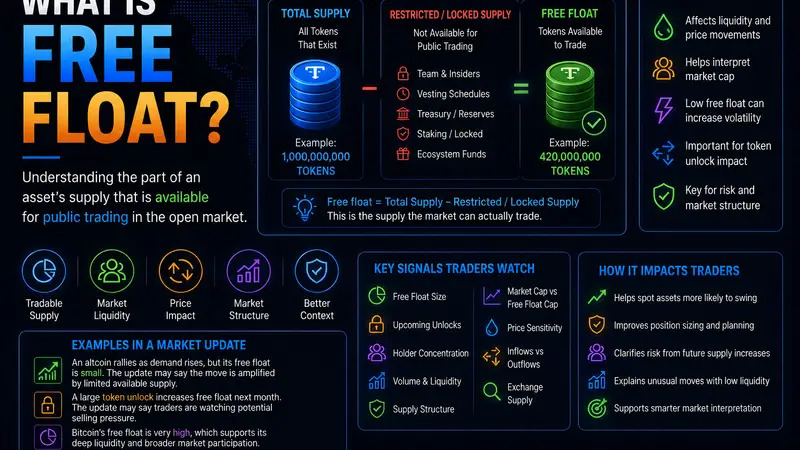
Free float shows how much supply is available to trade and why that can affect liquidity, volatility, and market structure.
Loading page…
Beginner-friendly crypto, macro, and market structure explainers for reading the Daily Pulse with more context.
Showing 1–12 of 270 guides
Free float shows how much supply is available to trade and why that can affect liquidity, volatility, and market structure.
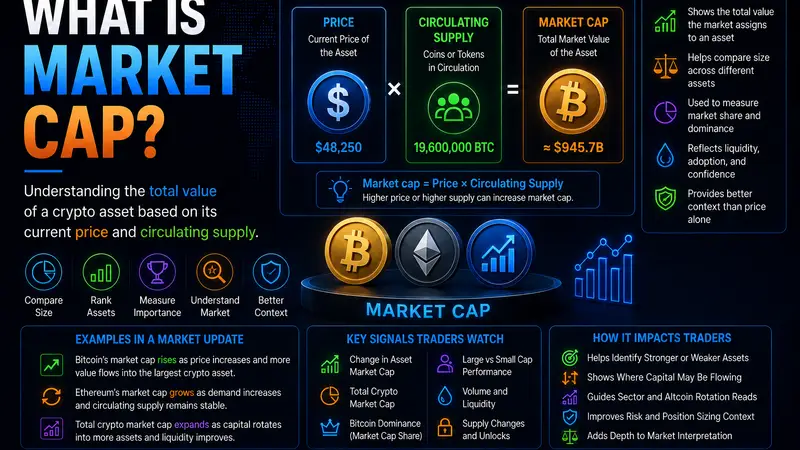
Market cap helps compare the total market value of crypto assets beyond price alone.
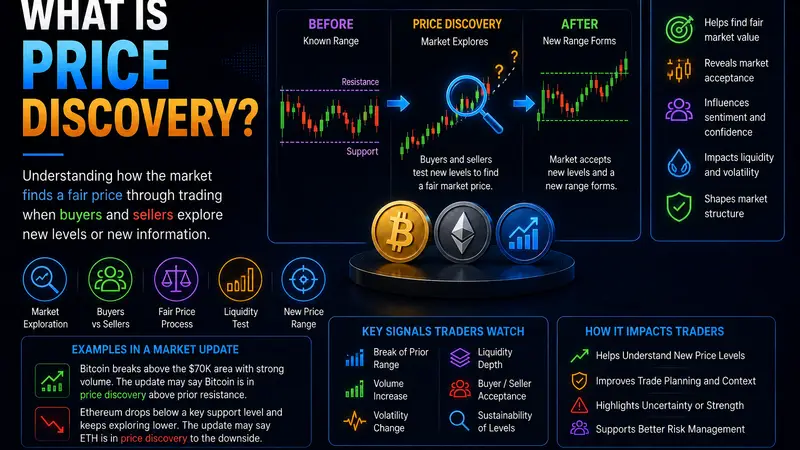
Price discovery is how buyers and sellers test new levels and work out where an asset may be fairly valued.
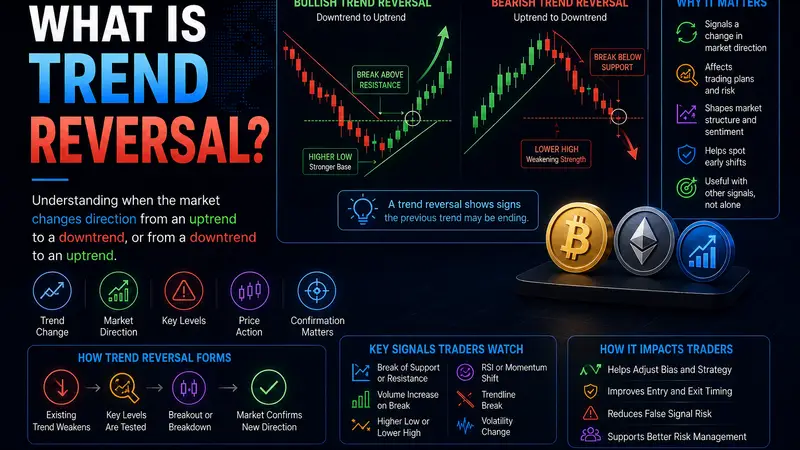
Trend reversal means a market may be changing direction, but traders usually look for confirmation before trusting the move.
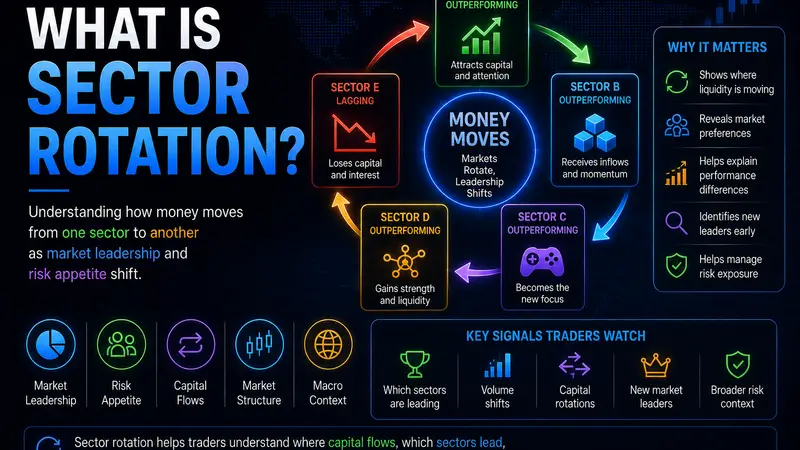
Sector rotation describes capital moving between different market sectors and can help explain changing market leadership.
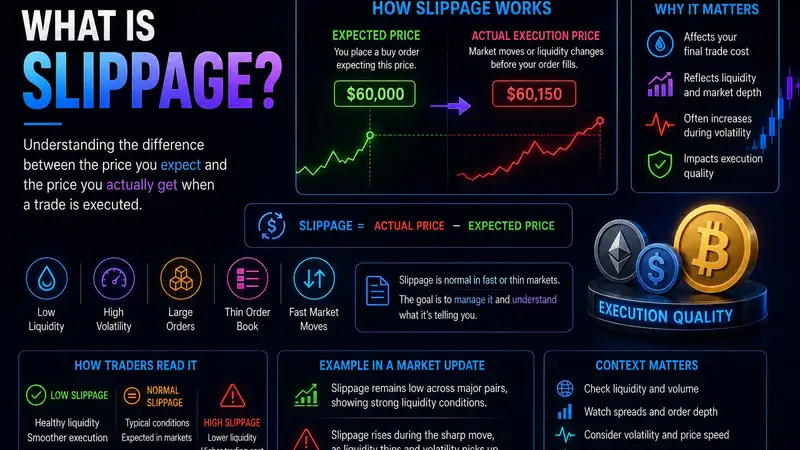
Slippage measures the difference between an expected trade price and the actual execution price in a market.
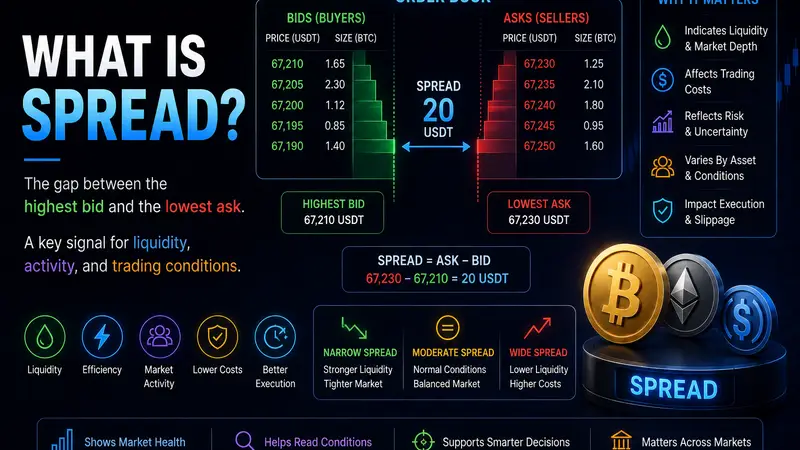
Spread is the difference between the bid and ask price and helps traders understand liquidity and trading conditions.
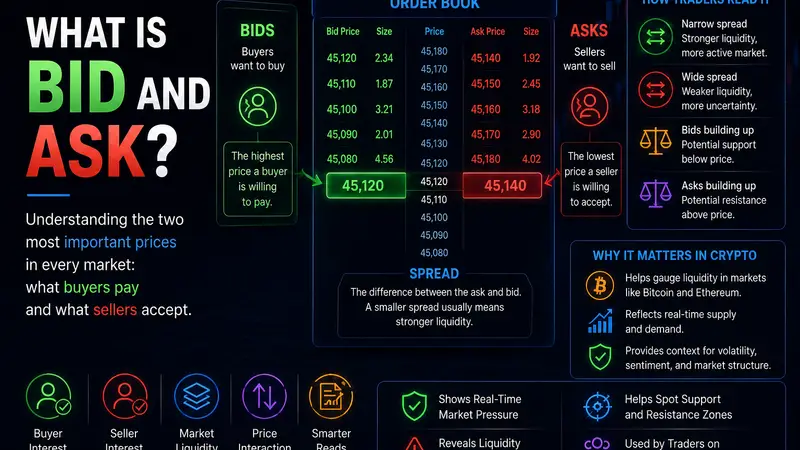
Bid and ask prices show where buyers and sellers are willing to trade and help explain liquidity and market activity.
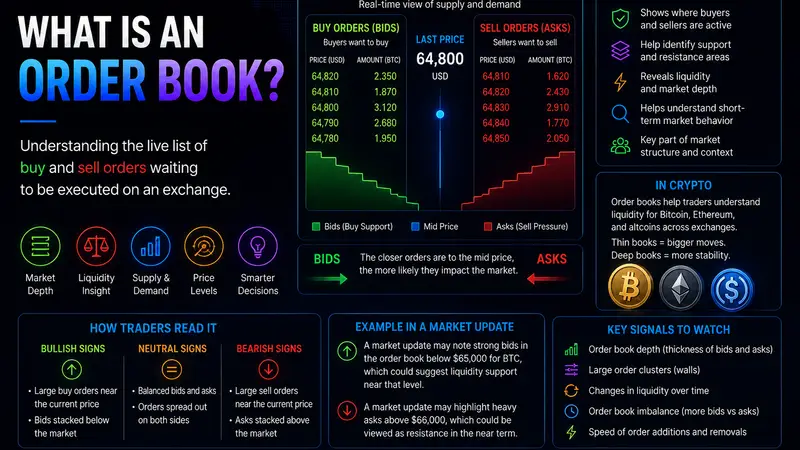
Order book data shows where buyers and sellers are placing orders and helps traders understand liquidity and market structure.
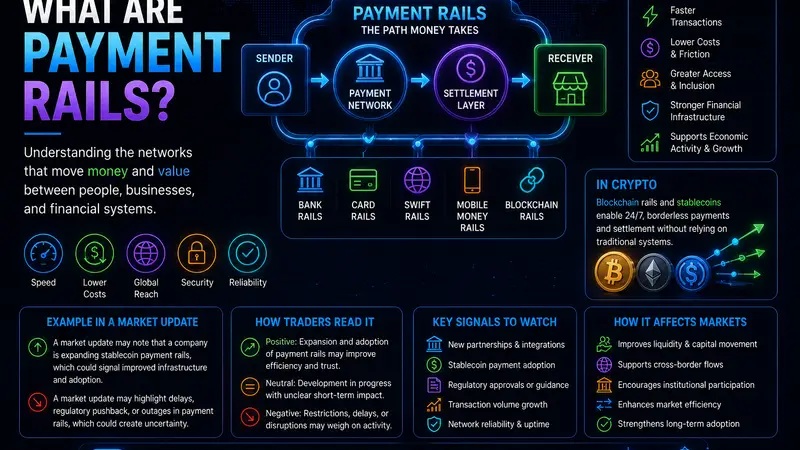
Payment rails are the networks that move money and value between users, businesses, and financial systems.
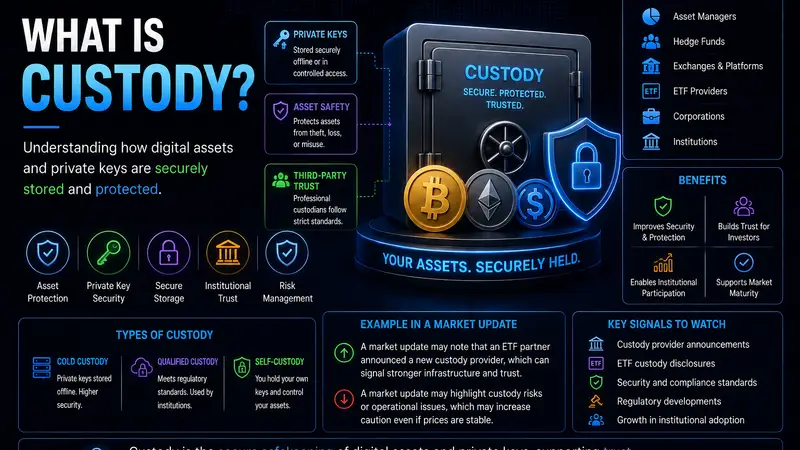
Custody refers to the safekeeping of digital assets and private keys, helping support security, trust, and market participation.
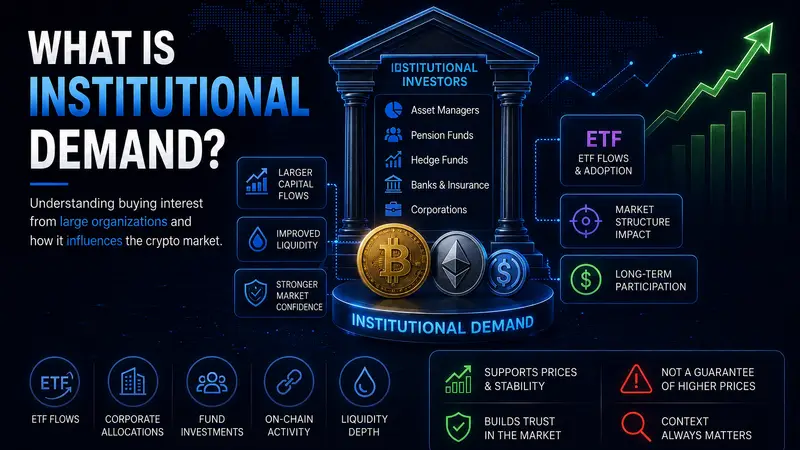
Institutional demand refers to buying interest from large investors and organizations and can influence liquidity, sentiment, and market structure.
Beginner-friendly crypto, macro, and market structure explainers for reading the Daily Pulse with more context.
Showing 169–180 of 270 guides
Free float shows how much supply is available to trade and why that can affect liquidity, volatility, and market structure.
Market cap helps compare the total market value of crypto assets beyond price alone.
Price discovery is how buyers and sellers test new levels and work out where an asset may be fairly valued.
Trend reversal means a market may be changing direction, but traders usually look for confirmation before trusting the move.
Sector rotation describes capital moving between different market sectors and can help explain changing market leadership.
Slippage measures the difference between an expected trade price and the actual execution price in a market.
Spread is the difference between the bid and ask price and helps traders understand liquidity and trading conditions.
Bid and ask prices show where buyers and sellers are willing to trade and help explain liquidity and market activity.
Order book data shows where buyers and sellers are placing orders and helps traders understand liquidity and market structure.
Payment rails are the networks that move money and value between users, businesses, and financial systems.
Custody refers to the safekeeping of digital assets and private keys, helping support security, trust, and market participation.
Institutional demand refers to buying interest from large investors and organizations and can influence liquidity, sentiment, and market structure.