What Is a Spread?
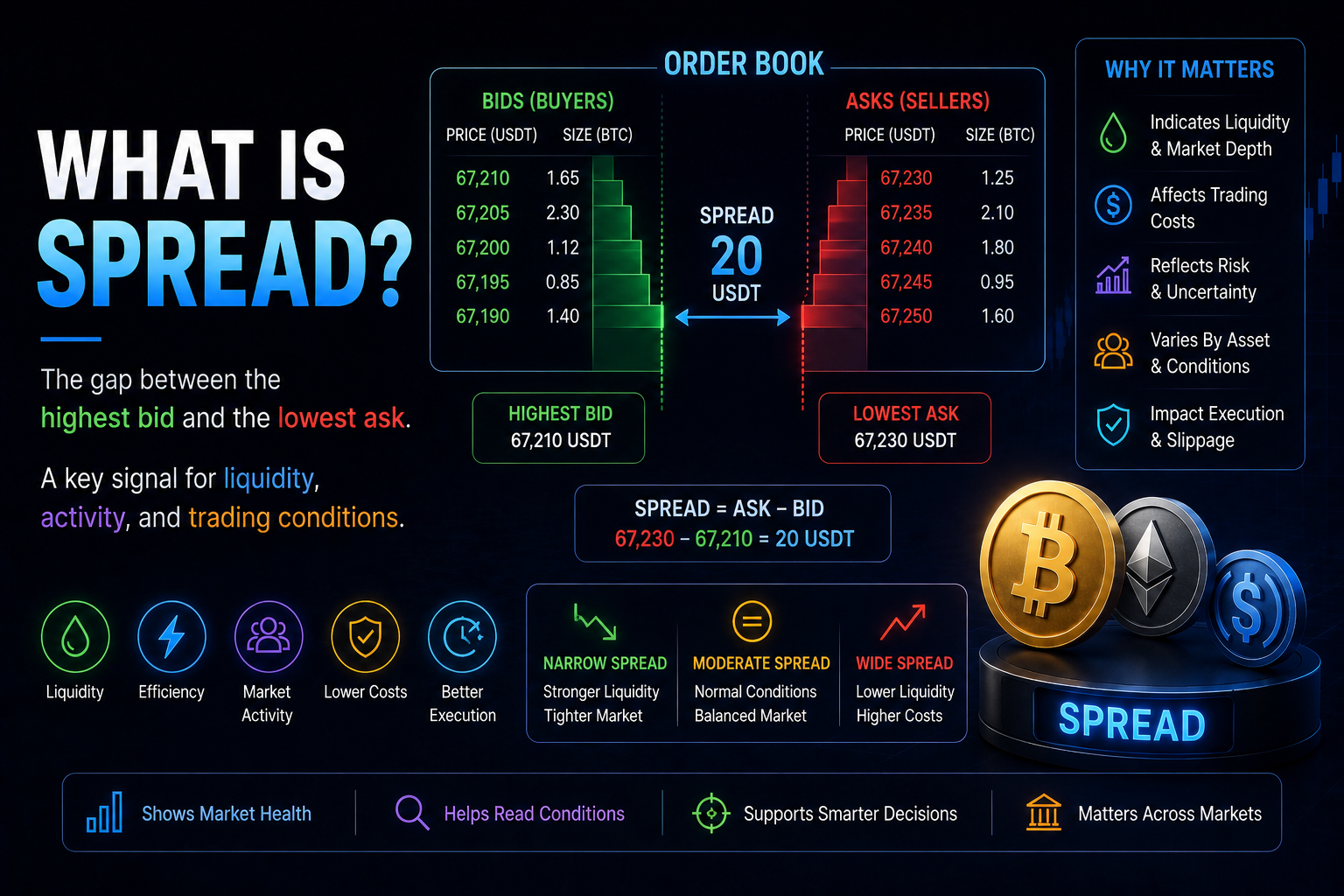
What Does Spread Mean?
Spread is one of the most common terms traders watch when buying or selling an asset. Crypto traders pay attention to the spread because it can provide clues about liquidity, trading activity, and how easily orders may be filled.
A spread exists in every active market and is especially important when reading order books, market structure, and trading conditions.
Simple definition
A spread is the difference between the highest bid price and the lowest ask price.
The bid is the highest price a buyer is willing to pay. The ask is the lowest price a seller is willing to accept. The gap between those two prices is called the spread.
Why spread matters
Spread matters because it can help show how active and liquid a market is.
A smaller spread usually means buyers and sellers are closely matched, while a wider spread may suggest lower activity, less liquidity, or greater uncertainty.
How traders usually read it
Traders often view a narrow spread as a sign of stronger liquidity and more efficient trading conditions.
A wider spread may indicate lower liquidity or increased caution among participants. The meaning depends on context and should be read alongside volume, volatility, and broader market conditions.
Why it matters for crypto
Crypto markets can experience changing liquidity throughout the day, making spreads an important part of market analysis.
Bitcoin and Ethereum often have relatively tight spreads because they are heavily traded, while smaller assets may experience wider spreads during quieter periods. Traders may use spreads as part of a broader read of liquidity and market structure.
Why context matters
Spread should not be used as a standalone market signal. A narrow spread does not guarantee price strength, and a wide spread does not guarantee price weakness.
Spread is most useful when viewed alongside volume, volatility, order book activity, liquidity conditions, and overall market structure.
Example in a market update
A market update might note that Bitcoin spreads remain tight, suggesting healthy liquidity and active participation.
Another update might mention widening spreads across smaller assets, suggesting traders are becoming more cautious or liquidity is becoming thinner.
Common signals traders watch
- Whether spreads are narrowing or widening
- Trading volume behind the spread
- Liquidity available in the order book
- Changes in volatility
- Differences between major and smaller assets
Key takeaway
Spread measures the gap between buyers and sellers and can help traders understand liquidity, trading conditions, and market activity.
Comments (0)
Join the discussion
Sign in or create a free account to leave a comment.
No comments yet. Be the first to comment!