May 20262 minBeginner
What Does Dominance Mean?
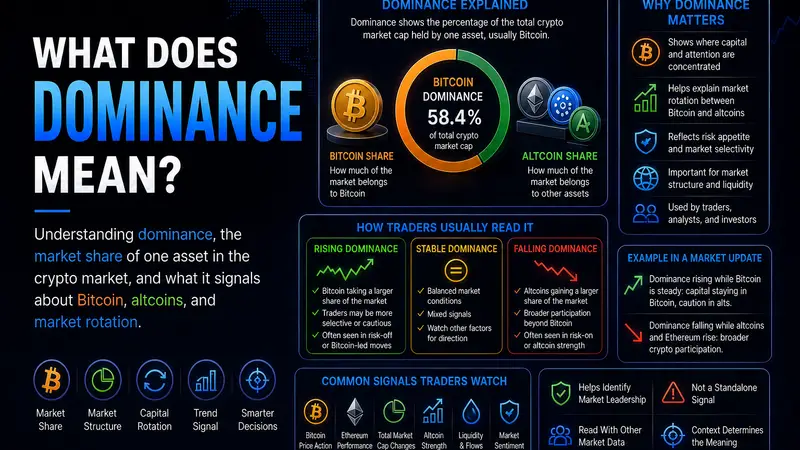
Dominance shows how much of the crypto market is held by one asset, usually Bitcoin, and helps traders read market rotation.
Loading page…
Beginner-friendly crypto, macro, and market structure explainers for reading the Daily Pulse with more context.
Showing 1–12 of 270 guides
Dominance shows how much of the crypto market is held by one asset, usually Bitcoin, and helps traders read market rotation.

Treasury refers to a government finance authority or debt market signal that can affect rates, liquidity, regulation, and crypto sentiment.
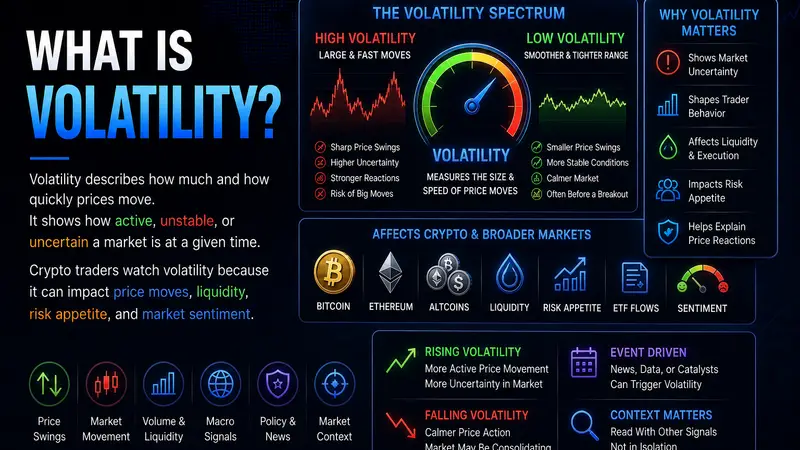
Volatility means how much and how quickly prices move, helping traders understand uncertainty and market risk.
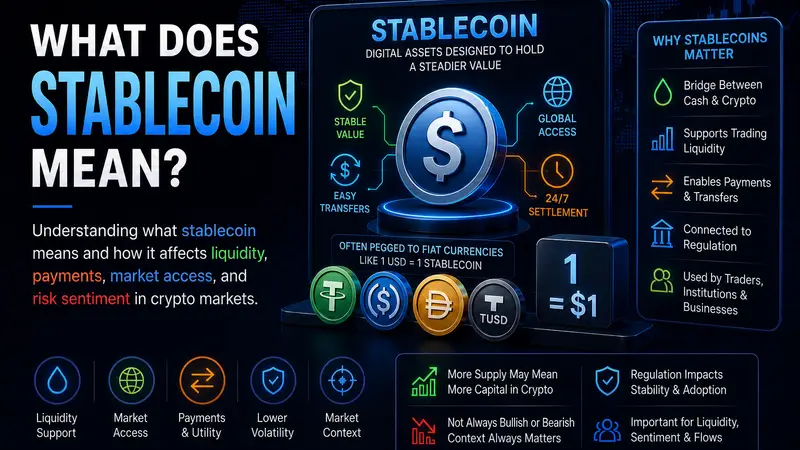
A stablecoin is a crypto asset designed to hold a steadier value, often by tracking a currency like the U.S. dollar.
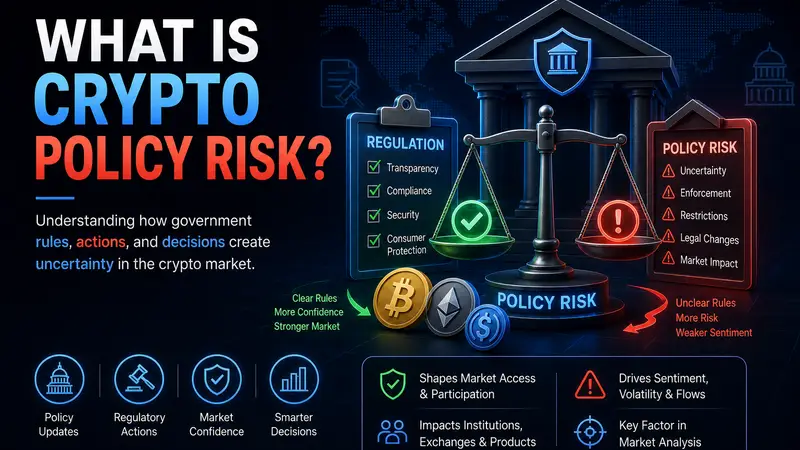
Crypto policy risk means the uncertainty that comes from changing rules, enforcement actions, or government decisions around crypto.
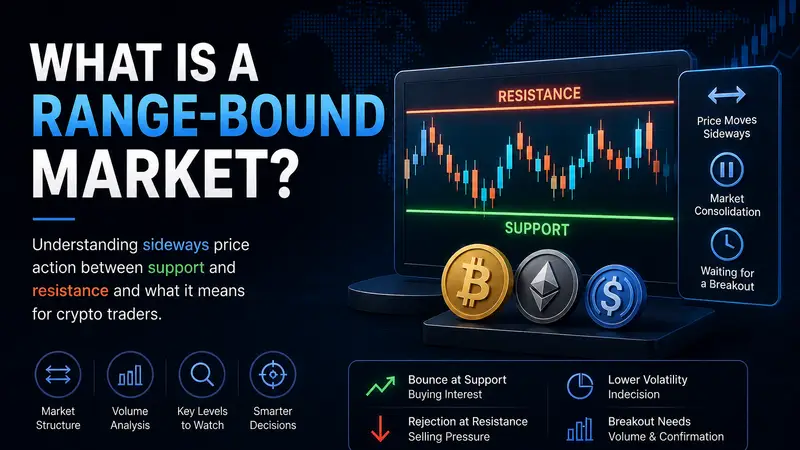
A range-bound market is when price moves between support and resistance instead of forming a clear trend higher or lower.
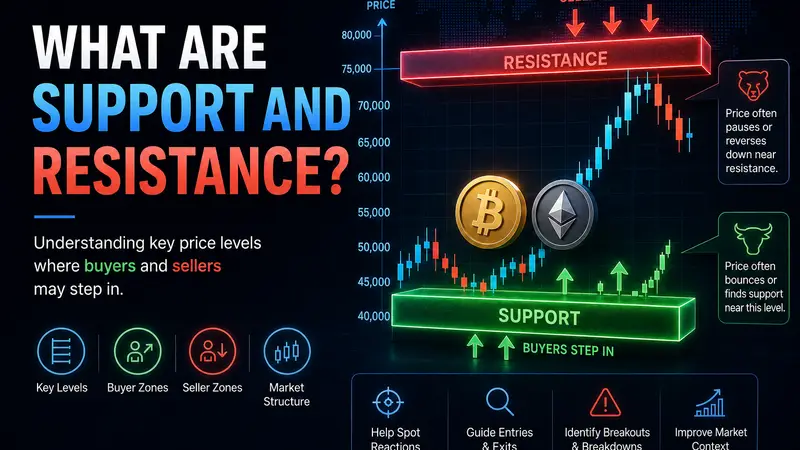
Support and resistance are price areas where buyers or sellers may become more active, helping traders understand key market levels.
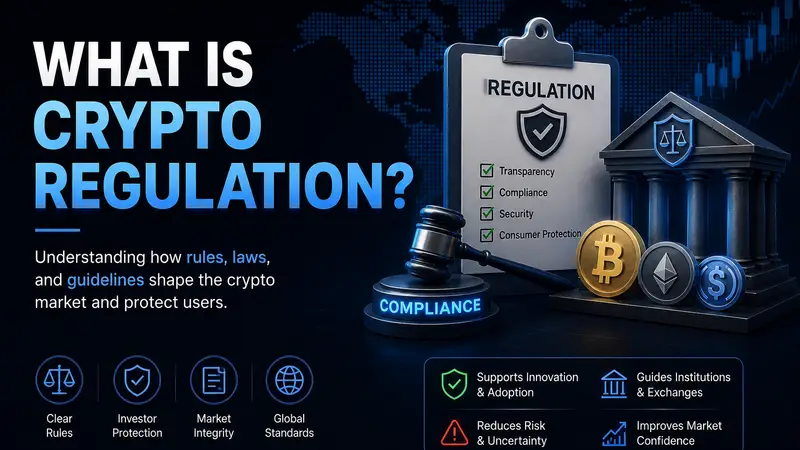
Crypto regulation refers to rules for crypto markets, exchanges, payments, custody, stablecoins, and how digital assets can be used.
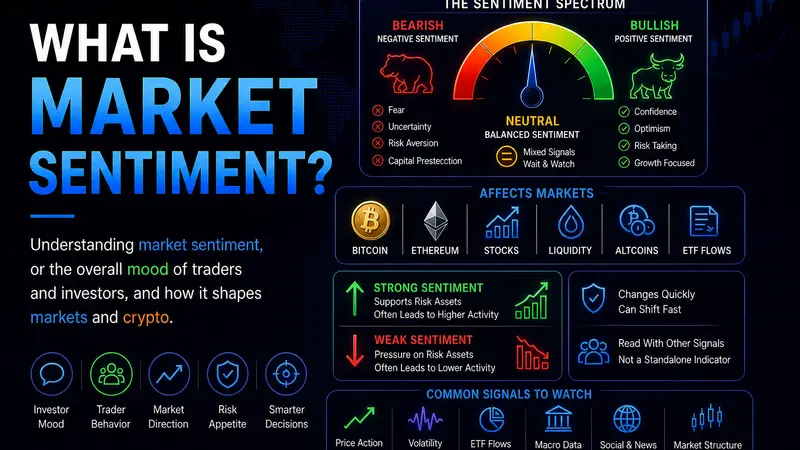
Market sentiment describes the overall mood of traders and investors, which can shape risk appetite, volatility, and crypto behavior.
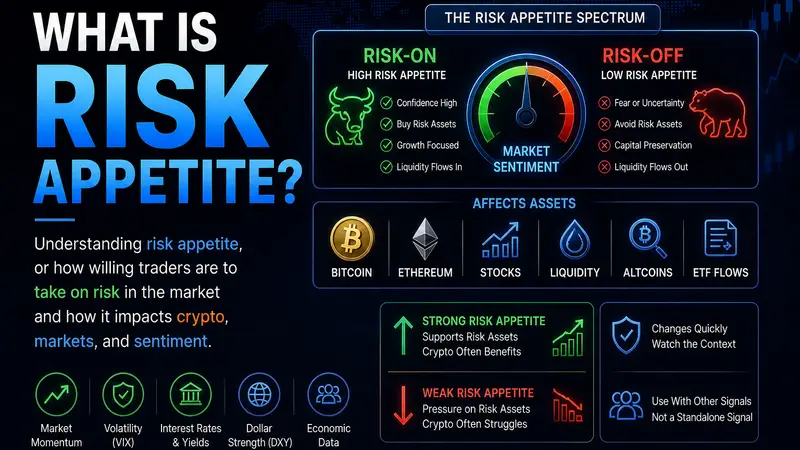
Risk appetite describes how willing traders are to hold higher-risk assets like stocks, Bitcoin, Ethereum, and other crypto assets.
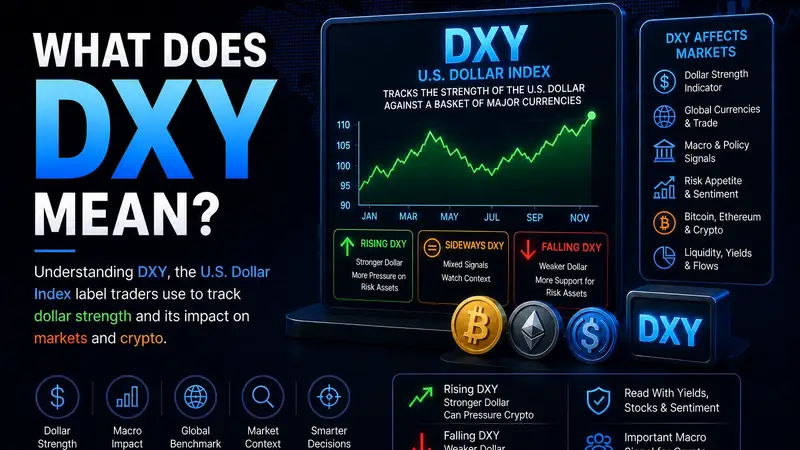
DXY is a dollar index ticker that helps traders track U.S. dollar strength and its impact on risk appetite and crypto markets.
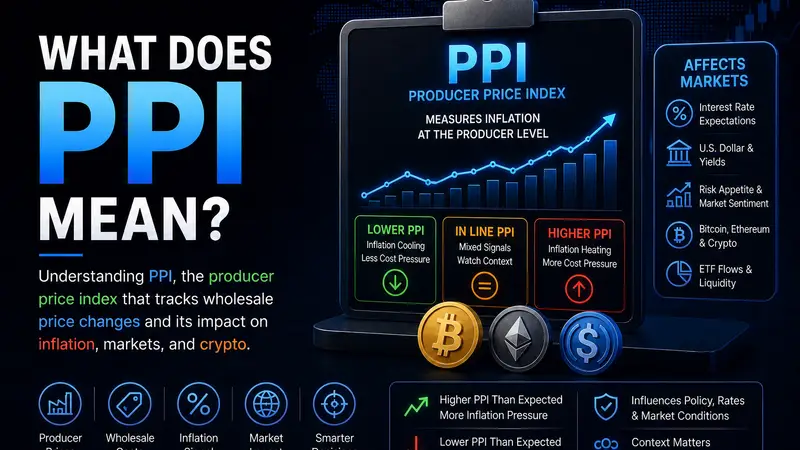
PPI is an inflation report that tracks producer prices and can influence interest-rate expectations, yields, and risk appetite.
Beginner-friendly crypto, macro, and market structure explainers for reading the Daily Pulse with more context.
Showing 253–264 of 270 guides
Dominance shows how much of the crypto market is held by one asset, usually Bitcoin, and helps traders read market rotation.
Treasury refers to a government finance authority or debt market signal that can affect rates, liquidity, regulation, and crypto sentiment.
Volatility means how much and how quickly prices move, helping traders understand uncertainty and market risk.
A stablecoin is a crypto asset designed to hold a steadier value, often by tracking a currency like the U.S. dollar.
Crypto policy risk means the uncertainty that comes from changing rules, enforcement actions, or government decisions around crypto.
A range-bound market is when price moves between support and resistance instead of forming a clear trend higher or lower.
Support and resistance are price areas where buyers or sellers may become more active, helping traders understand key market levels.
Crypto regulation refers to rules for crypto markets, exchanges, payments, custody, stablecoins, and how digital assets can be used.
Market sentiment describes the overall mood of traders and investors, which can shape risk appetite, volatility, and crypto behavior.
Risk appetite describes how willing traders are to hold higher-risk assets like stocks, Bitcoin, Ethereum, and other crypto assets.
DXY is a dollar index ticker that helps traders track U.S. dollar strength and its impact on risk appetite and crypto markets.
PPI is an inflation report that tracks producer prices and can influence interest-rate expectations, yields, and risk appetite.