What Is Crypto Regulation?
What Does Crypto Regulation Mean?
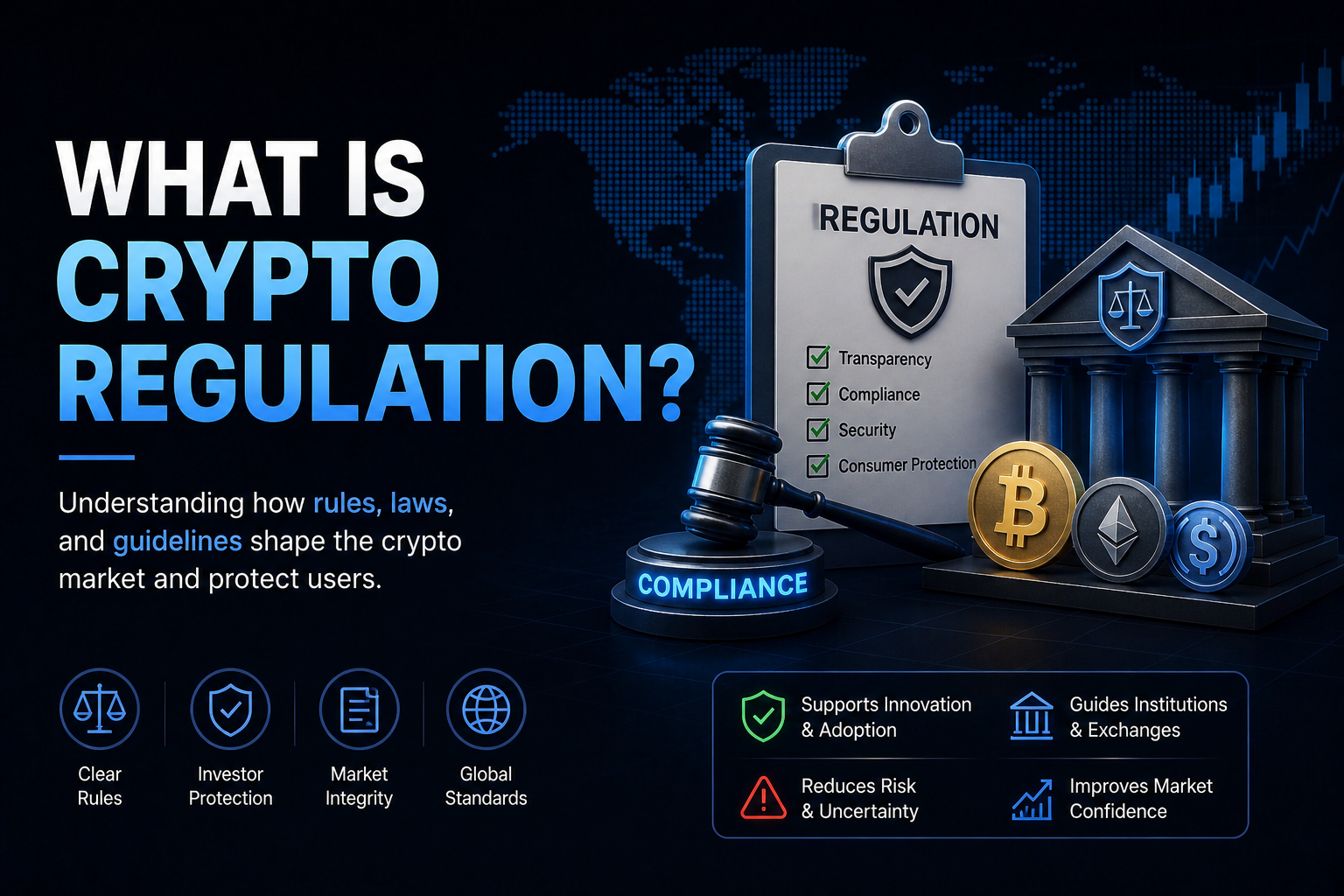
Crypto regulation refers to the rules, laws, and guidelines that apply to cryptocurrency markets and digital asset activity. Traders watch crypto regulation because policy changes can affect exchanges, stablecoins, custody, payments, investor access, and overall market confidence.
Simple definition
Crypto regulation means the rules that governments, agencies, or financial authorities create for crypto activity.
These rules can cover many areas, including trading platforms, investor protection, anti-money laundering requirements, stablecoins, token issuance, taxes, custody, and payment systems.
Why crypto regulation matters
Crypto regulation matters because it can shape how people and institutions are allowed to use digital assets.
Clearer rules can sometimes improve confidence by giving companies and investors a more predictable framework. Restrictive or uncertain rules can sometimes create caution because market participants may not know how a product, token, exchange, or service will be treated.
How traders usually read it
Traders usually read regulatory headlines based on whether they make the market feel clearer, more restrictive, or more uncertain.
A supportive rule can improve sentiment if it gives institutions more confidence to participate. A restrictive rule can pressure sentiment if it limits access, raises compliance costs, or creates uncertainty around a part of the market.
Why it matters for crypto
Crypto regulation can affect Bitcoin, Ethereum, stablecoins, ETF flows, exchanges, custody, and payment rails. It can also influence whether large institutions feel comfortable entering or expanding in the market.
Crypto traders may use regulatory headlines as part of a broader market read, especially when policy news appears alongside changes in price, volume, liquidity, or risk appetite.
Crypto regulation is not a standalone signal
Crypto regulation should not be used as a standalone price signal. A regulatory headline can sound important, but the market reaction depends on what the rule changes, who it affects, and whether traders already expected it.
Regulation is most useful when read alongside price action, ETF flows, exchange activity, volatility, liquidity, macro conditions, and market sentiment.
Example in a market update
If a country introduces clearer rules for crypto custody or stablecoins, traders may read it as a potential confidence boost for institutions and regulated market activity.
If a regulator restricts crypto payments, exchange access, or certain yield products, traders may read it as policy friction that could weigh on sentiment in that part of the market.
Common signals traders watch
- New rules for crypto exchanges or trading platforms
- Stablecoin regulation and payment-rail restrictions
- Custody rules for institutions and asset managers
- ETF approvals, inflows, or policy updates
- Enforcement actions, lawsuits, or agency guidance
Key takeaway
Crypto regulation shapes how digital assets can be used, traded, and trusted, so traders watch policy headlines as part of the broader market context.
Comments (0)
Join the discussion
Sign in or create a free account to leave a comment.
No comments yet. Be the first to comment!