May 20262 minBeginner
What Is Crypto Mining?
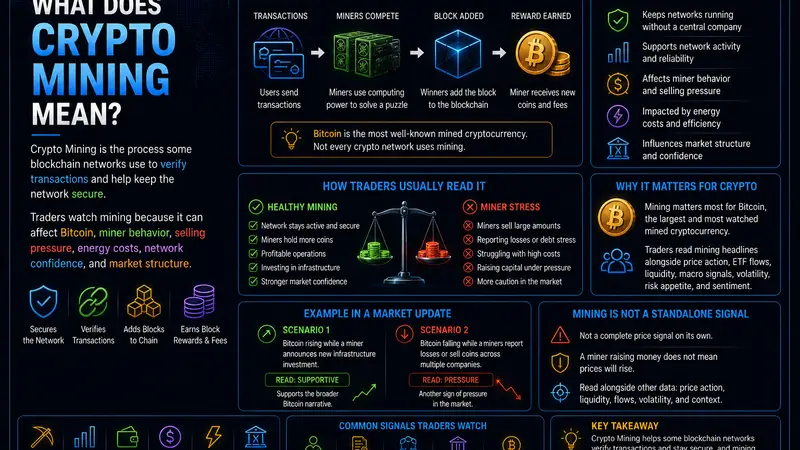
Crypto Mining is the process some blockchains use to verify transactions, secure the network, and create
018
Read guideLoading page…
Beginner-friendly crypto, macro, and market structure explainers for reading the Daily Pulse with more context.
Showing 1–12 of 324 guides
Crypto Mining is the process some blockchains use to verify transactions, secure the network, and create
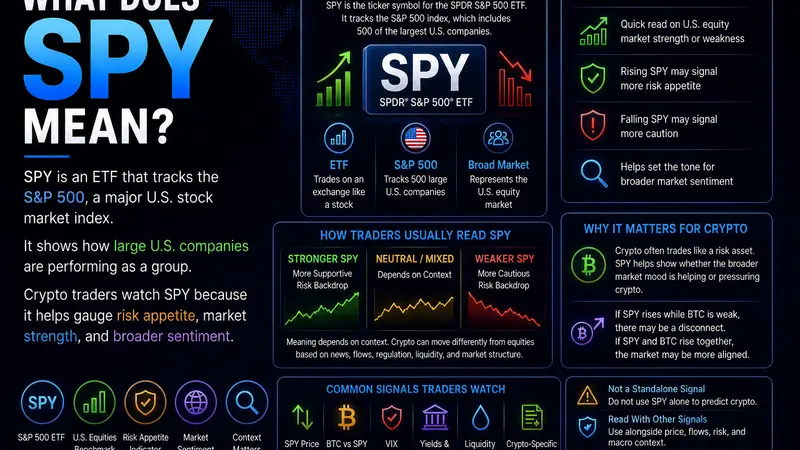
SPY is an ETF that tracks the S&P 500 and is often watched as a broad signal for risk appetite.
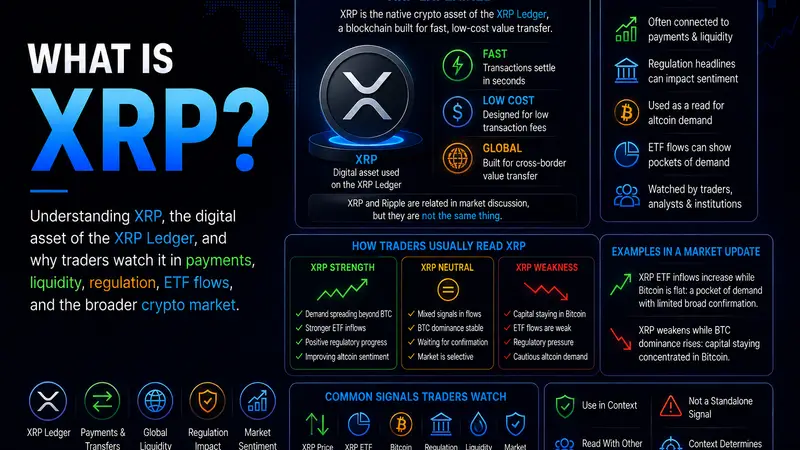
XRP is a crypto asset connected to the XRP Ledger and often discussed in payments, liquidity, regulation, and market updates.
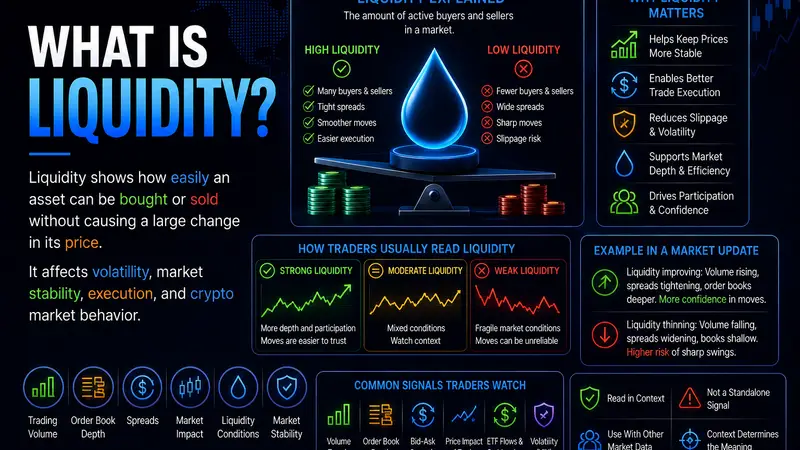
Liquidity shows how easily an asset can be bought or sold without strongly moving its price.
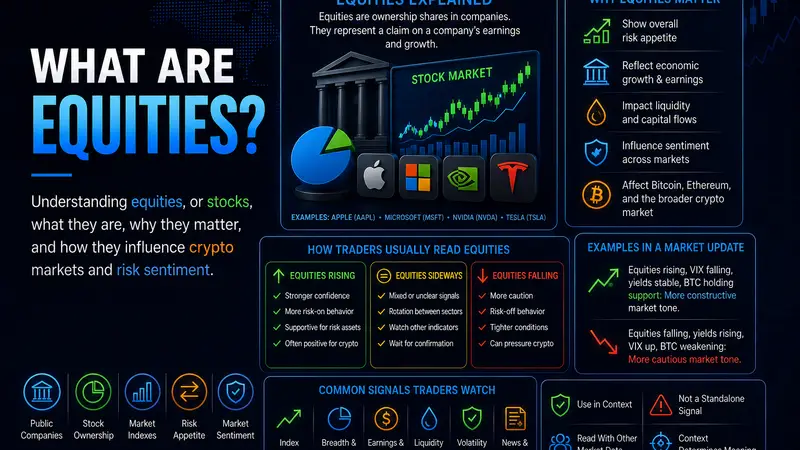
Equities are stocks or shares of companies, and they can help traders read risk appetite, sentiment, and crypto market context.
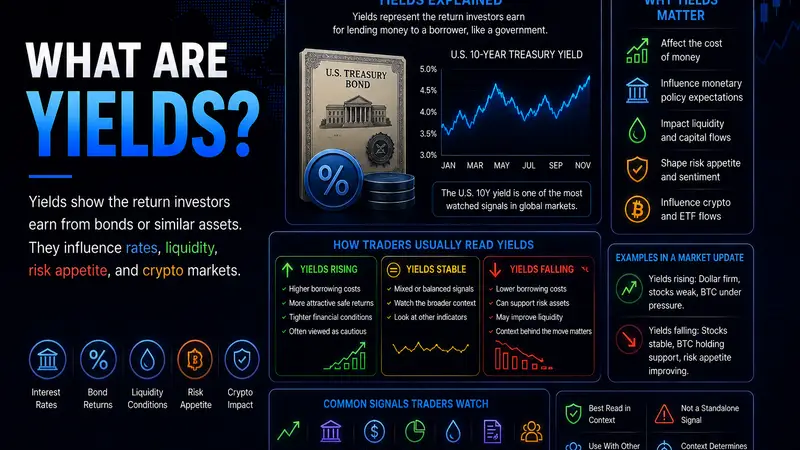
Yields show the return investors earn from bonds or similar assets and can affect rates, liquidity, risk appetite, and crypto sentiment.
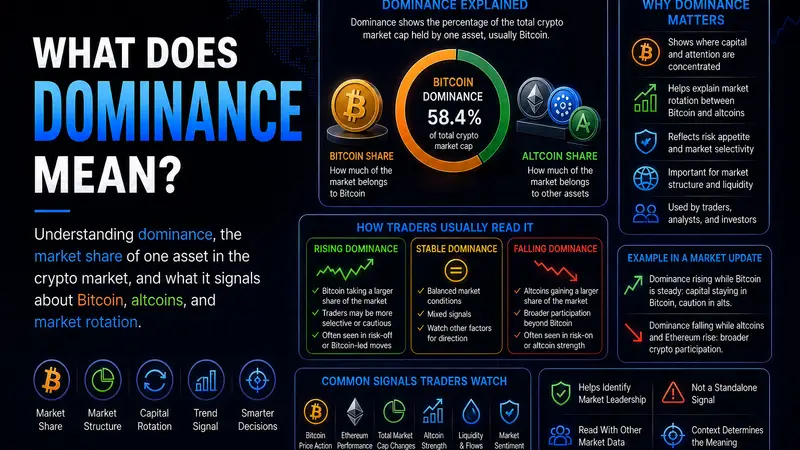
Dominance shows how much of the crypto market is held by one asset, usually Bitcoin, and helps traders read market rotation.

Treasury refers to a government finance authority or debt market signal that can affect rates, liquidity, regulation, and crypto sentiment.
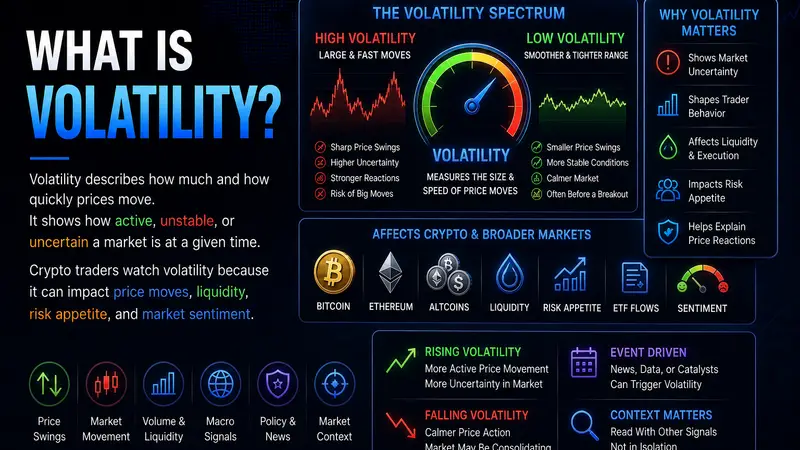
Volatility means how much and how quickly prices move, helping traders understand uncertainty and market risk.
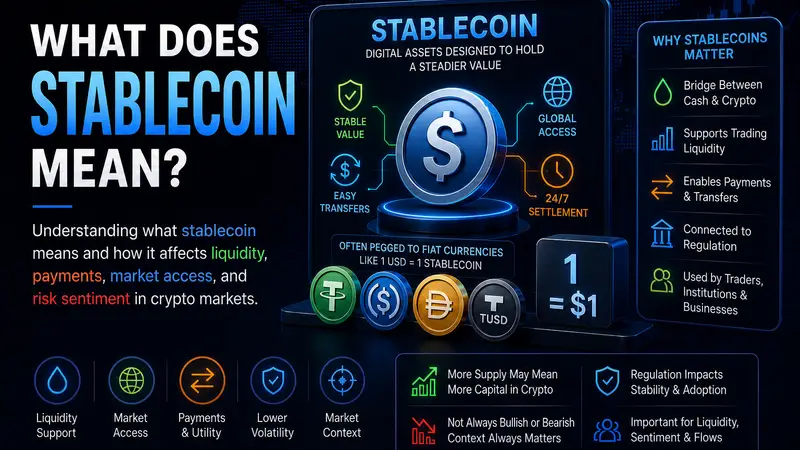
A stablecoin is a crypto asset designed to hold a steadier value, often by tracking a currency like the U.S. dollar.
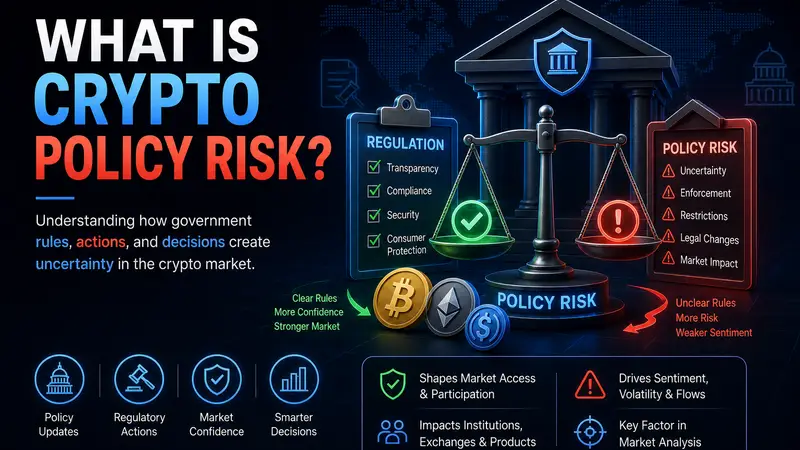
Crypto policy risk means the uncertainty that comes from changing rules, enforcement actions, or government decisions around crypto.
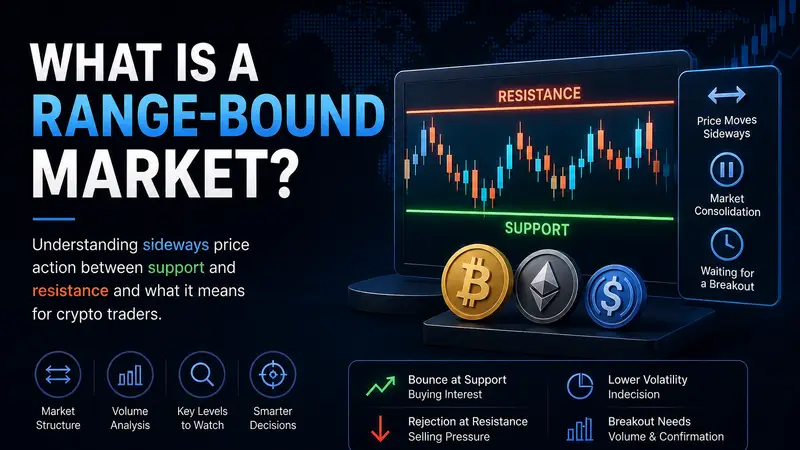
A range-bound market is when price moves between support and resistance instead of forming a clear trend higher or lower.
Beginner-friendly crypto, macro, and market structure explainers for reading the Daily Pulse with more context.
Showing 301–312 of 324 guides
Crypto Mining is the process some blockchains use to verify transactions, secure the network, and create
SPY is an ETF that tracks the S&P 500 and is often watched as a broad signal for risk appetite.
XRP is a crypto asset connected to the XRP Ledger and often discussed in payments, liquidity, regulation, and market updates.
Liquidity shows how easily an asset can be bought or sold without strongly moving its price.
Equities are stocks or shares of companies, and they can help traders read risk appetite, sentiment, and crypto market context.
Yields show the return investors earn from bonds or similar assets and can affect rates, liquidity, risk appetite, and crypto sentiment.
Dominance shows how much of the crypto market is held by one asset, usually Bitcoin, and helps traders read market rotation.
Treasury refers to a government finance authority or debt market signal that can affect rates, liquidity, regulation, and crypto sentiment.
Volatility means how much and how quickly prices move, helping traders understand uncertainty and market risk.
A stablecoin is a crypto asset designed to hold a steadier value, often by tracking a currency like the U.S. dollar.
Crypto policy risk means the uncertainty that comes from changing rules, enforcement actions, or government decisions around crypto.
A range-bound market is when price moves between support and resistance instead of forming a clear trend higher or lower.