Types of Crypto Tokens: Utility, Governance, Meme, and More
Types of Crypto Tokens: Utility, Governance, Meme and More
Beginning your journey into cryptocurrency might initially seem perplexing, especially because not all tokens do the same job. There are different types of crypto tokens, and each one plays a specific role inside a project or network. This guide aims to clarify the concept of crypto tokens, making it more accessible and less daunting.
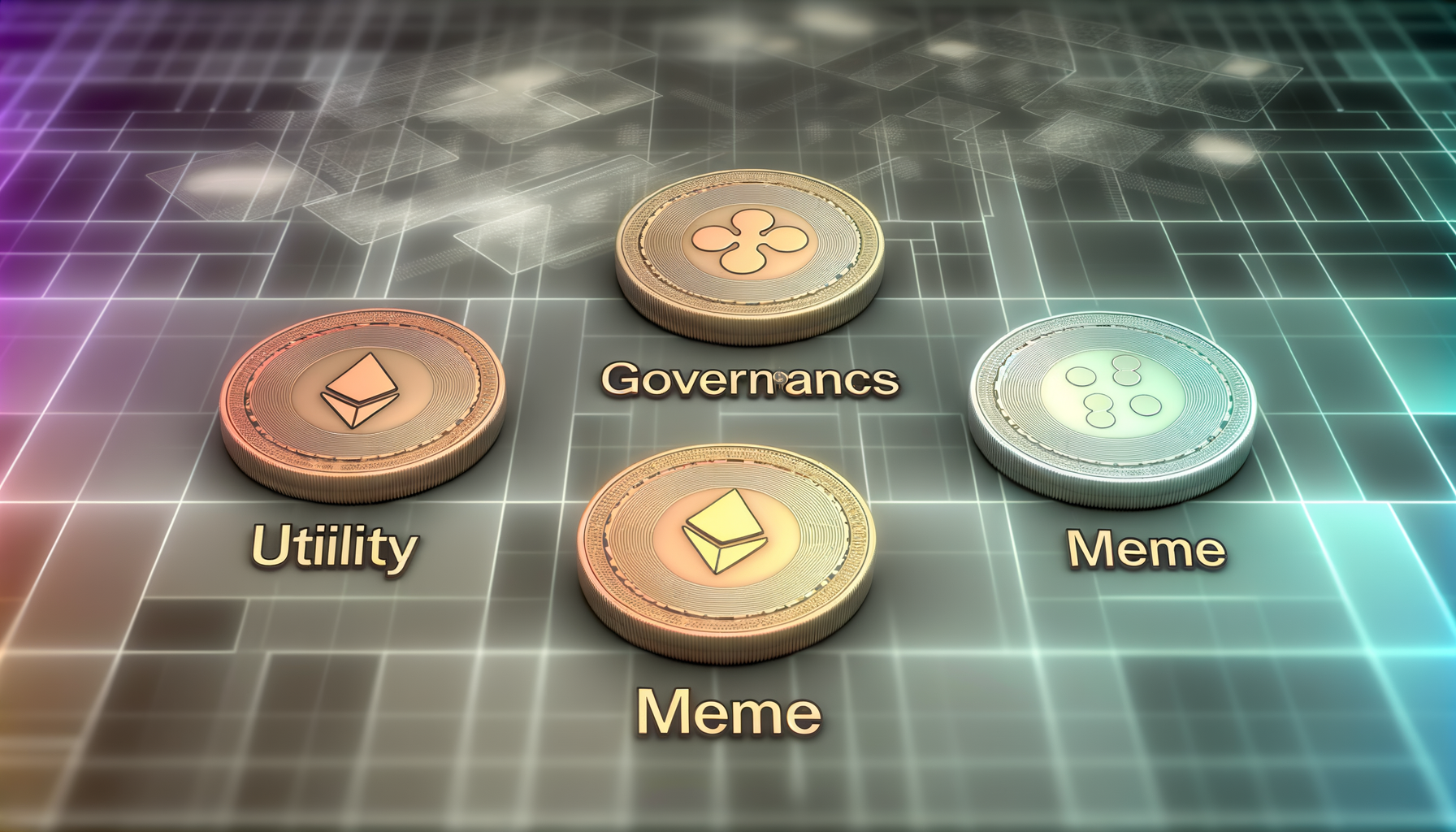
For instance: If a token is needed to pay fees inside an app, it is usually a utility token. If it lets you vote on changes, it is usually a governance token.
Utility tokens
Some tokens are used to access a product or service. These are often called utility tokens. In simple terms, they can function like a digital “key” or a unit used inside a platform, for example paying for features, usage, or fees. When evaluating utility tokens, their role within the system is usually the main focus.
Governance tokens
Then there are governance tokens, which are designed to give holders a vote in a project’s decisions. These tokens can allow users to participate in proposals, such as changing fees, adjusting rules, or choosing how a treasury is managed. The goal is to equip the community with the ability to make decisions, though the actual impact can differ based on the voting structure.
Meme tokens
Certain tokens are developed based on humor, societal trends, or digital communities. These are often called meme tokens. They may not have a strong utility built in, and they often depend heavily on attention and community momentum. Dogecoin and Shiba Inu are well-known examples that began as internet memes and later gained broader visibility.
Factors to consider
When comparing different types of crypto tokens, several practical risks and points of confusion frequently arise:
• Token labels can be misleading, a token called “utility” may still behave like a speculative asset
• Governance influence varies, voting can be dominated by a small number of large holders
• Meme tokens can be highly volatile, especially during hype cycles
• Lookalike tokens exist, similar names and symbols can cause mistakes
• Scams often target beginners, especially through fake links and impersonation
Quick safety checklist
If you want a simple way to think about the role of crypto tokens before you go further, this checklist can help:
• Can you explain what the token is used for in one sentence?
• Is it mainly a utility token, a governance token, or a meme token?
• If it is governance, do you understand who can vote and how voting power is distributed?
• Are you sure you are looking at the correct token, not a lookalike?
• Are you using official sources, not links from random messages?
Finally, a quick reminder: this article is for general education only. It is not financial advice. It is a safety focused guide so you can understand different types of crypto tokens before making your own decisions.
Terms in This Briefing
Quick explainers for concepts used in this post.
Comments (0)
Join the discussion
Sign in or create a free account to leave a comment.
No comments yet. Be the first to comment!