What Does a Yield Decline Mean?
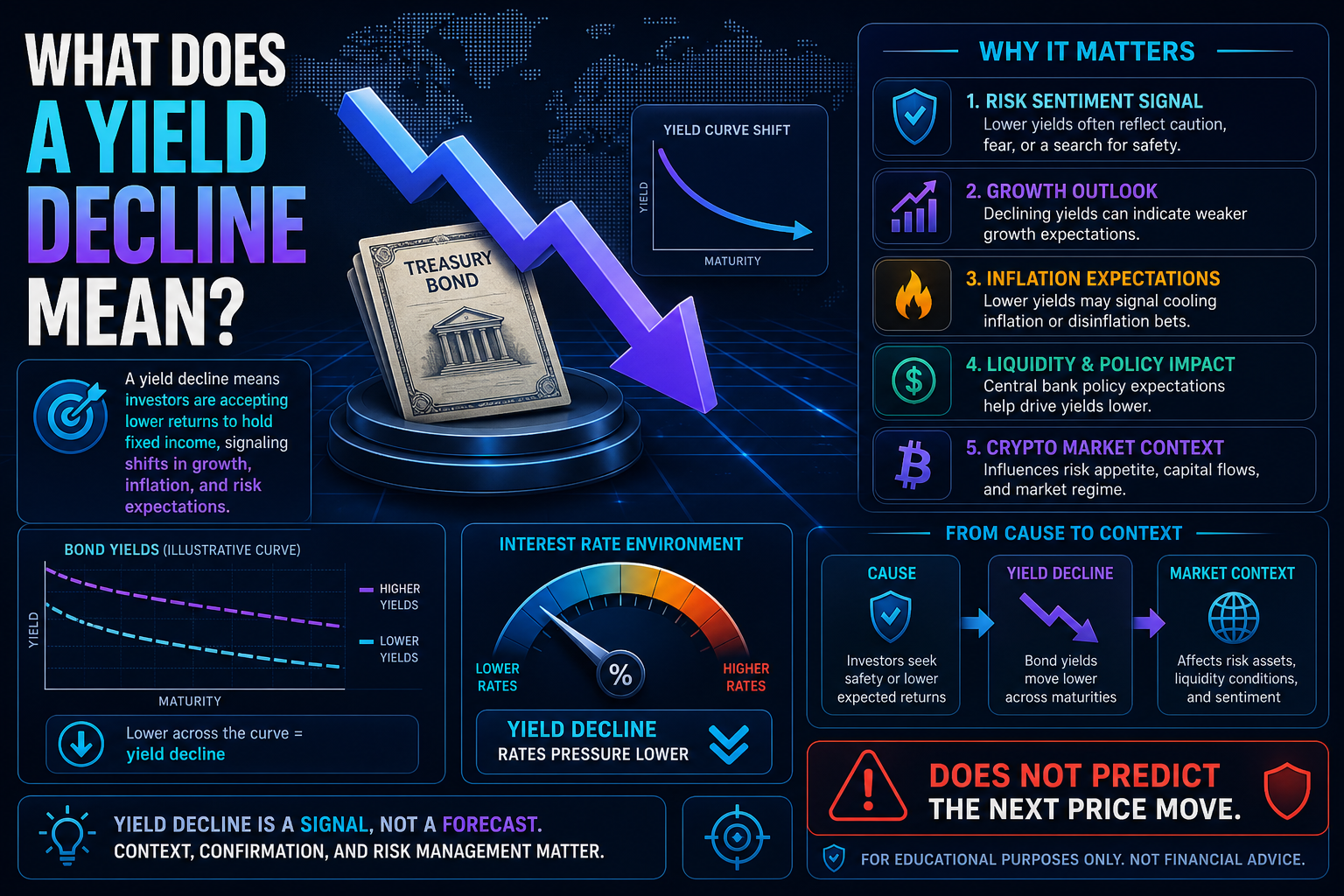
What Does a Yield Decline Mean?
A yield decline is a fall in bond yields, usually alongside rising bond prices. It can reflect changing expectations for growth, inflation, policy, or demand for safer and more liquid assets.
Why it matters
Lower yields may ease valuation pressure on future-oriented assets, but they can also reflect weaker economic expectations or risk aversion. The reason behind the move matters more than the yield direction alone.
Crypto context
Crypto may respond to lower yields through shifts in liquidity, rate expectations, and risk appetite. It can still diverge because of crypto-specific flows, regulation, or market structure.
Key takeaway
A yield decline describes easing bond yields and is useful macro context, not a standalone crypto signal.
Reading the wider context
Traders commonly ask which maturities are falling and why. A decline associated with easing inflation may carry a different message from one associated with weaker growth expectations or demand for safer assets. The speed of the move and the response of equities, currencies, and volatility can add useful context.
A yield decline can be temporary and can reverse as new data appears. Comparing it with policy expectations, the dollar, equity breadth, and crypto flows helps avoid using a single macro movement as a complete explanation.
Common signals people watch
- Treasury yields across maturities
- Dollar strength
- Equity and volatility response
- Inflation expectations
- Crypto liquidity and leverage
A practical way to use the concept
Rather than reacting to one headline or one market session, many readers follow the trend over several periods. They compare market participation, liquidity, and the reaction in related assets. This makes it easier to tell the difference between a temporary move and a broader change in conditions.
No single market indicator can explain all crypto movements. Macro relationships can change quickly, especially around economic releases and major policy events. The concept is most valuable as a question to investigate, not an answer by itself.
What can change the reading
Market interpretation can change when new inflation or labor data appears, when policy guidance shifts, or when investors adjust their demand for liquidity. This is why a yield decline is usually read as an evolving backdrop rather than a fixed signal.
It is also useful to distinguish a move in one trading session from a sustained trend. Price action, volume, and the response in related markets can provide confirmation or show that the initial interpretation is changing.
Comments (0)
Join the discussion
Sign in or create a free account to leave a comment.
No comments yet. Be the first to comment!