What Are Tokenized Treasuries?
What Are Tokenized Treasuries?
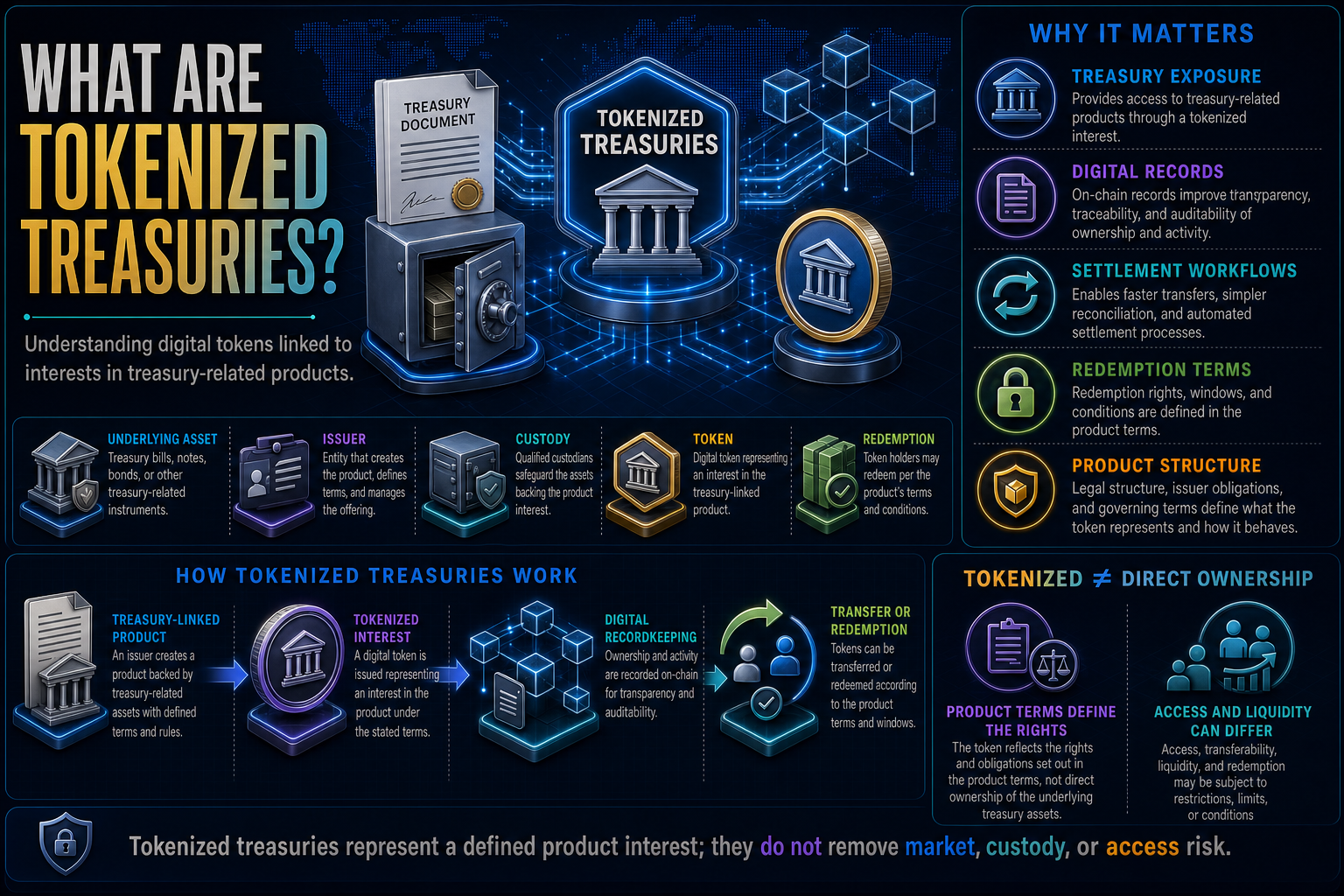
Tokenized treasuries are blockchain-based tokens or records linked to an interest in government treasury instruments or products that hold them.
Simple definition
The token is designed to represent a defined claim or interest, while the underlying treasury exposure remains part of an off-chain financial and legal structure. The details vary by product.
Why they matter
They are an example of how traditional financial instruments can be connected to blockchain-based recordkeeping, settlement, and distribution. They may also be used in on-chain treasury management or collateral workflows.
How people usually read them
People focus on what the token holder owns or is entitled to, who holds the underlying instruments, how transfers work, and what restrictions apply. A tokenized product may not offer the same access or liquidity as the underlying market.
Why it matters for crypto
Tokenized treasuries can connect on-chain capital with familiar treasury exposure. They highlight the role of custodians, issuers, permissions, and redemption mechanics in RWA products.
Not a standalone signal
A tokenized treasury product is not the same as direct ownership of every treasury instrument. Product terms, fees, access, liquidity, and credit or operational considerations still matter.
Example in a market update
If a blockchain-based product gives eligible users digital access to a treasury-linked fund or instrument, an update may describe it as tokenized treasuries.
Common signals people watch
- Underlying treasury exposure
- Issuer and custodian structure
- Tokenholder rights
- Redemption and transfer terms
- Eligibility and access rules
Why product structure matters
Tokenized treasuries can use different structures. One product may represent a fund interest, another may provide a contractual claim, and another may use a different form of digital recordkeeping. The token’s appearance does not explain the full structure.
Access can also be limited by geography, platform rules, investor eligibility, or transfer permissions. These practical details determine who can hold, transfer, or redeem the product.
Questions to keep in mind
What treasury-linked exposure does the product provide, and what are the holder’s rights and redemption process? These questions matter more than the tokenized label alone.
A digital token can streamline recordkeeping without changing the product’s underlying financial features. Reading the specific documents remains important for understanding the exposure and access provided.
This is especially important when comparing products, because their permitted users, custody arrangements, and methods of transfer may not be the same.
Key takeaway
Tokenized treasuries use digital tokens to represent a defined interest in treasury-linked products, while the underlying structure remains important.
Comments (0)
Join the discussion
Sign in or create a free account to leave a comment.
No comments yet. Be the first to comment!