What Are Tokenized Reserves?
What Do Tokenized Reserves Mean?
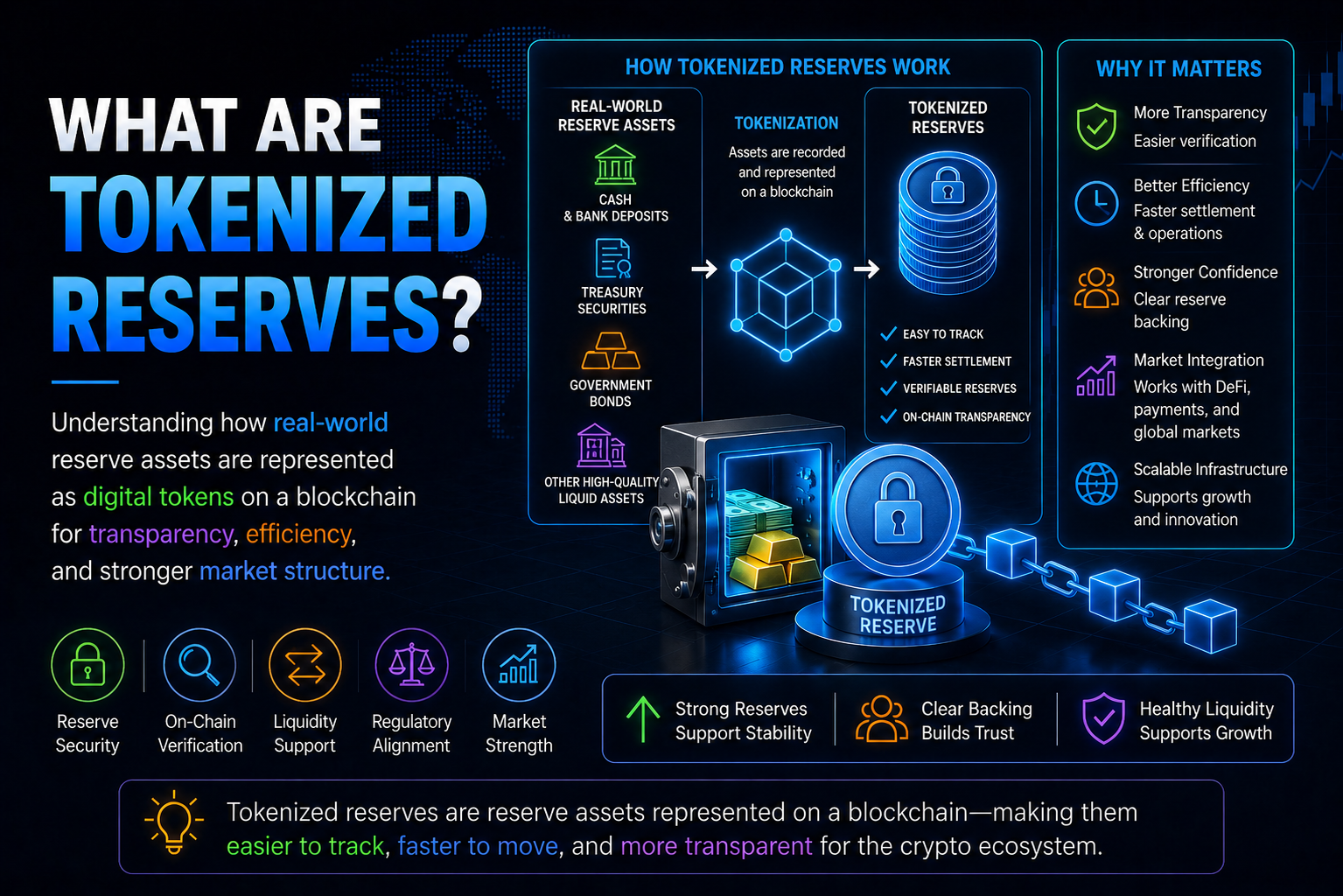
Tokenized reserves are reserve assets represented on a blockchain or digital ledger. Crypto traders may watch tokenized reserves because they can affect stablecoins, liquidity, transparency, regulation, investor confidence, and broader market structure.
Simple definition
Tokenized reserves are reserves that are represented as digital tokens or blockchain-based records.
In simple terms, reserves are assets held to support something else, such as a stablecoin, fund, or payment product. When those reserves are tokenized, they are represented digitally so they may be easier to track, transfer, verify, or use in blockchain-based systems.
Why tokenized reserves matter
Tokenized reserves matter because reserves are part of trust. If a stablecoin or digital asset product says it is backed by assets, traders want to understand what those assets are, how they are held, and whether they can support the product during stress.
Tokenization can make reserve-related activity easier to monitor or integrate into digital markets. But it does not automatically remove risk, because the quality, custody, reporting, regulation, and redemption process still matter.
How traders usually read it
Traders may read tokenized reserves as constructive when they suggest better transparency, stronger settlement systems, or more efficient movement of reserve assets.
They may read the same idea more cautiously if the reserve assets are unclear, the issuer is weak, the legal structure is uncertain, or the tokens are difficult to redeem. The meaning depends on what is being tokenized and who controls the reserve system.
Why it matters for crypto
Tokenized reserves matter for crypto because stablecoins, tokenized funds, payment systems, and real-world asset products often depend on the strength and clarity of their reserves.
Crypto traders may read tokenized reserve headlines alongside Bitcoin price action, Ethereum activity, stablecoin liquidity, ETF flows, regulation, market sentiment, and broader market structure. Reserve quality can shape confidence, especially when liquidity or trust becomes a focus.
Tokenized reserves are not a standalone signal
Tokenized reserves should not be used alone as a price signal. A reserve system being tokenized does not automatically mean a stablecoin, token, company, or market will become safer or stronger.
Tokenized reserves are most useful when read alongside reserve quality, issuer transparency, redemption rules, custody, regulation, liquidity, market demand, and price action in Bitcoin, Ethereum, and related assets.
Example in a market update
If a stablecoin issuer announces tokenized reserves with clear reporting and strong custody, traders may read the headline as supportive for market confidence.
If a reserve tokenization headline appears during weak liquidity, regulatory stress, or redemption concerns, traders may read it more cautiously until the structure is clearer.
Common signals traders watch
- What assets are being used as reserves
- Whether the reserve structure is transparent and easy to verify
- Whether users can redeem tokens clearly and reliably
- Whether regulation and custody arrangements look stable or uncertain
- Whether stablecoin liquidity, ETF flows, Bitcoin, Ethereum, and market sentiment support the broader read
Key takeaway
Tokenized reserves are reserve assets represented digitally, and traders watch them because they can affect transparency, stablecoin confidence, liquidity, regulation, and crypto market structure.
Comments (0)
Join the discussion
Sign in or create a free account to leave a comment.
No comments yet. Be the first to comment!