What Are Tokenized Assets?
What Does Tokenized Assets Mean?
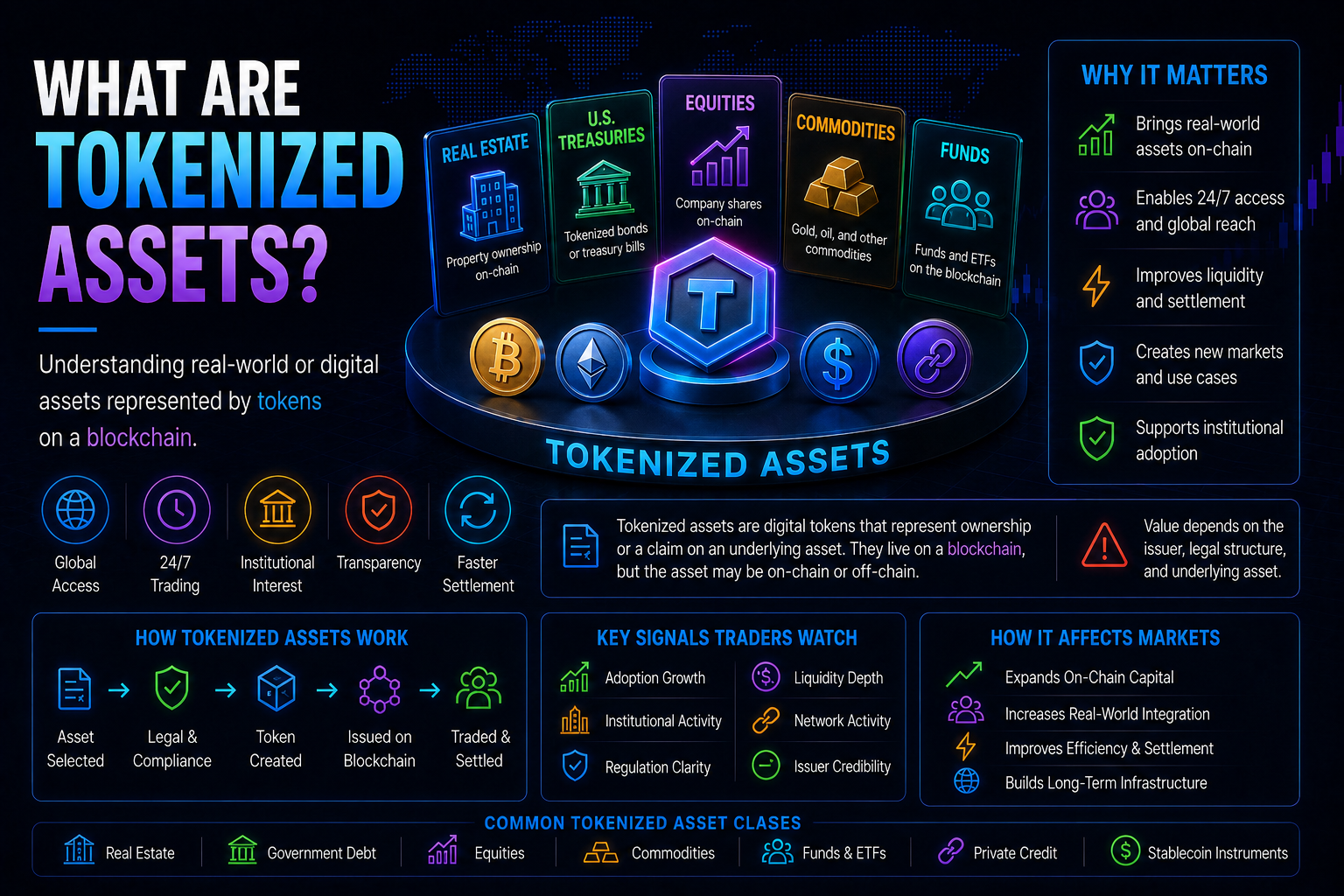
Tokenized assets are real-world or digital assets represented as tokens on a blockchain. Crypto readers watch tokenized assets because they can affect market structure, liquidity, institutional adoption, settlement, and how traditional finance connects with crypto networks.
Simple definition
Tokenized assets are assets represented by digital tokens on a blockchain.
The asset can be something financial, such as a fund, bond, treasury product, or stablecoin-like instrument. It can also be a digital asset or a claim connected to an off-chain asset, depending on the structure and rules behind it.
Why tokenized assets matters
Tokenized assets matter because they show how blockchain systems may be used beyond simple coin trading. They can connect traditional assets, settlement systems, custody, payments, and on-chain markets.
When tokenization activity grows, traders may read it as a sign that institutions, builders, or financial platforms are exploring more blockchain-based infrastructure. When adoption is slow or regulation is unclear, traders may stay more cautious.
How traders usually read it
Tokenized asset headlines are usually read as a market structure signal, not a simple bullish or bearish price signal.
Positive headlines may suggest stronger infrastructure, institutional interest, or more use cases for crypto networks. Cautious headlines may point to regulatory questions, custody risk, liquidity limits, or uncertainty about how the tokens are backed and managed.
Why it matters for crypto
Tokenized assets matter for crypto because they can bring traditional market activity closer to blockchain rails. This can affect Ethereum, other smart contract networks, stablecoin infrastructure, liquidity, custody, and settlement narratives.
Crypto traders may use tokenized asset headlines as part of a broader read on adoption, regulation, institutional demand, and whether blockchain networks are being used for more than speculation.
Tokenized assets are not a standalone signal
Tokenized assets should not be used as a standalone market signal. A tokenization headline does not automatically mean higher prices, stronger liquidity, or lower risk.
Tokenized assets are most useful when read alongside regulation, custody quality, issuer credibility, liquidity conditions, network activity, stablecoin flows, Bitcoin trend, Ethereum activity, and broader risk appetite.
Example in a market update
If a major platform expands tokenized asset access while Ethereum activity is firm and liquidity is improving, traders may read the headline as supportive for market structure.
If tokenized asset growth appears alongside regulatory uncertainty, weak liquidity, or cautious risk appetite, traders may treat the theme as interesting but not enough to change the broader market read.
Common signals traders watch
- Whether tokenized assets are gaining real usage or only headline attention
- Whether the issuer, custody setup, and backing are clear
- Whether regulation is becoming clearer or more uncertain
- Whether liquidity and settlement activity are improving
- Whether Ethereum or other smart contract networks are seeing stronger activity
Key takeaway
Tokenized assets help explain how real-world and digital assets can move onto blockchain rails, but their market meaning depends on liquidity, regulation, custody, adoption, and broader crypto conditions.
Comments (0)
Join the discussion
Sign in or create a free account to leave a comment.
No comments yet. Be the first to comment!