What Is Tokenization?
What Is Tokenization?
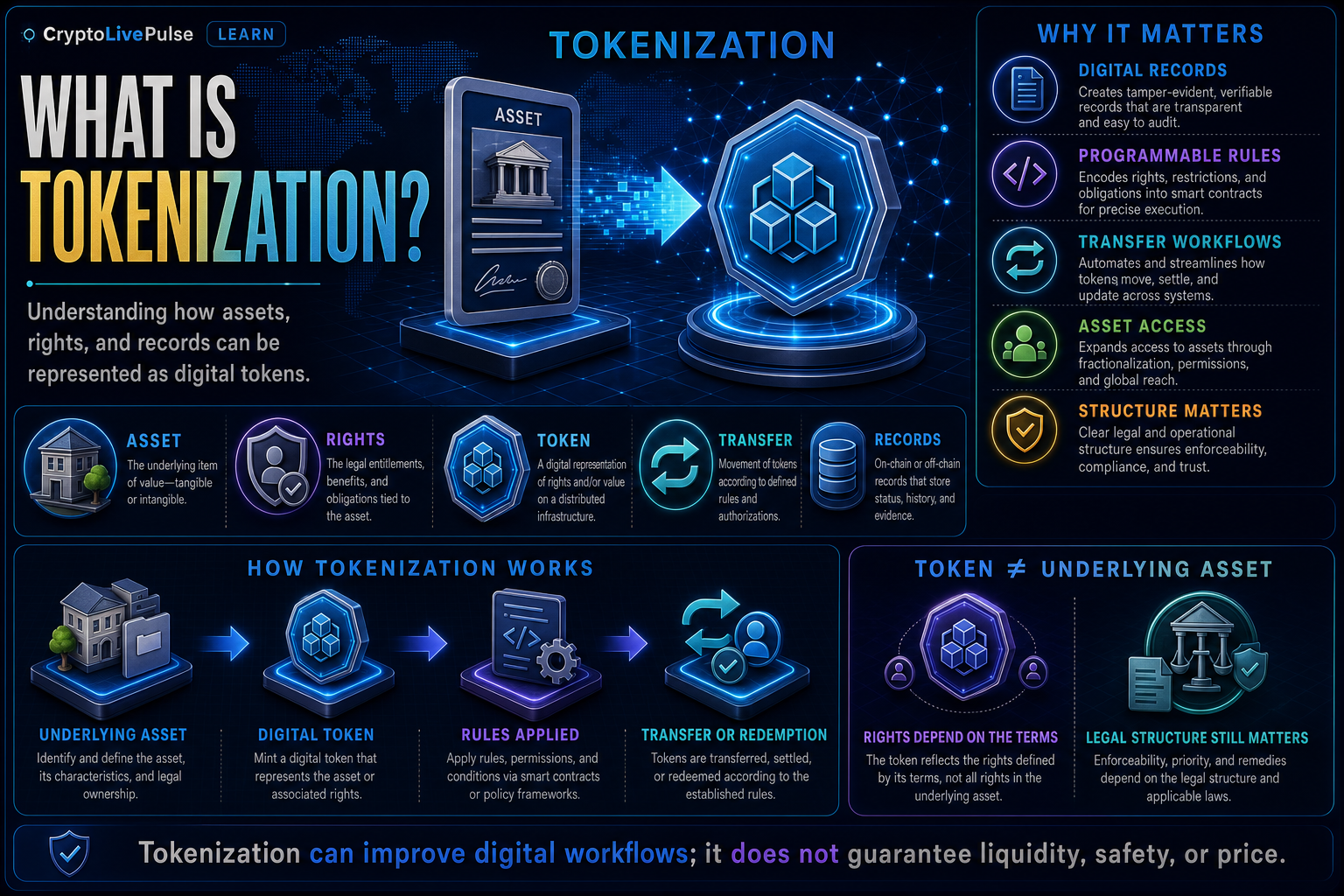
Tokenization is the process of representing an asset, right, or piece of information as a digital token on a blockchain or another digital ledger.
Simple definition
A token is a digital record that can be programmed to represent something. Depending on its design, it may represent ownership, access, a claim, a membership right, or a unit connected to an underlying asset.
Why tokenization matters
Tokenization can make it easier to track, transfer, and manage certain rights digitally. It may support faster recordkeeping, programmable rules, and new ways to connect financial or real-world activity with digital infrastructure.
How people usually read it
People usually look at what the token represents, what rights it provides, who maintains the underlying records, and how transfers or redemption work. The technology does not change the legal or practical nature of the underlying asset by itself.
Why it matters for crypto
Tokenization extends blockchain use beyond native crypto assets. It can be used for funds, payment claims, tickets, membership systems, real-world assets, and other digitally managed records.
Not a standalone signal
A tokenized version of an asset is not automatically more liquid, safer, or easier to trade. Its usefulness depends on the legal structure, custody, market access, technology, and the terms attached to the token.
Example in a market update
If a financial product begins using blockchain-based records for ownership or transfers, an update may describe the process as tokenization.
Common signals people watch
- What the token represents
- Ownership and redemption rights
- Custody and recordkeeping design
- Transfer restrictions and accessibility
- Whether real usage is growing
The token and the underlying asset
A token can be a useful digital representation, but it is not automatically the underlying asset itself. The connection between the token and the asset depends on the product’s legal documents, issuer arrangements, custody setup, and redemption rules.
For example, a token may record an interest in an asset, provide access to a service, or support a claim against an issuer. These are different relationships, even when the technology used to issue the token looks similar.
Questions to keep in mind
What does the token represent, who maintains the link to the underlying asset, and what happens during transfer or redemption? The answers explain the practical meaning of tokenization.
Key takeaway
Tokenization turns an asset, right, or record into a digital token, but the token’s value and usefulness still depend on its real-world structure and terms.
Comments (0)
Join the discussion
Sign in or create a free account to leave a comment.
No comments yet. Be the first to comment!