What Is a Stablecoin Reserves Audit?
What Is a Stablecoin Reserves Audit?
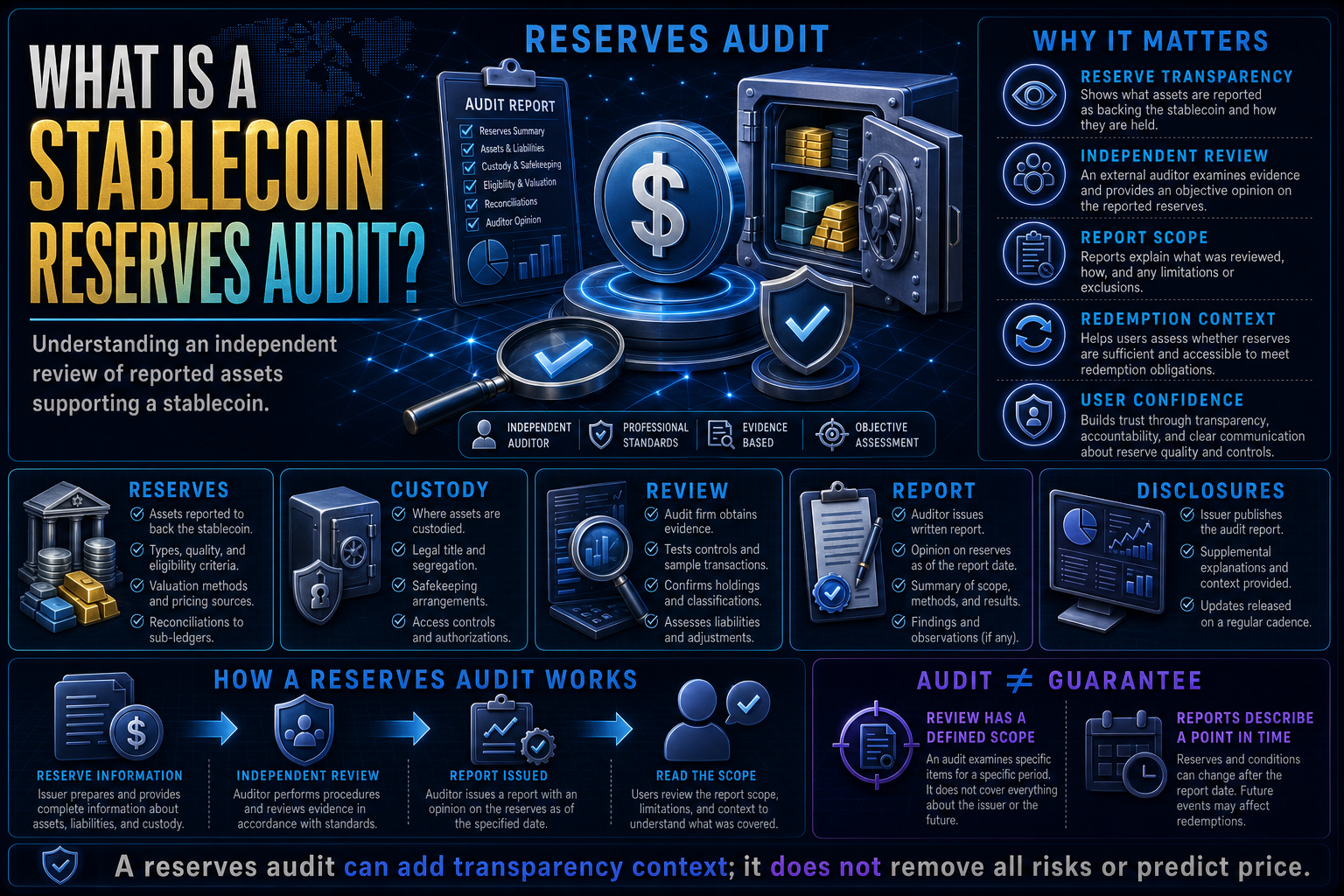
A stablecoin reserves audit is an independent examination of information about the assets intended to support a stablecoin and the issuer’s related reporting or controls.
Simple definition
The purpose is to give users more confidence in the reported reserve information. An audit is different from an attestation or a self-published report, and each can have a different scope.
Why it matters
Stablecoins often depend on confidence that the issuer can support issuance and redemption. Independent review can help users understand what information has been examined and how transparent the issuer is about its reserves.
How people usually read it
People should look beyond the word audit. Useful questions include what was reviewed, when the review occurred, which standards were used, and whether the report explains limitations or exclusions.
Why it matters for crypto
Reserve reporting connects on-chain stablecoin supply to off-chain assets and institutions. Clear reporting can be an important part of stablecoin transparency, alongside redemption terms, custody, and operational resilience.
Not a guarantee
An audit or other review does not remove every risk. It is evidence about a defined scope and point in time, not a guarantee of future performance, redemption, or safety.
Example in a market update
If an issuer publishes an independent reserves report with expanded disclosures, an update may describe it as a reserve-transparency development.
Common signals people watch
- Type and scope of the review
- Date of the reported information
- Description of reserve assets
- Custody and redemption disclosures
- Limitations stated in the report
Audit, attestation, and report
These words are sometimes used casually, but they can describe different kinds of review. An attestation may address a specific claim at a point in time, while an audit can have a different and potentially broader scope. A self-published report has another purpose again.
The label alone is not enough. Reading the document’s scope, methodology, timing, and stated limits helps explain exactly what information has and has not been examined.
Questions to keep in mind
Who performed the review, what did they examine, and what date does the report cover? These questions help users interpret reserve information without treating it as a blanket guarantee.
Reserve transparency is strongest when reports are regular, understandable, and tied to clear redemption and custody information. One document should be read as part of a wider disclosure picture.
Key takeaway
A stablecoin reserves audit is an independent review that can add context about reported reserve assets, but it is not a guarantee against all risks.
Comments (0)
Join the discussion
Sign in or create a free account to leave a comment.
No comments yet. Be the first to comment!