What Are Stablecoin Inflows?
What Are Stablecoin Inflows?
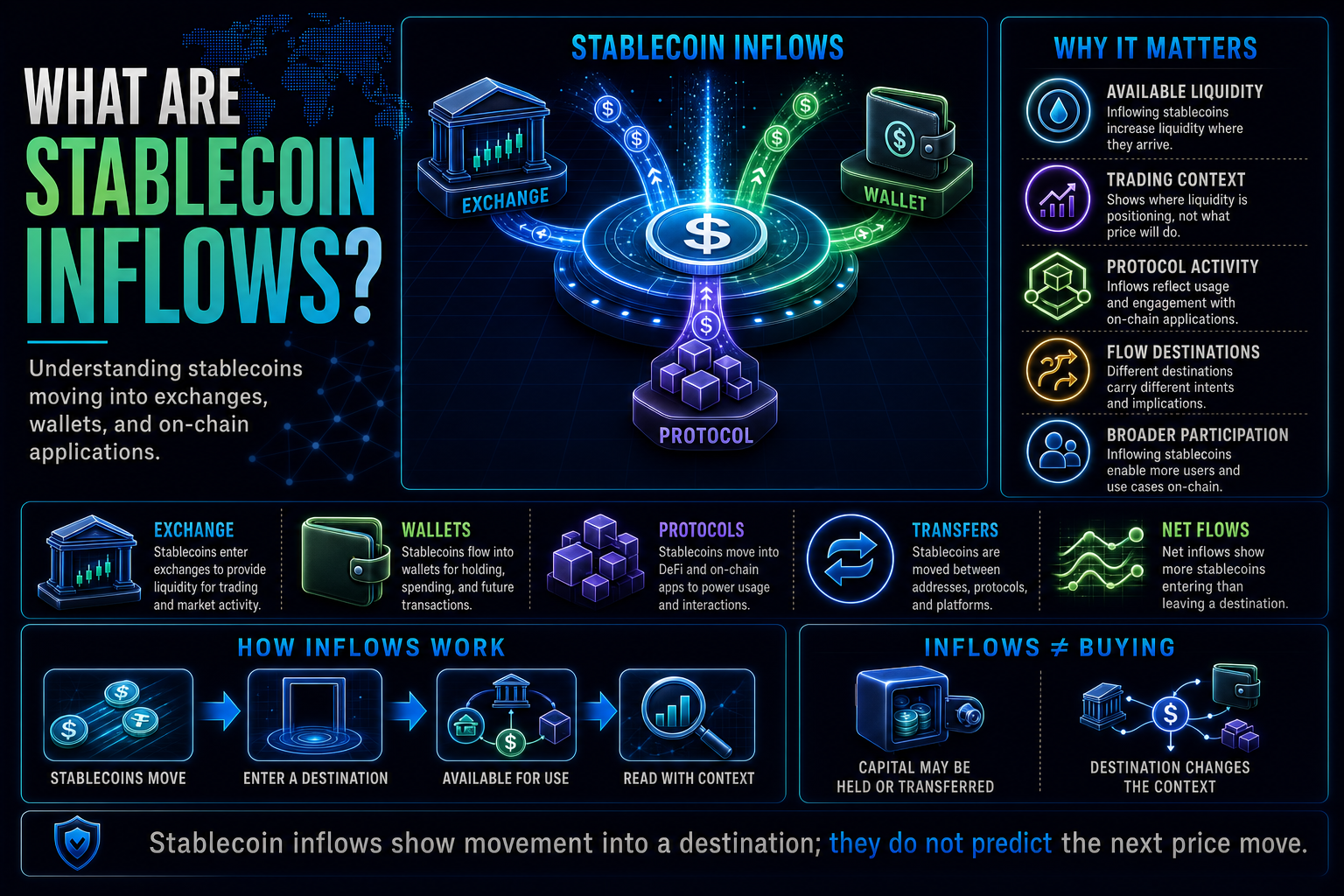
Stablecoin inflows are stablecoins moving into a specific destination, such as a crypto exchange, wallet group, blockchain, or decentralized application.
Simple definition
An inflow records movement into a defined place. Its meaning depends on the destination: stablecoins sent to an exchange describe exchange inflows, while stablecoins entering a lending or trading protocol describe application inflows.
Why they matter
Inflows can add context about where settlement capital is moving and where participants may be preparing to use it. They do not show the reason for every transfer or whether the capital will be used immediately.
How traders usually read them
Exchange inflows may be watched as potential available buying power or collateral. Protocol inflows may point to increasing activity in that application. Both readings require context from volume, price action, and broader flows.
Why it matters for crypto
Because stablecoins are widely used for trading and settlement, their movements can help explain changes in usable market liquidity. Transfers can also be internal, operational, or temporary, so labels and venue coverage matter.
Not a standalone signal
Stablecoin inflows do not guarantee purchases or a price move. They show movement into a destination, not a confirmed trading decision.
Example in a market update
If stablecoin balances are moving onto several trading venues while market volume improves, an update may describe available settlement liquidity as building.
Common signals people watch
- Destination of the inflow
- Whether flows are broad or concentrated
- Exchange balances and trading volume
- On-chain application activity
- Net flows over time
Why destination matters
An exchange inflow and an on-chain application inflow can mean very different things. Stablecoins sent to an exchange may become available for trading or collateral, while stablecoins sent to a payment or lending application may be intended for a completely different use.
A large transfer may also be an internal operational movement rather than a new user decision. Labels, transaction history, and confirmation from other activity can help explain whether a flow is broad participation or a single transfer.
Questions to keep in mind
Where did the stablecoins arrive, are the flows persistent, and do trading or application metrics support the same interpretation? These questions help put individual inflows into context.
A useful reading compares several periods rather than focusing only on a single transfer. Consistent inflows across destinations can tell a different story from one isolated movement between labelled wallets.
Key takeaway
Stablecoin inflows show where stablecoin capital is moving, adding context about possible trading, settlement, or application activity.
Comments (0)
Join the discussion
Sign in or create a free account to leave a comment.
No comments yet. Be the first to comment!