What Is Stablecoin Adoption?
What Is Stablecoin Adoption?
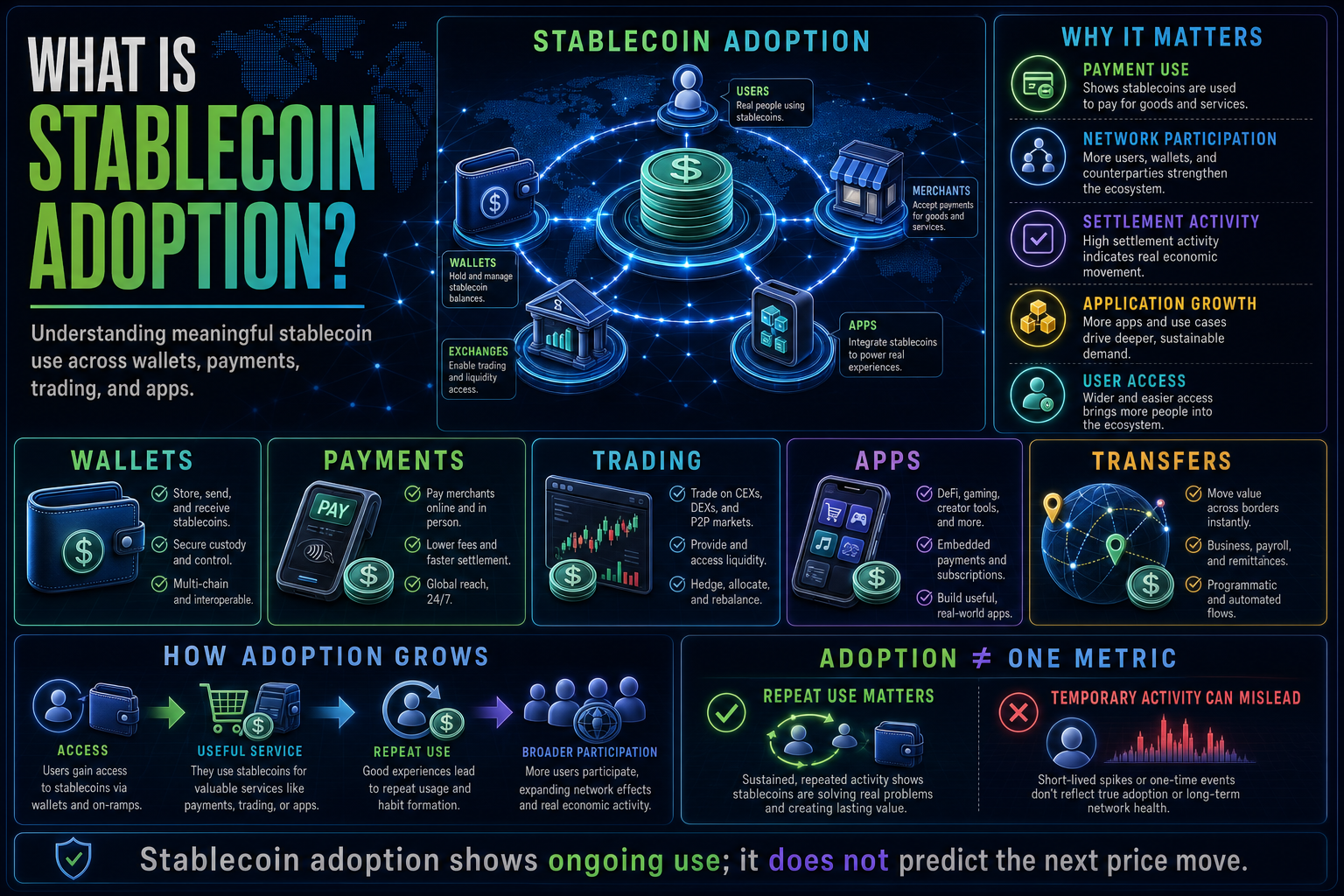
Stablecoin adoption is the growing use of stablecoins by people, businesses, platforms, and applications for transfers, settlement, savings, trading, or payments.
Simple definition
Adoption means a tool is being used in a meaningful and sustained way. For stablecoins, it can include wallet use, exchange settlement, merchant payments, remittances, and on-chain applications.
Why it matters
Stablecoin adoption helps show whether stablecoins are being used beyond simple transfers. It can add context about demand for digital settlement assets and the usefulness of the services built around them.
How people usually read it
People often look for repeat use, broader integrations, active wallets, and transfer activity rather than one announcement. Adoption can be uneven across regions, networks, and use cases.
Why it matters for crypto
Stablecoins are designed to be usable as a relatively stable digital unit. Adoption can connect blockchain infrastructure to everyday payments, cross-border transfers, decentralized finance, and institutional settlement.
Not a standalone signal
Higher usage does not guarantee long-term success for any one stablecoin or predict crypto prices. Adoption quality matters: temporary incentives and internal transfers can look different from durable everyday use.
Example in a market update
If wallet activity, settlement use, and payment integrations are broadening together, an update may describe stablecoin adoption as improving.
Common signals people watch
- Repeat wallet and transfer activity
- Merchant and application integrations
- Stablecoin settlement use
- Regional availability and access
- Supply and liquidity trends
Adoption is more than a launch
A new wallet integration or product announcement can improve access, but it does not by itself demonstrate adoption. Adoption is stronger when users return to a service, recipients accept the payment method, and activity continues without relying only on short-term incentives.
Use can also vary between regions and communities. A stablecoin may be practical for cross-border transfers, exchange settlement, or on-chain applications while having limited usefulness in other payment settings.
Questions to keep in mind
Who is using the stablecoin, what problem does it solve, and is the activity sustained? These questions help separate durable adoption from a temporary increase in transfers.
No single on-chain measure captures every use case. Some payments occur through services that bundle activity, while some wallets represent many users, so adoption needs several complementary indicators.
Comparing different forms of use—payments, settlement, trading, and applications—helps show whether participation is genuinely broad or limited to a narrow activity.
Key takeaway
Stablecoin adoption describes meaningful, ongoing use of stablecoins across wallets, payments, trading, and applications.
Comments (0)
Join the discussion
Sign in or create a free account to leave a comment.
No comments yet. Be the first to comment!