What Are Rate Expectations?
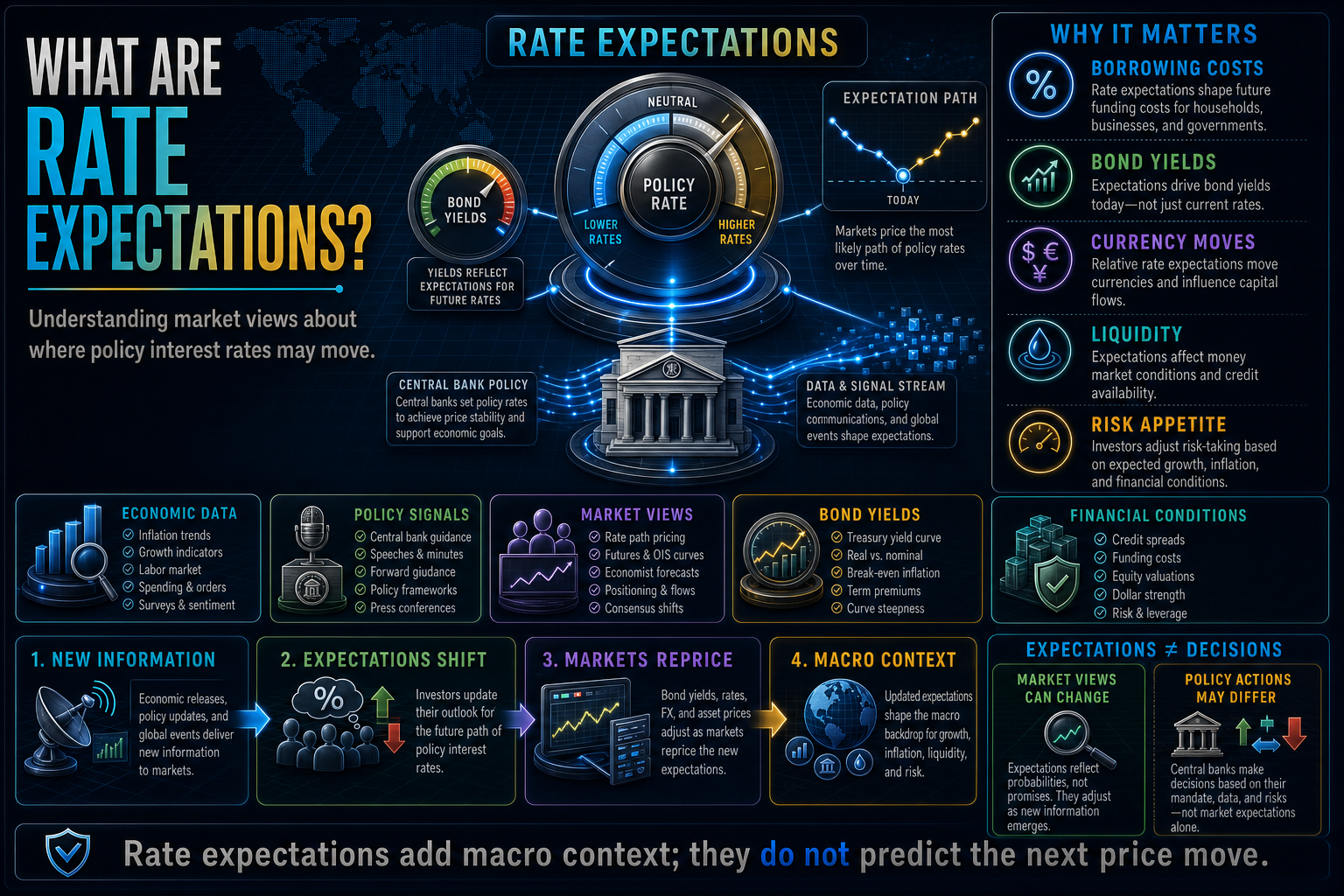
What Are Rate Expectations?
Rate Expectations is market views about where policy interest rates may move in the future.
Simple definition
It is a macro term used to explain the environment around markets. The term provides context, but it does not tell the whole story about a particular crypto asset, project, or price move.
Why rate expectations matters
Rate expectations can affect borrowing costs, bond yields, currency markets, liquidity, and investor willingness to take risk. They are a key way markets translate future policy views into current prices.
Macro terms are useful because crypto markets are part of a wider financial system. Broader conditions can influence liquidity, capital flows, sentiment, and how participants respond to crypto-specific developments.
How traders usually read it
Expectations are not promises. They can change when economic data, official communication, inflation trends, growth conditions, or market volatility alter the perceived policy outlook.
What can change the reading
Market-implied expectations, forecasts, and official policy decisions are different things. A change in expected rates may occur well before any authority makes an actual decision.
The same macro development may have different effects depending on positioning, liquidity, timing, and what markets already expect. Looking at several related indicators is more useful than relying on one headline.
Why it matters for crypto
Crypto participants may compare macro conditions with market liquidity, stablecoin activity, Bitcoin and Ethereum performance, volatility, and broader participation. This helps distinguish a crypto-specific move from a change in the wider market environment.
Rate Expectations is not a standalone signal
Rate Expectations does not guarantee that crypto will rise or fall. It is a framework for understanding conditions and potential influences, not a prediction or an instruction to take a particular action.
Example in a market update
If markets revise their view of future policy rates after economic data, an update may describe rate expectations as shifting.
Common signals people watch
- Policy communication
- Economic data
- Bond-yield movements
- Inflation trends
- Market-implied rate views
Questions to keep in mind
What is changing, why is it changing, and does the broader market evidence support the same reading? These questions help put rate expectations into useful context without treating it as a forecast.
Rate expectations should also be separated from actual policy decisions. Markets can revise their views repeatedly before an authority acts, holds policy steady, or communicates a different outlook.
Key takeaway
Rate expectations are market views about future policy rates and help shape wider financial conditions.
Comments (0)
Join the discussion
Sign in or create a free account to leave a comment.
No comments yet. Be the first to comment!