What Is a Put-Call Ratio?
What Is a Put-Call Ratio?
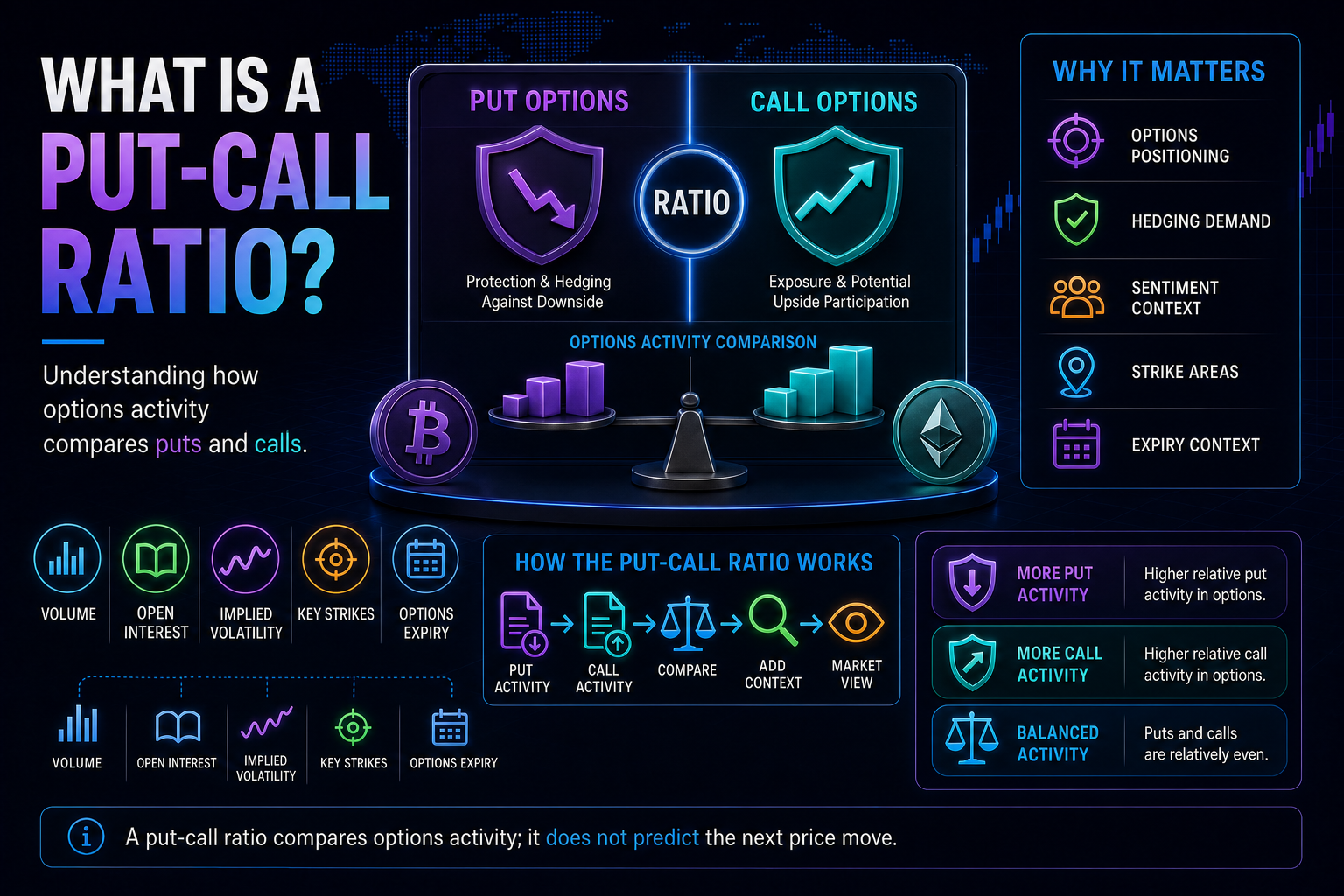
The put-call ratio compares put-option activity with call-option activity. In crypto, traders use it as one piece of context for understanding how options participants are positioning around downside protection, upside exposure, and market uncertainty.
Simple definition
A put-call ratio is the amount of put-option activity divided by the amount of call-option activity.
It can be calculated using options volume or options open interest. Puts generally relate to the right to sell, while calls generally relate to the right to buy, so the ratio offers a simple way to compare the two sides of the options market.
Why the put-call ratio matters
The put-call ratio matters because options activity may reveal whether traders are using more puts, more calls, or a relatively balanced mix. That can add context to sentiment, hedging demand, and positioning around major price areas.
A higher ratio means put activity is larger relative to call activity. A lower ratio means call activity is larger relative to put activity. Neither reading explains why participants chose those contracts.
How traders usually read it
Traders may view rising put activity as a sign that more downside protection or cautious positioning is being used. Stronger call activity may be associated with upside exposure, but it can also be part of a hedge, spread, or other multi-leg strategy.
For that reason, the ratio is usually read as market context rather than a direct bullish or bearish signal. The strikes, expiry dates, premiums, and contract structures all matter.
Volume versus open interest
A volume-based put-call ratio measures contracts traded during a selected period. It can show fresh activity but may change quickly.
An open-interest-based ratio measures outstanding contracts. It can provide a broader view of existing options positioning, although it does not show whether those positions are long, short, hedged, or part of a complex strategy.
Why it matters for crypto
Bitcoin and Ethereum options markets are often watched for signs of hedging demand and positioning around key strikes or expiry periods. The put-call ratio can help organize that information into a simple comparison.
Crypto options liquidity, settlement rules, and available contract choices differ between venues. A ratio from one market may not represent the entire crypto market.
The put-call ratio is not a standalone signal
A high put-call ratio does not guarantee that price will fall, and a low ratio does not guarantee that price will rise. Puts can be bought as insurance, while calls can be sold or used within spread strategies.
The ratio is most useful alongside options open interest, strike distribution, implied volatility, expiry timing, spot price action, and broader market conditions.
Example in a market update
If put activity increases ahead of an important Bitcoin options expiry, a market update may say that traders are watching for greater demand for downside protection.
If call activity is rising while Bitcoin and Ethereum options volume is also improving, an update may describe the market as showing more upside-focused options activity while noting that contract details remain important.
Common signals traders watch
- Put and call volume during the same period
- Put and call open interest by strike area
- Contract expiry dates and settlement rules
- Implied volatility and options premiums
- Bitcoin and Ethereum spot price near important strikes
Key takeaway
The put-call ratio compares put activity with call activity and can provide useful context about options positioning, hedging, and market sentiment.
Comments (0)
Join the discussion
Sign in or create a free account to leave a comment.
No comments yet. Be the first to comment!