What Is a Price Level?
What Is a Price Level?
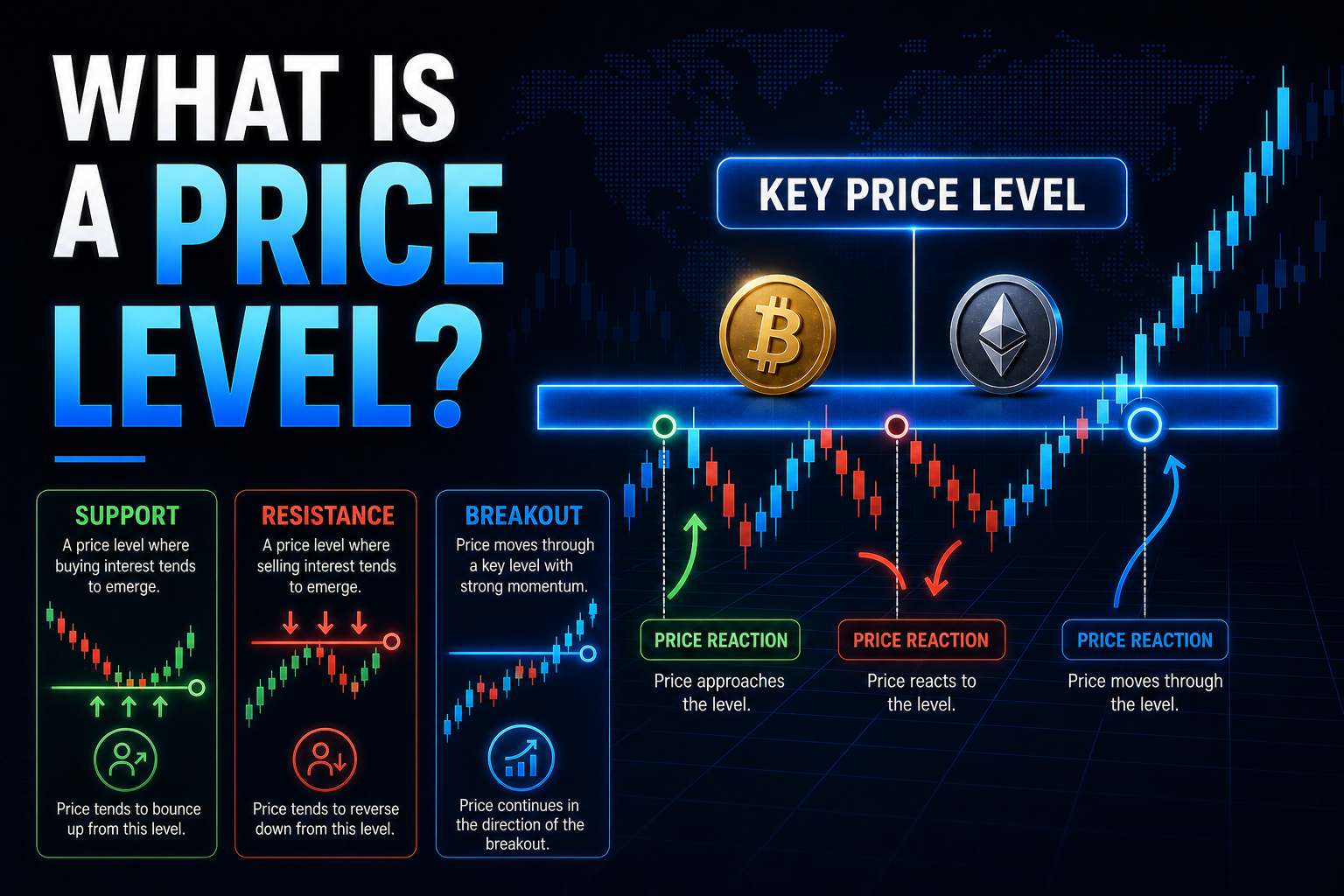
A price level is a specific area on a chart where an asset has traded, paused, reversed, or attracted noticeable buying or selling interest. Traders watch price levels because they can help organize market movement and provide context for where reactions may occur.
Simple definition
A price level is a point or zone that traders consider important when reading a chart.
For example, Bitcoin may trade near a price where it previously stopped falling, struggled to move higher, or saw unusually active trading. That area can become a price level worth watching.
Why price levels matter
Price levels matter because markets often react around areas that many participants can see. Some traders may place orders there, while others may use the area to judge whether a move is holding, weakening, or changing direction.
A price level does not guarantee a reaction. It simply marks an area where the balance between buyers and sellers may become more noticeable.
Common types of price levels
Support and resistance are two widely watched price levels. Support is an area where buying interest may become more active, while resistance is an area where selling interest may become more active.
Other commonly watched levels can include recent highs and lows, round numbers, prior breakout areas, and zones with high trading activity.
How traders usually read them
When price approaches a key level, traders often watch whether it pauses, bounces, breaks through, or moves back below it. A bounce can suggest that one side of the market is responding. A clean break can suggest that the prior balance is changing.
Traders usually look for confirmation from price action, trading volume, and the broader market context instead of relying on one level by itself.
Why price levels matter in crypto
Crypto markets can move quickly, so price levels help traders describe where important reactions are happening. Bitcoin and Ethereum levels may also influence how traders view altcoin sentiment, market strength, and overall risk appetite.
Because crypto trades around the clock and can be volatile, a level is often better viewed as a zone rather than an exact single number.
Price levels are not standalone signals
A price level does not predict what will happen next. Price can react briefly, move through the level, or return to test it later.
Price levels are most useful when read alongside trend direction, volume, volatility, support and resistance, and wider market conditions.
Example in a market update
If Bitcoin rises toward a previous high and begins to slow down, a market update may say that price is testing an important resistance level.
If Ethereum falls toward an area where it previously found buyers and then stabilizes, an update may describe that area as a key support level.
Common signals traders watch
- Previous highs and lows
- Support and resistance zones
- Trading volume near the level
- Whether price holds, rejects, or breaks through
- The wider market trend and sentiment
Key takeaway
A price level is an important area on a chart where traders watch for changes in buying, selling, and market direction.
Comments (0)
Join the discussion
Sign in or create a free account to leave a comment.
No comments yet. Be the first to comment!