What Is Options Expiry?
What Is Options Expiry?
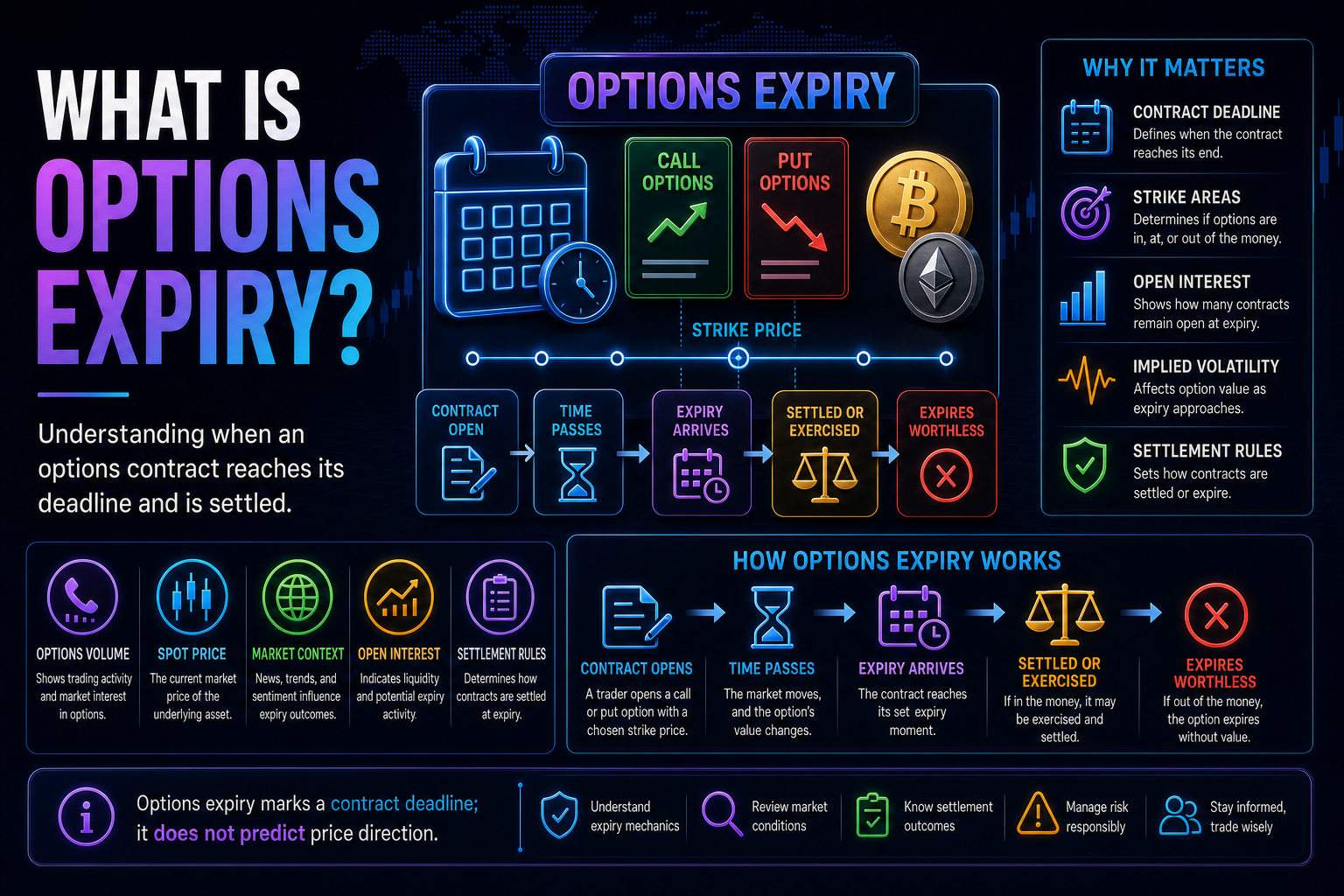
Options expiry is the point when an options contract reaches the end of its life. In crypto, it is when the contract can no longer be traded as that specific option and is settled, exercised, or allowed to expire according to the platform's rules.
Simple definition
Options expiry is the deadline for an options contract.
Every option has an expiration date or time. Before expiry, the contract can have value based on the underlying asset's price, the strike price, time remaining, volatility, and other market factors.
Why options expiry matters
Options expiry matters because it changes what happens to outstanding options contracts. As expiry approaches, traders and market makers may close, roll, hedge, settle, or exercise positions depending on the contract and market conditions.
Large groups of expiring contracts can also attract attention because options activity may affect trading volume, hedging flows, and short-term market conditions around important strike areas.
How options expiry works
An option gives its holder the right, but not the obligation, to buy or sell an underlying asset at a specified strike price before or at expiry, depending on the contract type. At expiry, the contract's final value is determined by the platform's settlement rules.
An option that has no value under those rules may expire worthless. An option with value may be exercised or settled. Many crypto options markets use cash settlement rather than delivery of the underlying asset.
How traders usually read it
Traders often watch the size of options open interest, the location of major strike prices, implied volatility, and how close expiry is. These factors can provide context for short-term options activity.
Options expiry does not automatically cause a price move. The market response depends on positioning, hedging, liquidity, spot demand, and broader market conditions.
Options expiry versus futures expiry
Options expiry ends an option's right to buy or sell at a strike price. Futures expiry ends a futures contract that requires settlement under its own terms.
Both can influence derivatives activity, but options and futures use different contract structures and risk profiles.
Why options expiry matters in crypto
Bitcoin and Ethereum have active options markets, so their expiries are often included in crypto market updates. Options activity can provide context for how professional and institutional participants are managing exposure.
Crypto options markets may use different settlement times, instruments, and rules across venues, so the contract details remain important context.
Options expiry is not a standalone signal
Options expiry does not predict whether price will rise or fall. It only marks a point when options contracts are settled, exercised, closed, or expire.
It is most useful when read alongside options open interest, strike distribution, implied volatility, spot price action, liquidity, and the wider market environment.
Example in a market update
If a large group of Bitcoin options contracts is approaching expiry, a market update may note that options activity could add to short-term trading volume around key strike areas.
If Ethereum implied volatility changes ahead of an options expiry, an update may say that traders are watching how derivatives positioning develops into settlement.
Common signals traders watch
- Options open interest by strike price
- Time remaining until contract expiry
- Implied volatility and options volume
- Bitcoin and Ethereum spot price near key strikes
- Settlement rules on the relevant venue
Key takeaway
Options expiry is when an options contract reaches its deadline and is settled, exercised, closed, or expires under the venue's rules.
Comments (0)
Join the discussion
Sign in or create a free account to leave a comment.
No comments yet. Be the first to comment!