What Is a Market Reaction?
What Is a Market Reaction?
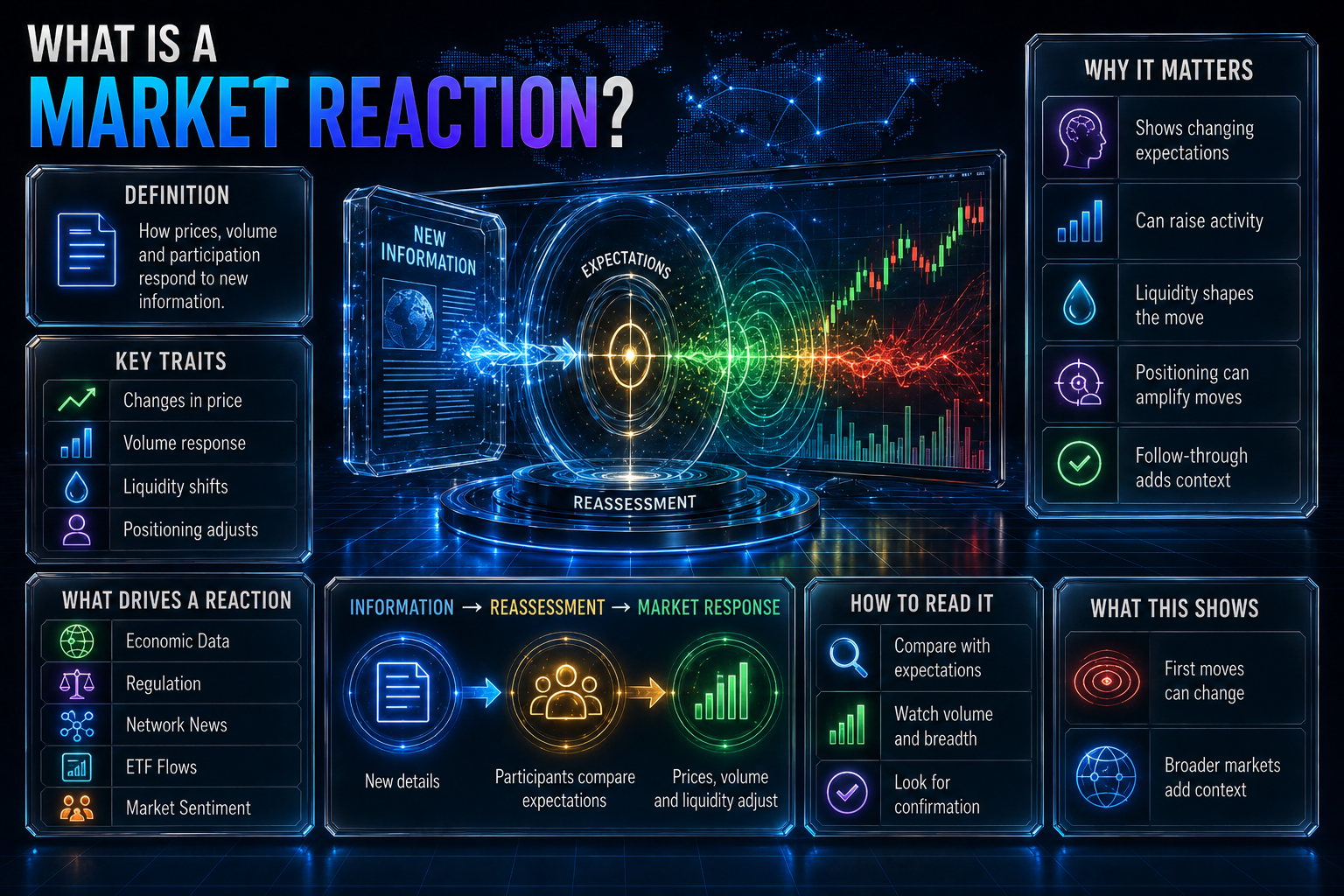
A market reaction is the way prices, trading activity, and participation change after new information reaches the market. In crypto, the information may involve economic data, regulation, ETF flows, a protocol update, an exchange development, or a broader shift in risk sentiment.
Simple definition
A market reaction is the response that follows an event, report, or development. It can appear through price movement, trading volume, spreads, liquidity, derivatives positioning, or changes in which assets attract attention.
Why a market reaction matters
The reaction can reveal how participants are interpreting new information. A large move may show that expectations changed quickly, while a limited move may suggest that the news was already anticipated or was not viewed as material. The quality of the response can be more informative than the headline alone.
How markets usually read it
Markets often compare the outcome with what participants expected beforehand. A result that sounds positive in isolation can still lead to selling if expectations had been even stronger. Likewise, a weak result may cause a constructive reaction if markets had prepared for something worse. Volume, breadth, and follow-through help add context.
Why it matters for crypto
Crypto markets trade continuously and can adjust quickly when new details emerge. Uneven order-book depth and derivatives leverage may amplify a response, particularly in smaller assets. Bitcoin, equities, bond yields, the dollar, and stablecoin liquidity can also influence how a crypto market reaction develops.
A market reaction is not a standalone signal
An initial reaction does not automatically confirm a lasting trend. Early activity can reflect thin liquidity, short covering, profit-taking, or rapid position changes. It is usually more useful to observe whether the move holds as volume, liquidity, and related markets provide further confirmation.
Common signals people watch
- How the outcome compares with prior expectations
- Price movement, volume, and market breadth
- Changes in spreads and available liquidity
- Derivatives positioning, funding, and liquidations
- Whether the response persists after the first move
Reading the wider context
A market reaction takes place within a wider setting. The same news can produce different outcomes when sentiment, liquidity, valuations, and positioning are different. A broad response across several assets may carry a different message from an isolated move in one thinly traded token.
It is also helpful to distinguish the first response from the later interpretation. New details can alter the initial view, and price may stabilize, extend, or reverse as participants reassess the information. Comparing the reaction with volume, participation, and related markets helps keep the analysis grounded.
Key takeaway
A market reaction is how prices and market conditions respond to new information. It provides context about changing expectations, not a guaranteed signal of what happens next.
Comments (0)
Join the discussion
Sign in or create a free account to leave a comment.
No comments yet. Be the first to comment!