What Is Layer 2?
What Does Layer 2 Mean?
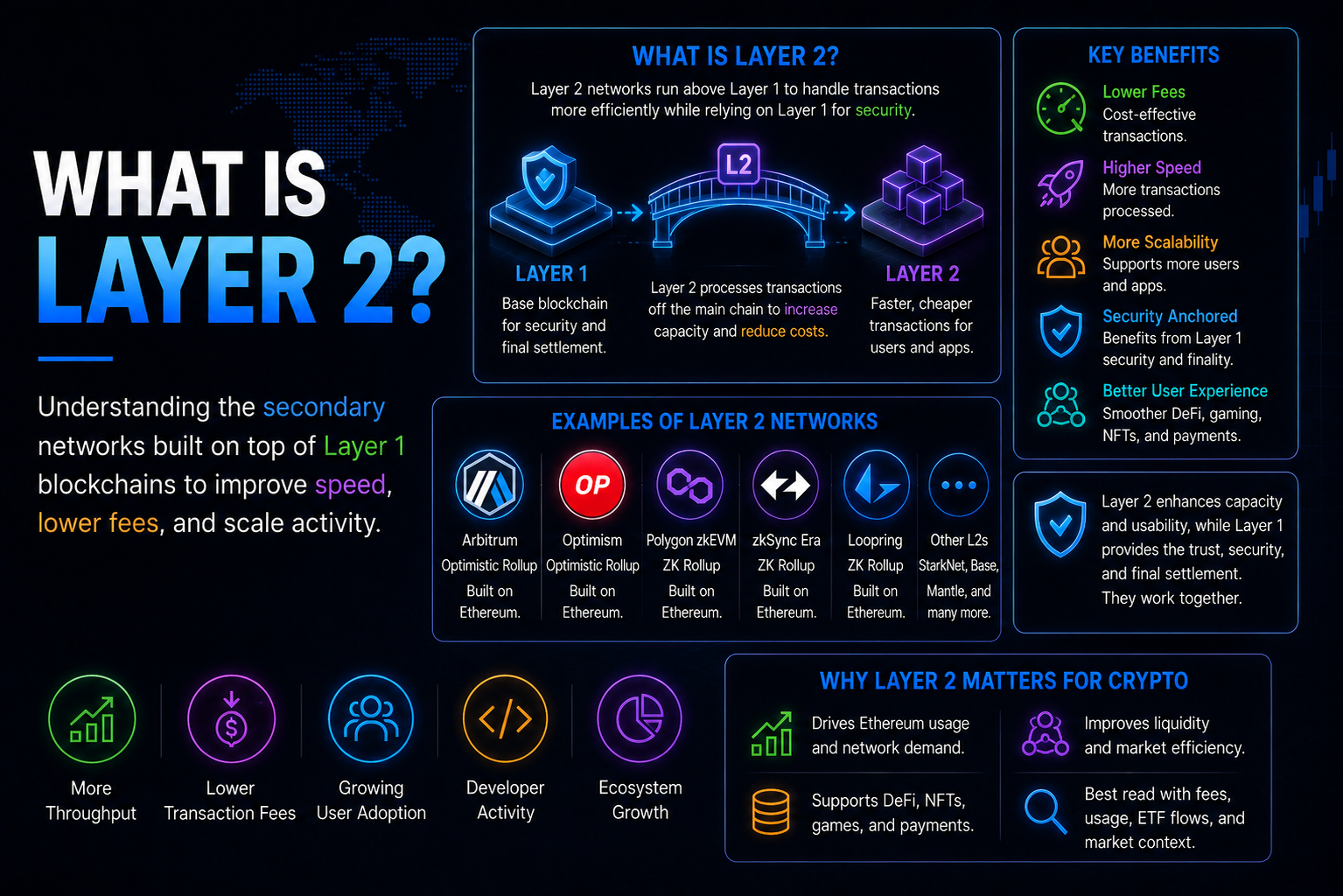
Layer 2 describes a blockchain network or system built on top of a main blockchain, often called Layer 1. Crypto traders watch Layer 2 activity because it can affect transaction costs, user activity, Ethereum demand, liquidity, sentiment, and broader market structure.
Simple definition
Layer 2 means a secondary blockchain system that helps a main blockchain process activity more efficiently.
A Layer 2 usually relies on a base blockchain for security or settlement, while handling some activity separately to improve speed, reduce costs, or support more users and apps.
Why Layer 2 matters
Layer 2 matters because popular blockchains can become expensive or slow when activity rises. Layer 2 systems can help move more transactions without forcing every action to happen directly on the base chain.
This can affect how traders read network growth, app usage, fees, liquidity, and the overall health of a blockchain ecosystem.
How traders usually read it
Strong Layer 2 activity is usually read as a sign that users and developers are active in a blockchain ecosystem.
Weak Layer 2 activity may suggest slower usage, less demand, or lower app activity. The meaning depends on context because activity can shift between Layer 1, Layer 2, exchanges, apps, and other networks.
Why it matters for crypto
Layer 2 is especially important for Ethereum because many Layer 2 networks are built to help Ethereum scale. Traders may watch Layer 2 activity to understand whether Ethereum usage is spreading across apps, tokens, stablecoins, and on-chain markets.
Layer 2 can also matter for Bitcoin, Ethereum, altcoins, ETF flows, liquidity, and sentiment when traders are trying to understand which parts of the market are gaining real usage instead of only price attention.
Layer 2 is not a standalone signal
Layer 2 activity should not be used as a standalone price signal. More Layer 2 usage does not automatically mean a token price will rise, and lower activity does not always mean the ecosystem is failing.
Layer 2 is most useful when read alongside fees, active users, app activity, liquidity, developer activity, ETF flows, Ethereum price structure, and broader market sentiment.
Example in a market update
If Ethereum is steady, Layer 2 usage is rising, and fees remain manageable, traders may read the ecosystem backdrop as more constructive.
If Ethereum is weak, Layer 2 activity is fading, and liquidity is thin, traders may read the setup as more selective or cautious.
Common signals traders watch
- Whether Layer 2 transaction activity is rising or falling
- Whether Ethereum fees are high, low, or changing quickly
- Whether apps, stablecoins, and tokens are active on Layer 2 networks
- Whether liquidity is moving toward or away from Layer 2 ecosystems
- Whether Layer 2 strength is supported by broader market sentiment
Key takeaway
Layer 2 helps traders understand how blockchain activity can scale beyond the base chain, and why usage, fees, liquidity, and ecosystem growth matter for crypto market context.
Comments (0)
Join the discussion
Sign in or create a free account to leave a comment.
No comments yet. Be the first to comment!