What Are Ethereum Gas Fees?
What Do Ethereum Gas Fees Mean?
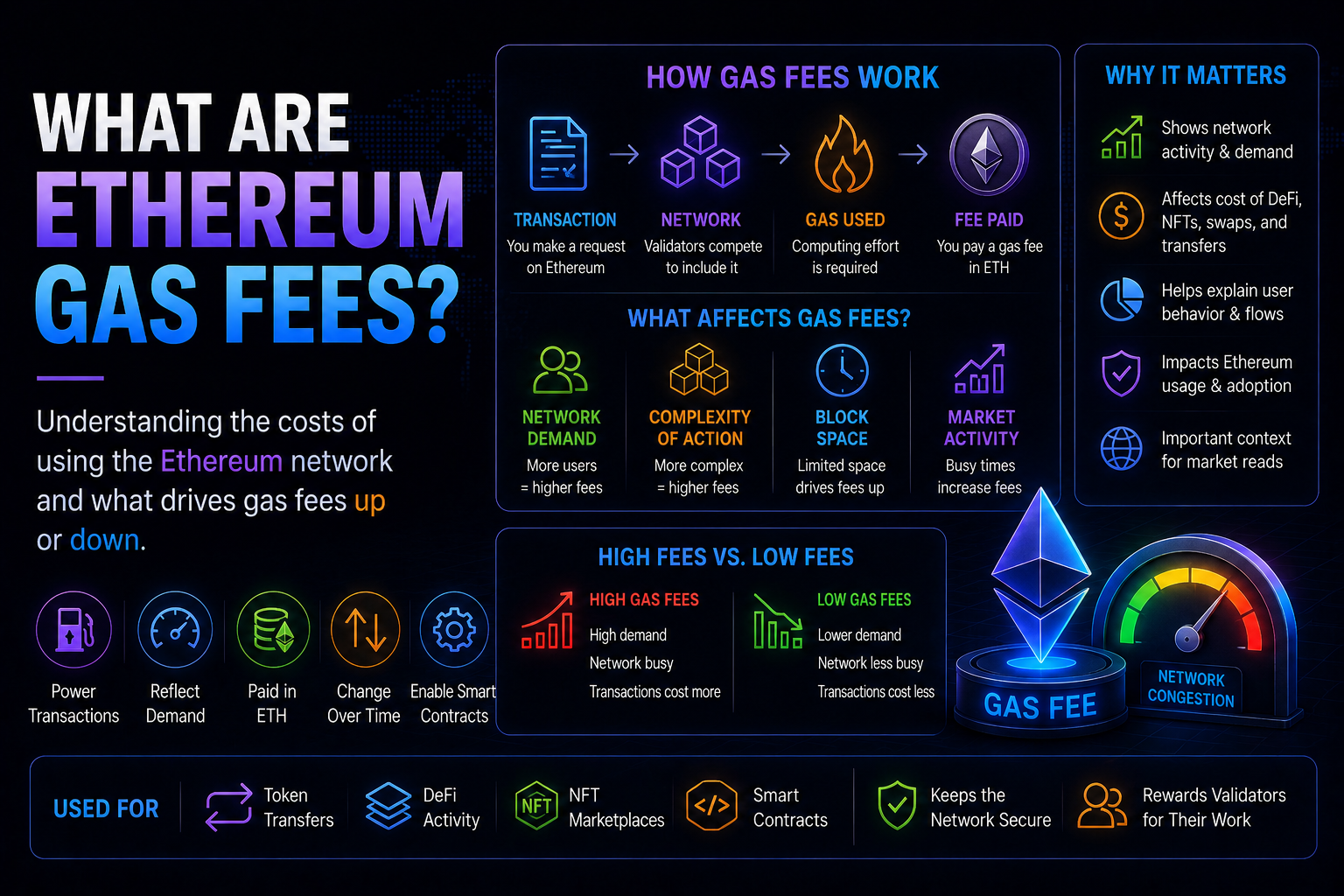
Ethereum gas fees are the transaction costs paid to process activity on the Ethereum network. Crypto traders and investors often watch gas fees because they can reflect how busy the network is and how much demand there is for using Ethereum.
Gas fees can change throughout the day as network activity rises or falls. Understanding them helps explain why sending tokens, using decentralized applications, or interacting with smart contracts may sometimes cost more than expected.
Simple definition
Ethereum gas fees are payments made to process transactions and execute smart contracts on the Ethereum blockchain.
Every action on Ethereum requires computing resources. Gas fees compensate the network for verifying transactions and keeping the blockchain secure.
Why Ethereum gas fees matter
Gas fees matter because they affect how expensive it is to use Ethereum. Higher fees can make trading, token transfers, and decentralized applications more costly, while lower fees make the network more accessible.
Changes in gas fees may also provide clues about network activity. Busy periods often lead to higher fees because more users are competing to have their transactions processed.
How traders usually read it
Higher Ethereum gas fees are usually viewed as a sign of increased network demand. This may happen during periods of stronger trading activity, heavy decentralized finance usage, or increased interest in Ethereum-based applications.
Lower gas fees usually suggest lighter network activity and reduced congestion. The meaning depends on context because fees alone do not explain why activity has increased or decreased.
Why it matters for crypto
Ethereum is one of the largest blockchain ecosystems, so its gas fees can influence how users interact with decentralized finance, NFTs, stablecoins, and other Ethereum-based services.
Crypto traders may include Ethereum gas fees as part of a broader market read alongside Ethereum price action, liquidity, trading volume, and overall network activity.
Why context matters
Ethereum gas fees should not be treated as a standalone market signal. Higher fees do not automatically mean Ethereum's price will rise, and lower fees do not automatically signal weakness.
Gas fees are most useful when considered alongside transaction activity, network usage, market sentiment, liquidity, and price trends.
Example in a market update
A market update may note that Ethereum gas fees have increased as network activity picks up, suggesting stronger demand for transactions and decentralized applications.
Another update may mention that gas fees remain low, indicating lighter network usage even while Ethereum's price is relatively stable.
Common signals traders watch
- Whether gas fees are rising or falling
- Overall Ethereum network activity
- Transaction volume on the Ethereum blockchain
- Levels of network congestion
- Ethereum price action alongside network usage
Key takeaway
Ethereum gas fees measure the cost of using the Ethereum network, and changes in those fees can provide useful context about network demand and activity.
Comments (0)
Join the discussion
Sign in or create a free account to leave a comment.
No comments yet. Be the first to comment!