What Is Dollar-Cost Averaging?
What Is Dollar-Cost Averaging?
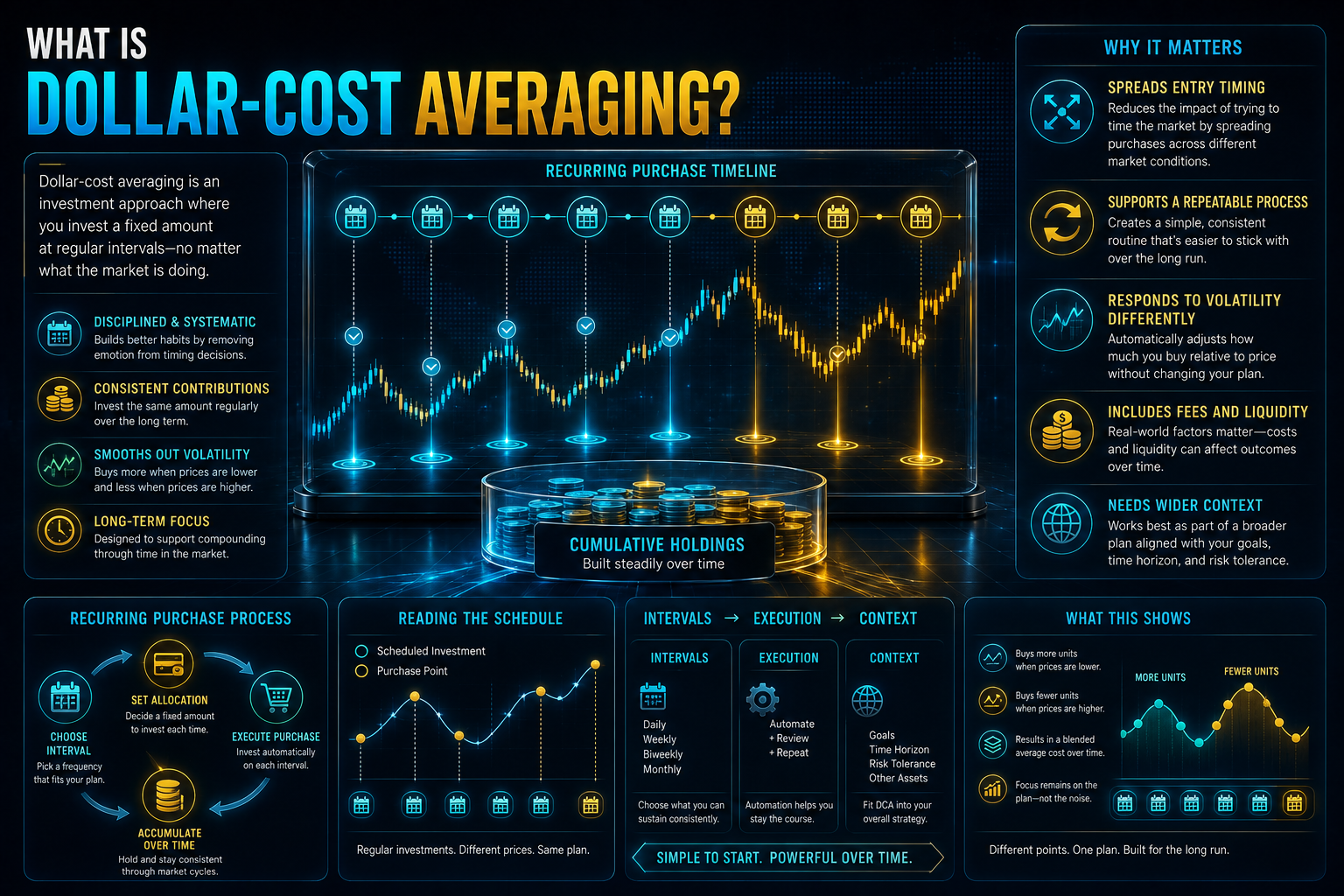
Dollar-cost averaging, often called DCA, is the practice of making equal purchases at regular intervals instead of making one larger purchase at a single time. It changes how entry timing is handled.
Simple definition
With dollar-cost averaging, a planned amount is spread across a schedule. The purchase price can vary from one interval to the next because markets move, so the number of units acquired may also vary.
Why dollar-cost averaging matters
A recurring schedule can reduce the importance of choosing one exact entry point. It can also make the process more repeatable by separating the decision to buy from short-term market movement.
However, spreading purchases over time does not remove downside risk or determine whether an asset is suitable. The outcome can still depend on the asset, market direction, fees, liquidity, and the length of the schedule.
How markets usually read it
Dollar-cost averaging is commonly compared with making one purchase at a single time. Neither approach is always better in every market. The difference is that DCA spreads timing exposure across several purchase points instead of concentrating it in one moment.
Why it matters for crypto
Crypto volatility can make entry timing difficult. A recurring approach may be discussed as a way to create a consistent process, but it does not replace research into token supply, custody, fees, liquidity, security, or the risks of the asset being acquired.
Dollar-cost averaging is not a standalone solution
DCA does not predict market direction, eliminate losses, or guarantee a positive result. It only changes the timing of purchases. A recurring schedule can still perform differently depending on market conditions and the asset involved.
Common signals people watch
- The planned purchase schedule and interval
- Fees, spreads, and execution costs
- The liquidity and volatility of the selected asset
- How custody and platform exposure are handled
- Whether the schedule still fits the wider plan and risk tolerance
Reading the wider context
DCA affects purchase timing, not the underlying risks of an asset. A schedule may reduce the emotional pressure of picking one entry, but it does not answer whether an asset is secure, liquid, or well understood.
Costs and conditions can also change over time. Looking at the schedule alongside fees, market depth, custody, and the wider market backdrop can give a more complete view than the method alone.
Key takeaway
Dollar-cost averaging spreads purchases over time instead of relying on one entry point. It can structure timing exposure, but it does not remove market or asset risk.
Comments (0)
Join the discussion
Sign in or create a free account to leave a comment.
No comments yet. Be the first to comment!