What Is Custody Risk?
What Is Custody Risk?
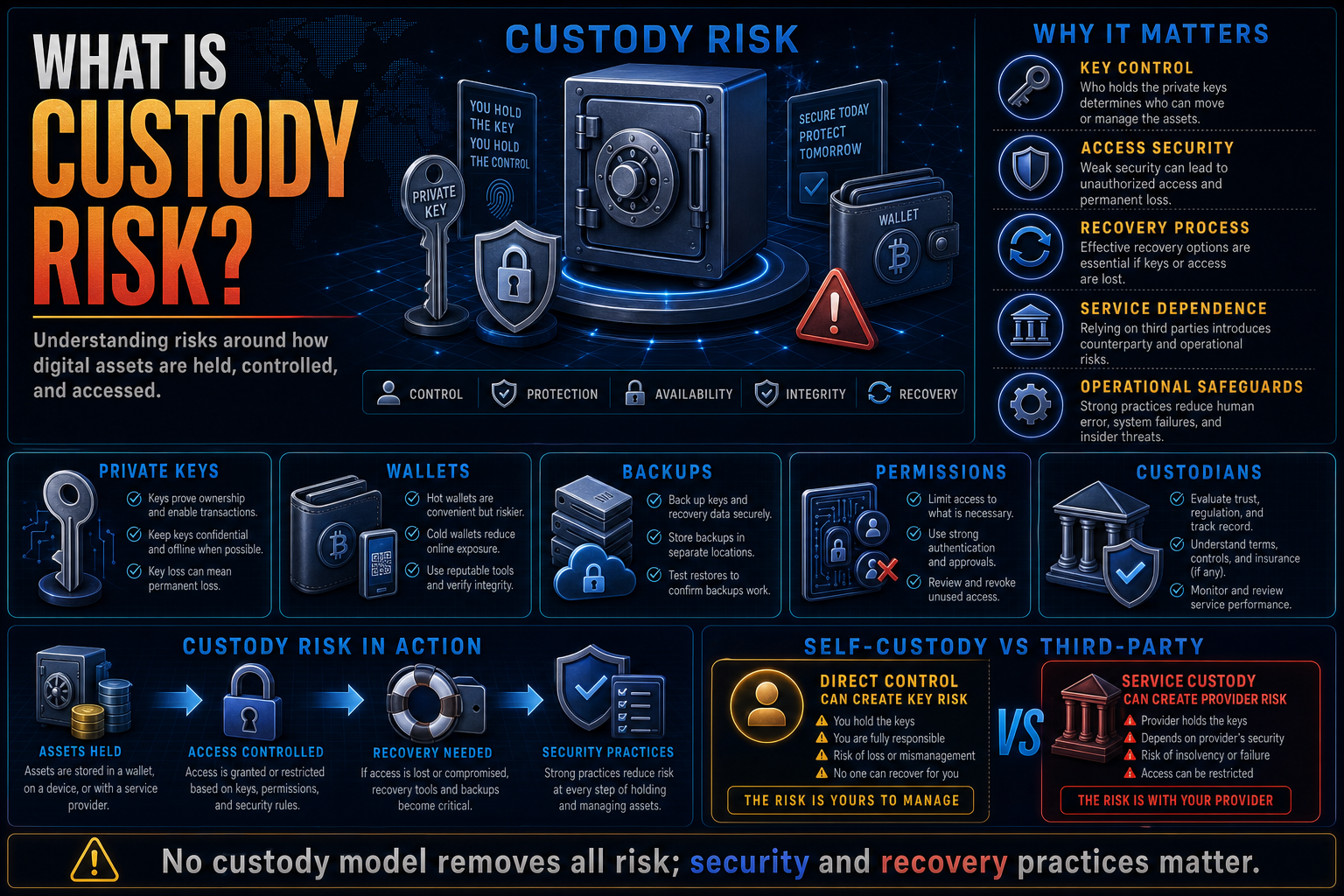
Custody risk is the risk that assets may be lost, inaccessible, mishandled, or exposed because of the way they are stored and controlled.
Simple definition
In crypto, custody depends on who controls the keys or access credentials. The user may control them directly, or a third-party service may hold and manage access on the user’s behalf.
Why custody risk matters
Digital asset transfers can be difficult or impossible to reverse. Weak controls, lost credentials, security failures, internal mistakes, or service disruptions can affect access to assets.
How people usually read it
Custody risk is assessed by looking at access controls, key management, backup and recovery processes, service-provider reliability, permissions, and operational safeguards.
Why it matters for crypto
Crypto custody is a central security decision because control of private keys can control the ability to move assets. Different custody models offer different tradeoffs between direct control, convenience, recovery, and reliance on a third party.
Not a standalone signal
No custody model removes all risk. Self-custody can create key-management risk, while third-party custody can introduce provider and access risk.
Example in a market update
A market update may mention custody risk when an exchange, wallet provider, or institutional custodian is important to an asset’s access or security story.
Common signals people watch
- Who controls the keys or credentials
- Recovery and backup processes
- Access permissions and authentication
- Security and operational controls
- Third-party concentration and reliability
Different custody models
With self-custody, a user has direct responsibility for private keys, backups, and recovery information. This can reduce reliance on a service provider, but it can increase the impact of mistakes, lost credentials, or poor security practices.
With third-party custody, a service manages some of the access and security process. This can offer convenience or recovery support, but it also means the user depends on the provider’s controls, availability, and policies.
Questions to keep in mind
Who can move the assets, how are lost-access situations handled, and what safeguards protect against misuse? These questions help frame custody risk without assuming one model is risk-free.
Custody choices may also change over time as needs change. The important point is that convenience, control, recovery, and reliance on others are separate considerations that should be understood together.
Strong custody practices also include reviewing permissions and recovery arrangements regularly, rather than assuming a setup remains safe simply because it worked previously.
Key takeaway
Custody risk is the risk around how assets are held and accessed, making key control, recovery, and security practices important.
Comments (0)
Join the discussion
Sign in or create a free account to leave a comment.
No comments yet. Be the first to comment!