What Is Crypto Malware Risk?
What Does Crypto Malware Risk Mean?
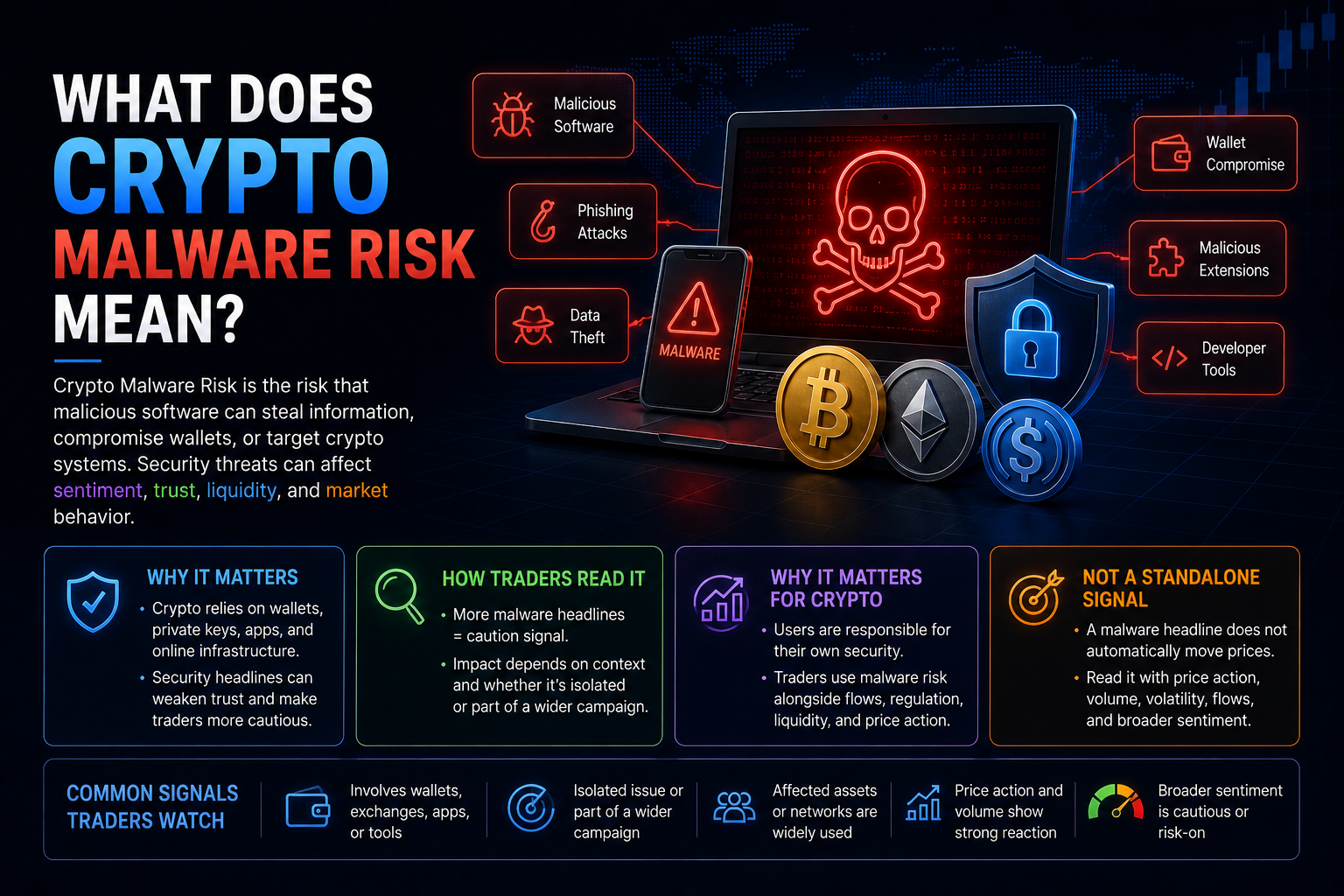
Crypto Malware Risk describes the risk that malicious software can target wallets, apps, exchanges, developer tools, or crypto users. Crypto readers watch malware risk because security headlines can affect sentiment, trust, liquidity, Bitcoin, Ethereum, altcoins, and broader market behavior.
Simple definition
Crypto Malware Risk means the risk that harmful software may steal information, interfere with transactions, compromise wallets, or target crypto-related systems.
Malware is software designed to cause harm. In crypto, it can target private keys, wallet addresses, browser extensions, trading tools, developer environments, or other parts of crypto infrastructure.
Why Crypto Malware Risk matters
Crypto Malware Risk matters because crypto depends heavily on digital wallets, private keys, software tools, and online infrastructure. If users or developers lose trust in those systems, market confidence can weaken.
Security headlines may not always move prices directly, but they can make traders more cautious. They can also affect how people read risk appetite, liquidity, market structure, and the reliability of crypto platforms.
How traders usually read it
When crypto malware headlines increase, traders usually read them as a caution signal. The concern is not only the specific attack, but also whether it points to wider security risk across wallets, apps, or developer tools.
The meaning depends on context. A small isolated malware report may have limited market impact, while a broader campaign targeting major infrastructure can weigh more heavily on sentiment.
Why it matters for crypto
Crypto can be sensitive to malware risk because users are often responsible for securing their own wallets, keys, and transactions. That makes security trust an important part of crypto market confidence.
Crypto traders may use malware risk as part of a broader market read, especially when it appears alongside exchange flows, ETF flows, regulation, liquidity concerns, wallet activity, or weak price action.
Crypto Malware Risk is not a standalone signal
Crypto Malware Risk should not be used as a standalone price signal. A malware headline does not automatically mean crypto prices will fall, and the absence of malware headlines does not mean risk is gone.
Malware risk is most useful when read alongside price action, volatility, volume, liquidity, exchange flows, ETF flows, regulation, Bitcoin dominance, and broader market sentiment.
Example in a market update
If Bitcoin is holding steady but crypto malware headlines are active, traders may read the market as stable on price but still cautious on security risk.
If malware concerns fade while price action improves and volatility falls, traders may read the setup as calmer, though they would still look for confirmation from other signals.
Common signals traders watch
- Whether malware headlines involve wallets, exchanges, apps, or developer tools
- Whether the issue appears isolated or part of a wider campaign
- Whether affected assets or networks are widely used
- Whether price action and volume show a strong market reaction
- Whether broader sentiment is already cautious or risk-on
Key takeaway
Crypto Malware Risk helps traders understand how security threats can affect trust, sentiment, liquidity, and market structure, but it should always be read in context.
Comments (0)
Join the discussion
Sign in or create a free account to leave a comment.
No comments yet. Be the first to comment!