What Is Crypto Compliance?
What Is Crypto Compliance?
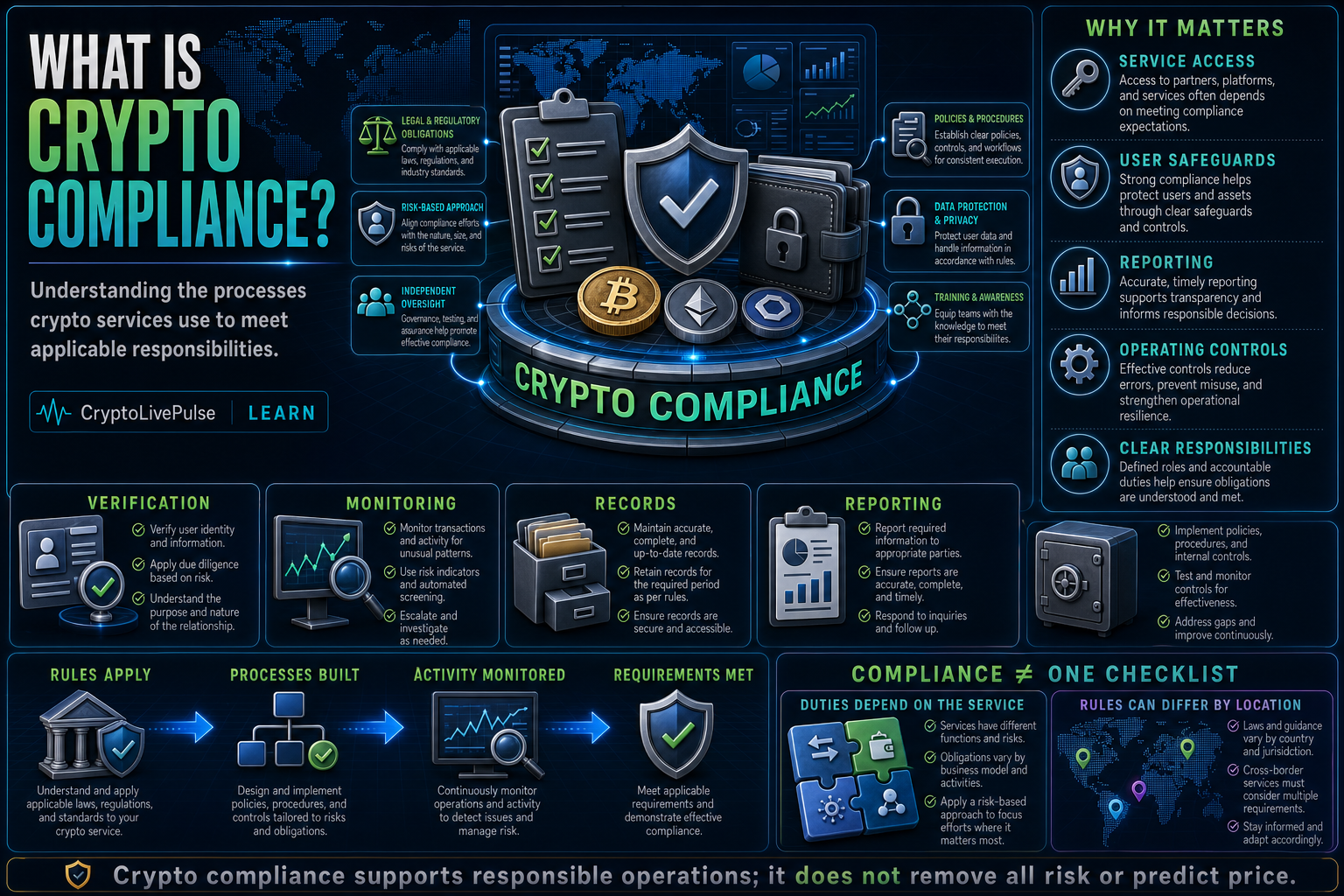
Crypto compliance refers to the processes a crypto business or service uses to meet applicable laws, regulations, internal policies, and operational requirements.
Simple definition
It is a useful term for explaining part of the environment around crypto markets and services. It does not apply to every business or service in the same way, because responsibilities and practical effects can vary by activity and location.
Why crypto compliance matters
Compliance can include customer identity checks, transaction monitoring, disclosures, recordkeeping, licensing or registration obligations, consumer safeguards, and risk controls. The exact requirements depend on the service and where it operates.
Understanding the term can help readers separate a broad market narrative from the specific details that affect a product, platform, or transaction. The relevant documents, service terms, and official information provide important context.
How people usually read it
People usually read crypto compliance as part of a platform’s operating framework. It can affect onboarding, product availability, transfers, reporting, and the services a user can access.
What can change the reading
Compliance is not one universal checklist. An exchange, stablecoin issuer, wallet provider, custodian, and payment company may face different obligations because they perform different functions.
The same term can have a different practical meaning depending on the parties involved, the jurisdiction, and the stage of a policy or market development. Reading the underlying source and the relevant scope is more useful than relying only on a label.
Why it matters for crypto
Crypto markets and services combine on-chain technology with off-chain businesses, institutions, and rules. This means that broader policy or financial context can influence access, operations, settlement, and the way market participants interpret developments.
Crypto compliance is not a standalone signal
Crypto compliance does not guarantee that an asset will rise or fall, and it does not provide a complete judgement about a service. It is most useful when read alongside the facts of the situation, market structure, and broader conditions.
Example in a market update
If a platform updates its verification or reporting processes, an update may describe the change as part of its crypto compliance operations.
Common signals people watch
- Identity and verification processes
- Transaction monitoring
- Recordkeeping and reporting
- Licensing or registration status
- Consumer and operational controls
Questions to keep in mind
What exactly is changing, who is affected, where does it apply, and what is confirmed rather than anticipated? These questions help readers place crypto compliance in context and avoid treating it as a prediction.
Key takeaway
Crypto compliance is the set of processes used to meet the rules and responsibilities that apply to a crypto service.
Comments (0)
Join the discussion
Sign in or create a free account to leave a comment.
No comments yet. Be the first to comment!