What Does Cross-Asset Correlation Mean?
What Does Cross-Asset Correlation Mean?
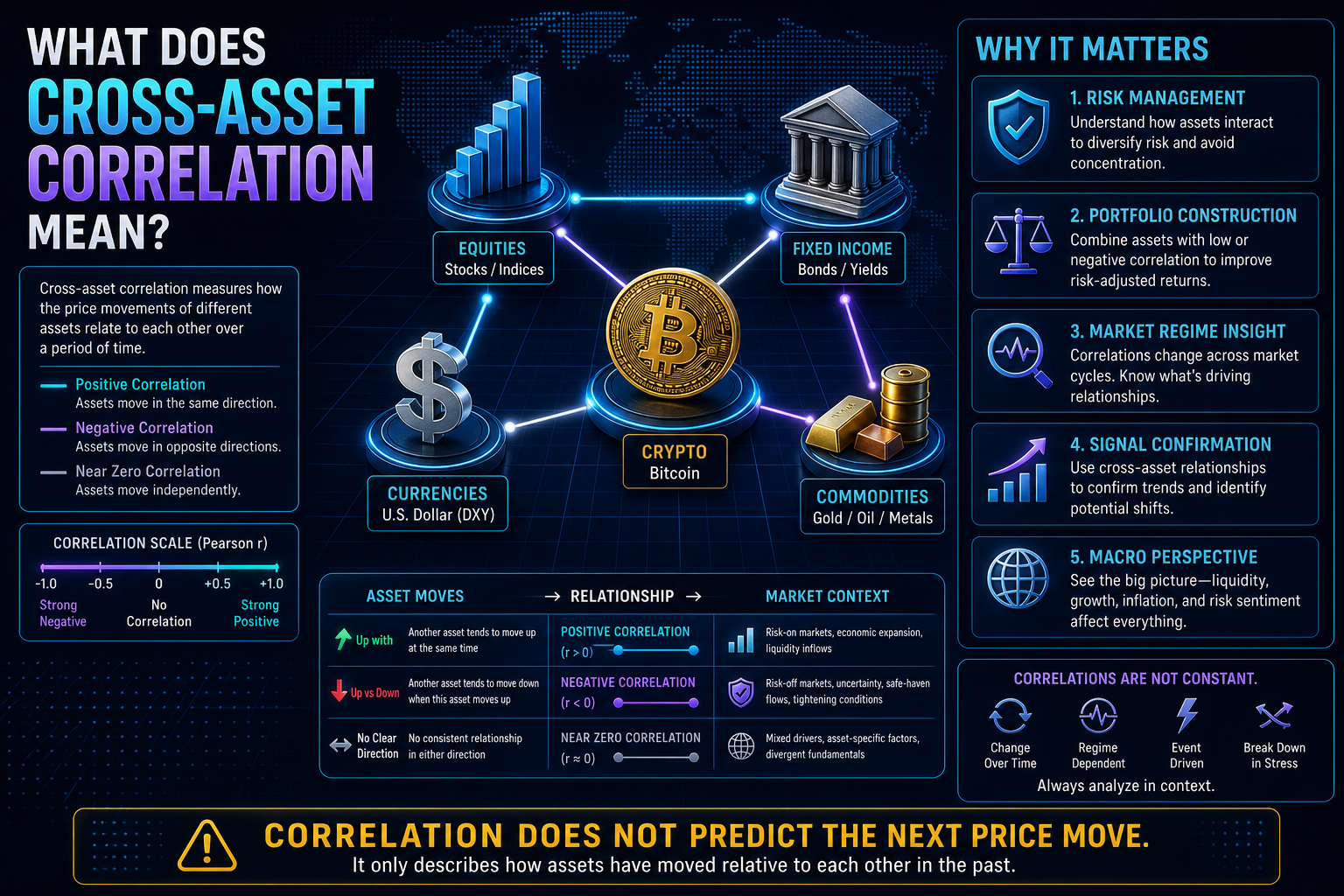
Cross-asset correlation describes how different markets tend to move in relation to one another. Crypto traders track it to understand whether Bitcoin and other digital assets are moving with equities, bonds, the dollar, commodities, or largely on their own.
Simple definition
Correlation measures whether assets have tended to move in the same direction, opposite directions, or without a consistent relationship over a chosen period. It describes a historical pattern; it does not explain the cause or guarantee that the pattern will continue.
Why it matters
When correlation is high, a common driver such as rates, growth expectations, or risk sentiment may be influencing several markets. When correlation is low, asset-specific factors may matter more. Relationships can change as market conditions change.
How markets usually read it
Participants compare price moves across markets and timeframes. A shared move can provide context for a broader risk-on or risk-off environment, while a divergence may highlight a distinct catalyst. Neither outcome alone confirms a trend.
Why it matters for crypto
Crypto sometimes trades alongside technology stocks and wider risk assets, especially during macro-driven periods. At other times, ETF flows, network news, regulation, or market structure can lead crypto to diverge. Tracking both broad and crypto-specific drivers gives a fuller picture.
Correlation is not a standalone signal
Correlation can be temporary, can change suddenly, and cannot establish causation. It does not predict the next price move. Traders often pair it with price structure, liquidity, volume, and current macro developments.
Common relationships people watch
- Crypto and equity-market moves
- Crypto and the dollar
- Crypto and bond yields
- Bitcoin relative to altcoins
- Changes in correlation across timeframes
Reading the wider context
Correlation depends on the period measured and may look different during calm markets, stress, or major policy shifts. An apparent relationship can weaken when new information changes the driver of one market. Comparing multiple timeframes and watching the reason for a move helps prevent overreliance on one historical pattern.
Key takeaway
No single relationship captures the full situation. Comparing several assets and timeframes helps separate a temporary shared move from a broader shift in market conditions.
For that reason, readers often focus on the evolving backdrop rather than using correlation as a one-step explanation for market behavior. The durability of the relationship, the reason for the move, and confirmation across timeframes can provide useful context.
Cross-asset correlation helps describe how markets have moved together. It is useful context for crypto, not a promise that the relationship will persist.
Comments (0)
Join the discussion
Sign in or create a free account to leave a comment.
No comments yet. Be the first to comment!